


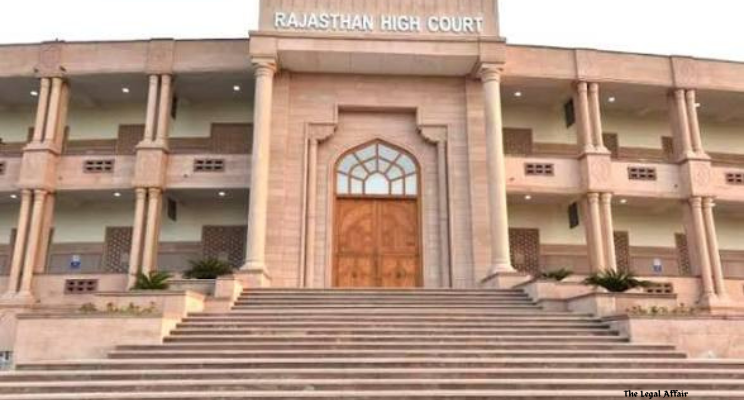
Introduction:
The Rajasthan High Court has dismissed a petition challenging the deletion of a man’s name from the electoral roll for the Nagar Palika General Election 2026, holding that the constitutional restriction on judicial interference in municipal elections becomes applicable once the election process has commenced.
Justice Anoop Kumar Dhand observed that the petitioner’s grievance concerned his right to cast a vote in the upcoming municipal elections, for which the Rajasthan State Election Commission had already announced a detailed election programme. Since the election process had been initiated, the Court held that it could not adjudicate the petition at that stage in view of Article 243-ZG of the Constitution of India.
The case arose from the petitioner’s allegation that his name had been deleted from the voter list despite having appeared in the electoral roll before its publication. According to him, the deletion was arbitrary, unsupported by any valid reason and carried out without providing him an opportunity of hearing. He contended that the action violated the applicable legal provisions and the principles of natural justice.
The petitioner approached the High Court seeking judicial intervention against the deletion of his name. However, the Court declined to examine the merits of the grievance, holding that the constitutional bar on interference in municipal election matters had already become operative.
The judgment addresses an important constitutional question concerning the relationship between an individual’s electoral rights and the principle that elections should proceed without interruption through judicial proceedings. It also highlights the distinction between challenging an electoral roll before the commencement of an election and seeking judicial intervention after the election programme has been announced.
Article 243-ZG forms part of the constitutional framework governing municipalities under Part IX-A. It restricts judicial interference in municipal electoral matters and provides that an election to a municipality cannot be called into question except through an election petition presented in the manner prescribed by the relevant law.
The provision reflects the constitutional objective of ensuring that municipal elections are conducted in an orderly and uninterrupted manner. It prevents election disputes from becoming the subject of ordinary judicial proceedings during the electoral process, while preserving the statutory mechanism through which election-related grievances may be raised.
The Rajasthan High Court relied upon the principles laid down by the Supreme Court in N.P. Ponnuswami v. Returning Officer, Namakkal Constituency and Others and Mohinder Singh Gill v. Chief Election Commissioner, New Delhi. These decisions establish the importance of allowing an election to proceed in accordance with the prescribed programme and limiting judicial intervention once the electoral process has commenced.
In the present case, the Court concluded that the announcement of the election programme by the Rajasthan State Election Commission had triggered the constitutional restriction under Article 243-ZG. Consequently, the petitioner’s challenge to the deletion of his name could not be adjudicated at that stage.
The decision does not determine whether the deletion of the petitioner’s name was legally justified or whether the procedure followed by the electoral authorities complied with the applicable law. Instead, it concerns the constitutional limits on the High Court’s ability to entertain such a grievance after the election process has begun.
The ruling therefore reinforces the principle that election-related disputes must be pursued through the appropriate legal mechanism and at the stage permitted by the Constitution and the applicable election laws.
Arguments of the Parties:
Petitioner’s Contentions
The petitioner challenged the deletion of his name from the electoral roll for the Nagar Palika General Election 2026, contending that the action had deprived him of the opportunity to exercise his constitutional right to vote in the forthcoming municipal elections.
His principal grievance was that his name had appeared in the voter list before its publication, but was subsequently removed without any apparent justification. According to the petitioner, the deletion was not supported by any valid reason and was carried out without providing him an opportunity to explain his position.
The petitioner alleged that the action of the electoral authorities was arbitrary and contrary to the applicable legal provisions governing the preparation and maintenance of electoral rolls. He also questioned the procedure followed by the authorities, asserting that the deletion of his name without a hearing violated the principles of natural justice.
The principle of natural justice invoked by the petitioner was that a person should ordinarily be given a reasonable opportunity to present his case before an adverse decision affecting his rights is taken. In the context of electoral rolls, this principle assumes particular importance because the inclusion or exclusion of a person’s name directly affects their ability to participate in the electoral process.
The petitioner’s grievance was therefore not merely about an administrative error in the preparation of the voter list. It concerned the loss of an opportunity to participate in a democratic election and the alleged failure of the authorities to follow a fair procedure before removing his name.
By approaching the Rajasthan High Court, the petitioner sought judicial intervention against the deletion. His challenge raised the question of whether the electoral authorities could remove an existing voter’s name without providing an adequate justification and an opportunity of hearing.
However, the petition also encountered a significant constitutional obstacle. By the time the matter came before the High Court, the Rajasthan State Election Commission had already issued the detailed election programme for the municipal elections.
The petitioner’s grievance thus arose at a stage when the electoral process was already underway. The Court was required to determine whether it could examine the legality of the deletion at that point, notwithstanding the constitutional restriction imposed by Article 243-ZG.
It is important to distinguish the petitioner’s allegations from the findings ultimately recorded by the Court. The judgment, as reflected in the provided case summary, does not establish that the deletion was justified, nor does it record a finding that the electoral authorities had complied with every applicable procedural requirement. The petition was dismissed because of the constitutional bar on judicial interference after the election process had commenced.
Position of the Election Authorities
The principal issue before the Court concerned the constitutional restriction on entertaining election-related disputes after the commencement of the electoral process.
The detailed submissions made on behalf of the State Election Commission or other respondents are not set out in the provided case summary. Accordingly, no specific factual defence or additional argument can be attributed to them.
The legal position considered by the Court was that Article 243-ZG restricts judicial interference in municipal election matters once the election process has commenced. The Rajasthan State Election Commission had already issued the election programme for the Nagar Palika General Election 2026, bringing the dispute within the constitutional framework governing municipal elections.
The significance of this position was that the petitioner’s challenge could not be examined solely on the basis of the alleged illegality of the deletion. The Court first had to consider whether it was constitutionally permitted to adjudicate the grievance at that stage.
The election programme had already been announced, and the electoral process was underway. Therefore, the question of whether the petitioner’s name had been deleted correctly or incorrectly had to be considered in light of the constitutional restriction on judicial intervention.
The Court ultimately accepted that the bar under Article 243-ZG had become operative and that the petitioner’s grievance could not be adjudicated at that stage.
Court’s Judgment:
The Rajasthan High Court dismissed the petition, holding that the constitutional prohibition under Article 243-ZG of the Constitution of India prevented it from adjudicating the petitioner’s grievance after the commencement of the municipal election process.
Justice Anoop Kumar Dhand observed that the dispute related to the petitioner’s ability to cast his vote in the forthcoming municipal elections. Since the Rajasthan State Election Commission had already issued the detailed election programme, the electoral process had commenced and the constitutional restriction had become applicable.
The Court’s reasoning centred on the constitutional framework governing municipal elections, the significance of the election programme and the principles laid down by the Supreme Court concerning judicial interference in electoral matters.
Constitutional Bar Under Article 243-ZG
Article 243-ZG is a constitutional provision dealing with the validity of laws relating to municipal elections and the circumstances in which courts may interfere in such matters.
The provision contains two important restrictions. First, it provides that the validity of laws relating to the delimitation of constituencies or the allotment of seats cannot be questioned in court. Second, it states that an election to a municipality cannot be called into question except through an election petition presented to the authority and in the manner prescribed by the relevant law.
The second restriction was particularly relevant to the present dispute because the petitioner sought judicial intervention in relation to the electoral roll for an upcoming municipal election.
The constitutional framework recognises that elections involve a series of interconnected stages. These may include the preparation of electoral rolls, publication of the election programme, nomination of candidates, scrutiny, polling and the declaration of results.
If every dispute arising at one stage of the electoral process were permitted to interrupt the remaining stages through ordinary judicial proceedings, the timely completion of elections could be seriously affected.
Article 243-ZG seeks to prevent such disruption by restricting judicial interference and requiring election disputes to be raised through the prescribed legal mechanism.
The Rajasthan High Court applied this constitutional principle to the facts before it. The Court noted that the election programme had already been declared by the State Election Commission and that the election process had therefore commenced.
The Court consequently held that the constitutional bar had become operative and that the petitioner’s grievance could not be adjudicated at that stage.
Commencement of the Election Process
A central consideration in the judgment was the commencement of the election process.
The Rajasthan State Election Commission had issued a detailed election programme for the Nagar Palika General Election 2026. The petitioner approached the High Court after the announcement of this programme, seeking relief concerning the deletion of his name from the voter list.
The Court observed that the dispute related to the casting of a vote in the upcoming municipal elections. Since the election programme had already been issued, the Court considered the electoral process to have commenced.
This finding was significant because the constitutional restriction under Article 243-ZG was not treated as a mere technical objection. It operated as a limitation on the Court’s jurisdiction to entertain the election-related grievance at that stage.
The Court therefore did not proceed to examine whether the deletion of the petitioner’s name was supported by sufficient reasons, whether an opportunity of hearing was required or whether the authorities had followed the applicable procedure.
Instead, it concluded that the constitutional restriction prevented it from adjudicating the dispute once the election process had commenced.
The Court’s approach reflects the distinction between the legality of an administrative action and the stage at which that action may be challenged in connection with an election. Even where a person raises a grievance concerning the preparation of an electoral roll, the availability of judicial intervention must be considered within the constitutional framework governing elections.
The judgment accordingly emphasises that the commencement of an election may have a direct impact on the manner in which electoral grievances can be pursued.
Reliance on N.P. Ponnuswami v. Returning Officer
The High Court referred to the Supreme Court’s decision in N.P. Ponnuswami v. Returning Officer, Namakkal Constituency and Others, which is a leading authority on judicial interference in election matters.
The decision establishes the importance of allowing an election to proceed through the prescribed stages without interruption by ordinary judicial proceedings.
The principle underlying the decision is that election-related disputes should ordinarily be addressed through the election petition mechanism provided by law rather than through proceedings that interrupt the electoral process.
The Supreme Court recognised that an election is not confined to the act of voting alone. It is a continuous process involving several stages, and interference at an intermediate stage may disrupt the completion of the election.
The Rajasthan High Court relied upon this principle while considering the petitioner’s challenge to the deletion of his name from the voter list.
The Court noted that the election programme had already been announced and that the electoral process had commenced. In these circumstances, the petitioner could not obtain judicial adjudication of his grievance through the writ petition at that stage.
The reliance on Ponnuswami reinforced the proposition that the constitutional and statutory framework governing elections must be respected, particularly once the election process has begun.
Reliance on Mohinder Singh Gill v. Chief Election Commissioner
The Court also referred to the Supreme Court’s decision in Mohinder Singh Gill v. Chief Election Commissioner, New Delhi.
This decision is an important authority concerning the conduct of elections and the scope of judicial intervention in electoral matters.
The principles emerging from the decision emphasise that election disputes must be considered within the constitutional and statutory framework governing the electoral process. The conduct of elections should not be disrupted by proceedings that interfere with the completion of the prescribed stages.
The Rajasthan High Court relied upon the principles laid down in this decision to support its conclusion that the petitioner’s grievance could not be adjudicated after the announcement of the election programme.
The reference to both Ponnuswami and Mohinder Singh Gill demonstrates that the Court approached the dispute in the context of the established constitutional principle of uninterrupted elections.
The judgment did not treat the petitioner’s allegation of an improper deletion as irrelevant. Rather, it held that the question could not be adjudicated through the present proceedings at the stage when the election process was already underway.
Application of Article 243-ZG to the Present Case
After considering the constitutional provision and the Supreme Court precedents, the High Court applied the principles to the facts before it.
The Court noted that the petitioner was seeking relief concerning his participation in the forthcoming municipal elections. The Rajasthan State Election Commission had already declared the election programme, and the electoral process had commenced.
In these circumstances, the Court held that the bar contained in Article 243-ZG had become operative.
The Court observed:
“…upon declaration of the election program by the State Election Commission, the election process has been initiated. Hence, the bar contained under Article 243-ZG of the Constitution of India comes into operation automatically. The grievance raised by the petitioner cannot be adjudicated by this Court, in the light of the judgment passed by the Apex Court in the above noted cases, at this stage after the election process has been initiated.”
The observation makes clear that the Court considered the announcement of the election programme to be the decisive circumstance for determining whether it could entertain the petition.
Once the election process had commenced, the constitutional restriction prevented the Court from adjudicating the petitioner’s grievance at that stage.
The Court therefore declined to examine the merits of the allegation that the petitioner’s name had been deleted without justification or an opportunity of hearing.
The decision was consequently based on the constitutional restriction governing municipal elections rather than a determination of the substantive legality of the deletion.
No Adjudication on the Merits of the Deletion
An important aspect of the judgment is the distinction between dismissing the petition on constitutional grounds and deciding that the deletion of the petitioner’s name was legally valid.
The High Court did not record a finding that the electoral authorities had acted correctly in removing the petitioner’s name. Nor did it determine whether the petitioner had been entitled to a hearing before the deletion.
The Court’s conclusion was limited to the question of whether the grievance could be adjudicated after the election process had commenced.
This distinction is significant because the dismissal of the petition should not be interpreted as an endorsement of the procedure followed by the electoral authorities.
The judgment establishes that the constitutional bar prevented judicial interference at that stage. It does not establish that every deletion from an electoral roll is necessarily lawful or that electoral authorities are free to disregard applicable procedural requirements.
The constitutional restriction concerns the manner and stage at which an election-related grievance can be raised. It does not eliminate the obligation of electoral authorities to act in accordance with the applicable law.
Similarly, the judgment does not determine the precise remedy that may be available to the petitioner in the circumstances of his case. Article 243-ZG provides for election disputes to be raised through an election petition in accordance with the relevant law, but the availability and suitability of a particular remedy depend upon the governing statutory framework and the nature of the grievance.
Final Outcome
In view of the commencement of the municipal election process and the constitutional restriction under Article 243-ZG, the Rajasthan High Court dismissed the petition.
Justice Anoop Kumar Dhand held that the petitioner’s grievance concerning the deletion of his name from the voter list could not be adjudicated by the Court at that stage.
The judgment reinforces the constitutional principle that municipal elections should proceed in accordance with the election programme and that disputes concerning the electoral process must be addressed through the appropriate legal mechanism.
The ruling also highlights the importance of timing when challenging decisions relating to electoral rolls. A grievance that may be capable of being examined at an earlier stage can encounter constitutional restrictons once the election process has commenced.
Ultimately, the decision underscores the bala