


Introduction:
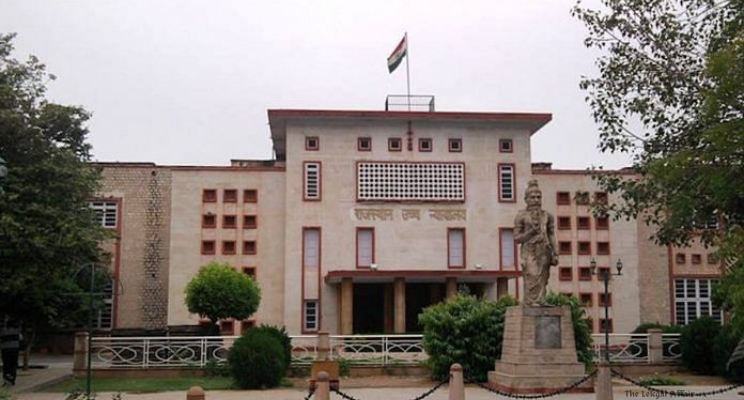
In a landmark judgment, the Rajasthan High Court, presided over by Justice Anoop Kumar Dhand, addressed a critical issue concerning the procedural lapses in Revenue Courts. The case, titled Umakant Sharma v. Om Prakash Sharma, revolved around a partition and permanent injunction suit that was decreed without adhering to the mandatory procedures outlined in the Civil Procedure Code (CPC). The Court observed that the presiding officers in the Revenue Courts, often drawn from the Administrative Services, lacked formal legal training, leading to significant procedural errors.
Arguments:
The petitioner challenged the orders of the trial court, which had decreed the suit without framing issues or recording evidence, a decision upheld by both the first and second appellate courts. The petitioner argued that such a process violated the fundamental principles of natural justice and the procedural mandates of the CPC. The respondent, however, maintained that the decision was just and based on the merits of the case.
Court’s Observations and Judgment:
Justice Dhand emphasized the importance of adhering to procedural laws, stating that the failure to frame issues and record evidence was a glaring oversight. He highlighted that Order 14 of the CPC mandates the framing of issues when pleadings are disputed, and the burden of proof must be appropriately allocated. The Court found it shocking that the Revenue Courts bypassed these essential steps, leading to a miscarriage of justice.
Recognizing the root cause of such procedural lapses, the Court noted that many presiding officers in Revenue Courts come from administrative backgrounds without formal legal education or training. This lack of legal acumen results in decisions that do not align with judicial standards. To address this systemic issue, the Court proposed the establishment of an “Administrative Judicial Academy” dedicated to providing both pre-service and in-service legal training to administrative officers serving in judicial capacities.
Recommendations:
The Court outlined several steps for the State Government to implement:
- Establish an Administrative Judicial Academy to organize mandatory training programs for newly appointed and in-service administrative officers.
- Conduct research on judicial reforms to enhance management and access to justice.
- Promote judicial innovation through seminars, colloquiums, and workshops.
- Develop a comprehensive curriculum that blends theoretical knowledge with practical training in procedural laws.
- Sensitize officers to expedite the disposal of matters without granting unnecessary adjournments.
The Court directed that a copy of the order be sent to the State Government and scheduled the next hearing for September 1, 2025, to review the steps taken in compliance with these directions.
Conclusion:
The Rajasthan High Court’s judgment underscores the critical need for legal training among administrative officers serving in judicial roles. By advocating for the establishment of an Administrative Judicial Academy, the Court aims to bridge the gap between administrative service and judicial responsibilities, ensuring that justice is administered in accordance with the law. This initiative is a significant step toward strengthening the judiciary and upholding the rule of law.