


Introduction:
A court in Rajasthan’s Ajmer District acquitted Syed Gohar Husain Chisti, a cleric from the Ajmer Dargah, and five others accused of inciting people and chanting the controversial “Sar Tan Se Juda” slogan during a rally against ex-BJP spokesperson Nupur Sharma in June 2022. The allegations stemmed from a protest held in response to Sharma’s comments about the Prophet Muhammad, which sparked widespread outrage and led to her suspension from the BJP. However, Additional District and Sessions Judge Ritu Meena found insufficient evidence to substantiate the charges against the accused. A detailed judgment of the case is awaited.
On June 17, 2022, Syed Gohar Husain Chisti and others were accused of raising the slogan “Sar Tan Se Juda” (beheading is the only punishment for those who insult Prophet Muhammad) during a protest rally at the main gate of the Ajmer Dargah. The rally was organized in response to comments made by suspended BJP spokesperson Nupur Sharma about the Prophet Muhammad. The slogan was allegedly chanted to express outrage and demand justice for the perceived insult.
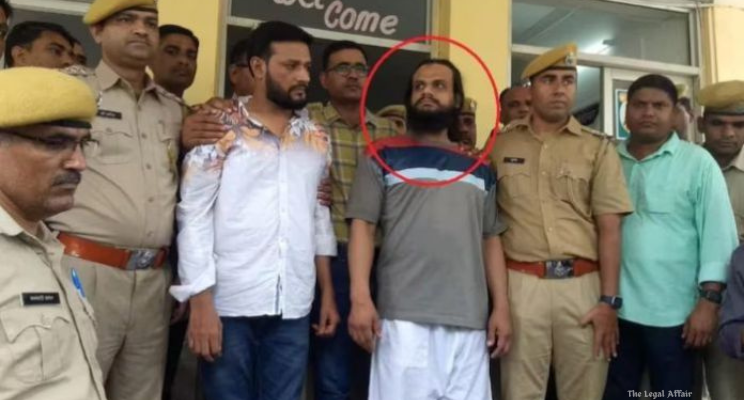
Chisti and the other accused were arrested on July 15 from Hyderabad and charged under multiple sections of the Indian Penal Code (IPC), including Sections 506 (criminal intimidation), 504 (intentional insult with intent to provoke breach of the peace), 188 (disobedience to order duly promulgated by public servant), 149 (unlawful assembly), 143 (punishment for unlawful assembly), 117 (abetting commission of an offence by the public or by more than ten persons), and 302/115 (abetment of an offence punishable with death or imprisonment for life if offence not committed).
Arguments:
The state argued that the alleged video clips of the slogan being chanted were widely circulated online, leading to unfortunate incidents in Udaipur and Amravati, where victims were beheaded due to religious hatred incited by such slogans. Consequently, the provisions of Section 115 read with Section 302 of the IPC were also applied against the accused, suggesting that the slogans had a direct link to these violent acts. The prosecution contended that the cleric and others were responsible for inciting violence and promoting religious hatred through their actions and statements during the protest rally.
The primary defense of Syed Gohar Husain Chisti was that the protest rally was peaceful and conducted with lawful permission. He argued that the protest was organized to express the community’s hurt sentiments over Nupur Sharma’s comments, which were perceived as an insult to their religious beliefs. The defense emphasized that there was no intent to incite violence or hatred, and the rally was merely an expression of the community’s collective grievances. The defense further argued that the evidence against the accused, particularly the video clips, was insufficient to prove their involvement in inciting violence or promoting religious hatred.
Court’s Judgment:
After reviewing the evidence and arguments presented by both sides, Additional District and Sessions Judge Ritu Meena found that there was insufficient evidence to substantiate the charges against Syed Gohar Husain Chisti and the other accused. The court observed that the video clips provided as evidence did not conclusively prove that the accused had chanted the controversial slogan with the intent to incite violence or hatred. The judge emphasized the importance of proving intent and causation in cases involving charges of incitement and abetment to violence.
The court noted that while the slogans and comments made during the rally were provocative, there was no direct evidence linking the accused to the violent incidents in Udaipur and Amravati. The court highlighted that merely participating in a protest and chanting slogans, without clear evidence of intent to incite violence, is insufficient to warrant criminal charges under the sections of the IPC cited by the prosecution.
In conclusion, the court acquitted Syed Gohar Husain Chisti and the other accused due to a lack of substantial evidence. The court’s detailed judgment is awaited, which will provide further insights into the reasoning behind the acquittal and the interpretation of the evidence presented.