


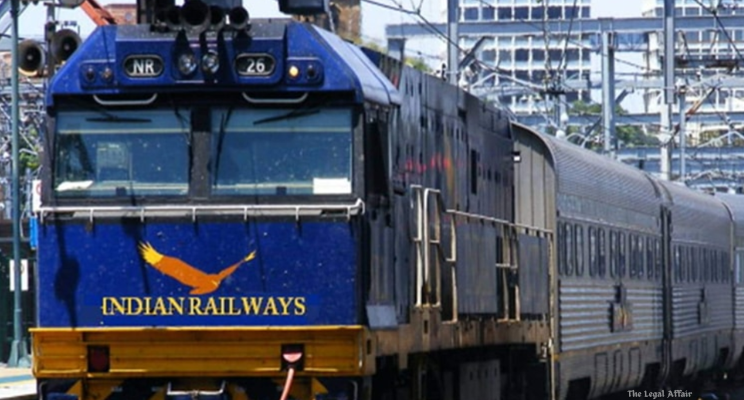
Introduction:
In the landmark case Vijay Singh Gour v. Union of India [MA-3232-2011], the Madhya Pradesh High Court, presided over by Justice Himanshu Joshi, delivered a significant judgment addressing the scope of the Railways’ responsibility in ensuring passenger safety under the Railways Act, 1989. The case revolved around the tragic death of Gurmeet Singh, a bona fide passenger who fell from a moving train due to extreme overcrowding caused by the unchecked boarding of unauthorized and ticketless passengers. The Court held that the failure of the Railway authorities to prevent such unauthorized boarding amounted to contributory negligence, thereby rendering the Railways liable to compensate the deceased’s dependents. The Court observed that the Railways, as an instrumentality of the State, bear a statutory and constitutional obligation to safeguard passengers, emphasizing that any negligence or failure in this regard must attract liability. This case stands as a critical reaffirmation of the principle that public authorities must maintain the highest standards of diligence in performing their statutory duties, especially in contexts involving human life and safety.
Arguments of the Appellant:
Counsel for the appellant, Advocate Ratnakar Prasad Mishra, submitted that the Railway Claims Tribunal had erred in rejecting the family’s claim for compensation by holding that the deceased was not a bona fide passenger solely because no ticket was recovered from his possession after the fatal incident. The appellant argued that the Tribunal’s reasoning was flawed as it failed to appreciate the evidence of co-passengers and the deceased’s valid railway pass supported by an identity card issued by the Railways. It was contended that the deceased, Gurmeet Singh, had been traveling from Bhilai Power House Station to Durg with a valid season ticket, and the accident was caused by overcrowding in the compartment, not by any fault or negligence of the deceased. The counsel argued that the Railways, being a statutory authority under the Railways Act, 1989, are duty-bound to ensure the safety of all passengers and to prevent ticketless or unauthorized persons from boarding. The appellant further relied on the precedent established in Union of India v. Rina Devi (2018), wherein the Supreme Court held that the absence of a recovered ticket after an accident does not necessarily mean the deceased was not a bona fide passenger. The appellant emphasized that the deceased was pushed off the train due to the rush created by unauthorized travelers who were permitted to board unchecked, clearly demonstrating the negligence of railway authorities. Therefore, the denial of compensation by the Tribunal was contrary to law, justice, and the principles laid down under Sections 123(c) and 124A of the Railways Act, which make the Railways liable for untoward incidents such as accidental deaths during the course of travel.
Arguments of the Respondent (Railways):
Counsel for the respondent, Advocate Satyendra Kumar Patel, countered the appellant’s submissions by asserting that the deceased was not a bona fide passenger, as no valid travel ticket was found in his possession at the time of the accident. It was argued that the absence of a ticket raises serious doubts about the authenticity of the claim and opens the possibility of forgery or manipulation to obtain false compensation. The respondent further contended that the Railways cannot be held responsible for every accidental fall from a moving train, particularly when the deceased’s travel authorization is not clearly established. The counsel stressed that the burden of proving bona fide passenger status lies on the claimant, and since the deceased’s possession of a valid ticket could not be proven beyond reasonable doubt, the Tribunal was justified in rejecting the claim. It was also argued that the Railways had taken adequate safety measures to manage passenger boarding and cannot be expected to monitor every compartment on every train at all times. The respondent maintained that the incident was purely accidental and not attributable to any negligence on the part of the Railways, and therefore, the administration could not be held liable for compensation.
Court’s Judgment:
After a careful examination of the facts, evidence, and legal precedents, the Madhya Pradesh High Court set aside the order of the Railway Claims Tribunal and held the Railways liable to pay compensation to the deceased’s family. Justice Himanshu Joshi began by reiterating the statutory obligations of the Railways under Sections 123(c) and 124A of the Railways Act, 1989, which clearly impose a duty on the administration to ensure the safety of passengers and to compensate victims in cases of “untoward incidents,” including accidental deaths arising from negligence or dereliction of duty. The Court observed that the Tribunal’s decision was primarily based on the non-production of a travel ticket, a reasoning that could not stand in light of the Supreme Court’s ruling in Rina Devi, which clarified that the mere absence of a ticket does not automatically disqualify a passenger from being considered bona fide. The Court found that the deceased had been traveling with a valid season ticket and an accompanying identity card, both of which were valid on the date of the accident. Accordingly, once prima facie evidence of lawful travel was established, the burden shifted to the Railways to prove that the deceased was not a bona fide passenger—a burden they failed to discharge.
The Court then turned to the central issue of contributory negligence. Justice Joshi observed that the Railways’ failure to prevent ticketless and unauthorized persons from boarding the train directly contributed to the overcrowding that led to the fatal accident. The Court emphasized that ensuring the safety of passengers extends beyond mere train operations; it includes enforcing access control measures and maintaining vigilance against unauthorized travel. The Court stated that the presence of unauthorized travelers not only violates the rights of paying passengers but also undermines the statutory purpose of the Railways Act, which envisions a safe and orderly mode of transportation. By allowing ticketless passengers to board unchecked, the Railways effectively created conditions that endangered bona fide passengers, thereby breaching their statutory duty of care.
The Court observed, “The Railways being a public utility service and an instrumentality of the State owe a statutory and constitutional duty to ensure the safety and security of passengers traveling on its network. This duty extends not only to operational efficiency but also to the effective implementation of regulatory measures, including preventing unauthorized and ticketless travel.” Justice Joshi further noted that the tragic incident resulting in Gurmeet Singh’s death was a direct consequence of overcrowding caused by such unauthorized travelers, and this constituted contributory negligence on the part of the Railway administration.
The Court underscored that passenger safety cannot be viewed narrowly as a matter of infrastructure but must be seen as a broader obligation encompassing regulatory enforcement. It held that the Railways’ systemic failure to prevent unauthorized boarding reflected not only negligence but also a disregard for human life, violating the principles of public accountability. The judgment emphasized that public authorities like the Railways cannot escape liability by relying on procedural technicalities such as the absence of a ticket, especially when their own failure in oversight directly causes the accident.
Having established contributory negligence, the Court proceeded to determine compensation. Referring to the scale of compensation under Section 124A of the Railways Act and the relevant notification prescribing the standard amount for accidental deaths, the Court directed that the deceased’s family be paid ₹8 lakh within eight weeks. The Court also noted that the payment should be made expeditiously, without any delay, and that any default in compliance would attract statutory interest.
In concluding its judgment, the Court reiterated the broader principle that the Railways, as a state-run enterprise, must uphold the highest standards of care in safeguarding passengers. Justice Joshi’s reasoning strongly emphasized that public service institutions bear a moral and legal duty to protect lives entrusted to them and that negligence in fulfilling this duty warrants compensation to the victims. The decision is not merely about monetary recompense; it stands as a reminder that public accountability and humane governance are intrinsic to the functioning of State instrumentalities.
The Court’s ruling thus reinforces the doctrine that the safety of bona fide passengers cannot be compromised by administrative lapses, and the Railways’ statutory obligation to ensure safe travel includes the responsibility to regulate and monitor access to trains effectively. By acknowledging contributory negligence, the Madhya Pradesh High Court has strengthened the jurisprudence on passenger safety, statutory liability, and the accountability of public authorities in cases of untoward incidents.