


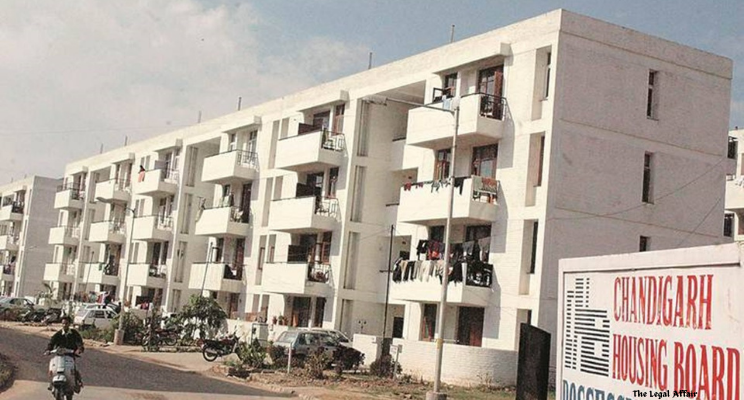
Introduction:
In the case of Mohan Lal v. UT of Chandigarh and Ors., the Punjab & Haryana High Court examined the denial of a small flat under the Chandigarh Small Flats Scheme, 2006, to the petitioner, Mohan Lal. The scheme was introduced to provide housing to slum dwellers, ensuring their right to shelter and dignified living. However, the Chandigarh Housing Board rejected his application, stating that he was not a “recognized resident” under the scheme. The case raised crucial questions about procedural fairness, the interpretation of eligibility criteria, and the constitutional right to housing. A division bench comprising Justice Sureshwar Thakur and Justice Vikas Suri presided over the matter, emphasizing that the scheme’s holistic purpose was to uplift the ultra-marginalized sections of society by providing them with stable housing. The Court held that a detailed inquiry was necessary before rejecting an applicant based on technicalities, especially when their long-term residence in the jhuggi was evident. The Court ultimately ruled in favor of Mohan Lal, directing the authorities to allot him a flat under the scheme.
Arguments of Both Sides:
The petitioner, Mohan Lal, contended that he was unfairly disqualified despite fulfilling the scheme’s eligibility criteria. He argued that his name was included in the 2006 Biometric Survey conducted by the Chandigarh Administration, confirming his residence in the slum. Additionally, he provided evidence of an electricity connection installed in his name as early as 2003. However, his exclusion from the 2006 voter list was cited as a reason to deny him the benefit. Mohan Lal argued that voter lists are prepared based on door-to-door visits by electoral officers, and his absence during such visits might have led to his omission. This, he maintained, was not sufficient grounds to reject his claim under a welfare scheme meant to benefit slum dwellers.
On the other hand, the Chandigarh Housing Board argued that the eligibility criteria under the Chandigarh Small Flats Scheme, 2006, required an applicant to be listed in both the 2006 Biometric Survey and the 2006 voter list. They pointed out that while the petitioner was part of the Biometric Survey, his absence from the 2006 voter list made him ineligible. The authorities maintained that strict adherence to the scheme’s conditions was necessary to prevent ineligible individuals from taking undue advantage. They also submitted that alternative eligibility provisions allowed applicants to qualify if they appeared in voter lists from 2004, 2005, 2007, or 2008, but Mohan Lal’s name was absent from those years as well.
Court’s Judgment:
The Punjab & Haryana High Court ruled in favor of the petitioner, finding that he was arbitrarily disqualified from the scheme. The Court highlighted that the scheme’s objective was to provide shelter to slum dwellers, aligning with the constitutional right to life and dignity under Article 21. It observed that voter lists are compiled through field visits by election officials, and a person’s absence during the visit should not be the sole reason for denying housing benefits. The Court noted that Mohan Lal’s continuous residence in the jhuggi was corroborated by his inclusion in the 2006 Biometric Survey and the electricity connection issued in his name since 2003.
The bench emphasized that procedural fairness required the authorities to conduct a more detailed inquiry instead of outright rejecting applications based on technical non-inclusion in the 2006 voter list. Justice Thakur stated, “When the holistic purpose of the scheme is to benefit slum dwellers, a more detailed inquiry should have been undertaken by the competent authority before rejecting the claim.”
The Court further ruled that since the petitioner had been living in the slum since 2006 and met the core eligibility criteria, the denial of his claim was arbitrary. The authorities were directed to allot him a small flat under the scheme, ensuring that he was not unfairly deprived of his right to shelter.