


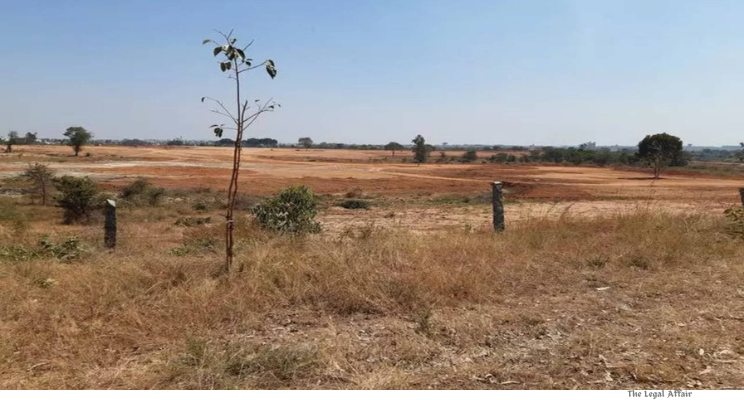
Introduction:
In a pivotal judgment, the Punjab & Haryana High Court declared Section 101A of the Haryana State Amendment to the Right to Fair Compensation and Transparency in Land Acquisition, Rehabilitation, and Resettlement Act, 2013, as unconstitutional. The provision, inserted in 2018, empowered the Haryana government to denotify land acquired under the Land Acquisition Act, 1894, if the public purpose became unviable or unnecessary. This judgment, authored by Justice G.S. Sandhawalia and Justice Harpreet Kaur Jeevan, emphasized the fundamental incompatibility of the amendment with the central legislation and held it as violative of the Constitution, particularly Articles 14 and 300A. The case, titled State of Haryana and Another v. Nishabar Singh and Others, was a critical moment in ensuring the protection of the rights of landowners and the sanctity of judicial processes.
Arguments:
The Haryana State government defended Section 101A, claiming it provided flexibility to address instances where the purpose of land acquisition had become unviable or non-essential. They argued that the amendment aligned with the intent of progressive development while offering the state the discretion to denotify land in exceptional cases. However, the court noted that this power was exercised solely by the state without conferring any rights on landowners to challenge such denotifications or decisions, thereby rendering it inherently arbitrary.
On the contrary, the petitioners contended that Section 101A undermined the objectives of the central Act. They argued that the 2013 Act was enacted to ensure fair compensation, rehabilitation, and resettlement of displaced landowners, and any state amendment diminishing these objectives was impermissible. The petitioners highlighted that the provision introduced ambiguous terms like “unviable” and “non-essential,” giving unchecked authority to the state, while undermining the principles of equality and the rule of law.
Court’s Judgment:
The court meticulously analyzed the provisions of the central Act and the impugned amendment. It noted that Section 101 of the central legislation already provided a mechanism for returning unutilized land to the original owners after five years. However, the amendment, Section 101A, introduced terms like “unviable” and “non-essential,” which were not only undefined but also contrary to the spirit of the principal Act. The bench opined that the amendment created an unjustified distinction by vesting unilateral decision-making power in the state while sidelining the interests of landowners.
The court held that such provisions disrupted the federal structure by allowing a state law to override a central statute, which is prohibited under Article 254 of the Constitution. It further emphasized that the amendment violated the separation of powers by enabling the legislature to assume adjudicatory roles, a function reserved exclusively for the judiciary.
The judgment elaborated that the 2013 Act was designed to replace the exploitative mechanisms of the 1894 Act with a framework ensuring that landowners benefitted from progressive development. The amendment, however, reversed this progress by prioritizing the state’s discretion over the rights of individuals. The court emphasized that manifest arbitrariness, as outlined in the landmark Shayara Bano v. Union of India case, was a valid ground for striking down legislation.
Finally, the court declared Section 101A unconstitutional and ultra vires, rendering it void. It underscored that laws undermining the basic structure of the Constitution, such as equality and the rule of law, cannot stand judicial scrutiny.