


Introduction:
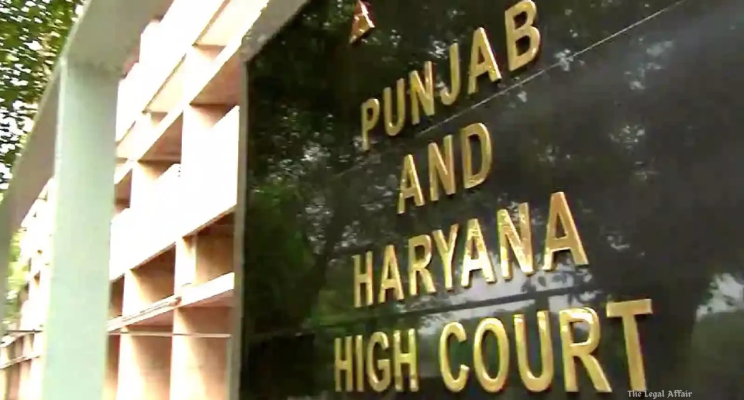
The Punjab & Haryana High Court, in a landmark decision, imposed a cost of ₹3 lakh on the Haryana Staff Selection Commission (HSSC) for unjustly denying a woman’s candidature for the post of Constable under the ESM-SC category. The case revolved around the Commission’s arbitrary and discriminatory rejection of her candidature over six years.
The petitioner, after qualifying all requisite stages of selection, was initially disqualified on the grounds of inadequate height, which was later found to be a procedural error. Despite her meeting the eligibility criteria, the Commission repeatedly denied her claim on various pretexts, ultimately alleging she was overage on the cut-off date. Justice Mahabir Singh Sindhu, in a scathing judgment, held the Commission’s actions to be illegal and an abuse of process, thereby granting the petitioner full eligibility and directing the Commission to finalize her appointment without further delay.
Background:
The case arose from a recruitment advertisement issued in 2018 for the post of Female Constable in Haryana Police. The petitioner, belonging to the ESM-SC category, cleared all stages of the recruitment process, including the Knowledge Test, Physical Screening Test (PST), and Physical Measurement Test (PMT). However, her candidature was rejected during the PMT on grounds of not meeting the height criteria of 156 cm.
Upon further scrutiny, it was established that her height was improperly measured during the PMT, and she indeed met the height requirement. Instead of rectifying the error, the HSSC rejected her candidature on subsequent pretexts, the latest being that she was overage as of the cut-off date, April 1, 2018.
The petitioner, a mother of two minor children, challenged the rejection before the Punjab & Haryana High Court under Article 226 of the Constitution, seeking justice for the alleged procedural irregularities and discriminatory actions of the Commission.
Arguments:
Petitioner’s Contentions:
- Improper Measurement of Height:
The petitioner argued that her height was incorrectly measured during the PMT, leading to her unjust disqualification. Evidence was presented to show that she met the requisite height criteria.
- Arbitrary Rejections:
The petitioner highlighted that even after proving her eligibility regarding height, the Commission repeatedly rejected her candidature on new and unjustified grounds, such as overage.
- Legal and Procedural Violations:
She contended that the Commission’s actions violated the Haryana Police Service Rules, 2017, which require age-related disputes to be referred to the government as the competent authority.
- Discrimination and Harassment:
The petitioner alleged discriminatory treatment by the Commission, emphasizing her six-year struggle to secure her rightful appointment.
Respondent’s Arguments:
- Initial Height Disqualification:
The Commission defended its initial decision to disqualify the petitioner on the grounds of not meeting the height requirement.
- Overage Allegation:
The respondents claimed that the petitioner was overage by 28 days as of the cut-off date, rendering her ineligible for the post.
- Procedural Justifications:
The Commission maintained that all actions were in line with recruitment rules and denied allegations of discrimination or procedural lapses.
Court’s Observations and Judgment:
- Findings on Height Measurement:
The Court found that the petitioner had indeed met the height requirement, and her disqualification on this ground was a result of procedural errors during the PMT.
- Overage Allegation:
The Court dismissed the respondents’ claim of overage, terming it frivolous and arbitrary. Justice Sindhu emphasized that the Commission, even in the worst-case scenario, should have referred the matter to the government for a decision, as required under the Haryana Police Service Rules, 2017.
- Illegal and Discriminatory Actions:
The Court observed that the Commission’s repeated rejections of the petitioner’s candidature were an attempt to victimize her and appeared to be motivated by prejudice or a misplaced sense of prestige.
- Compensation and Directions:
The Court imposed exemplary costs of ₹3 lakh on the HSSC for subjecting the petitioner to unnecessary litigation and harassment over six years. The Court directed the Commission to treat the petitioner as fully eligible and qualified for the post of Female Constable under the ESM-SC category and proceed with her appointment without any further delay.
Legal Principles Highlighted:
- Accountability of Public Authorities:
The judgment underscores the responsibility of public authorities to act fairly, transparently, and by the law.
- Redressal of Grievances:
It highlights the need for government bodies to address legitimate grievances promptly, without subjecting individuals to prolonged and avoidable litigation.
- Rule of Law and Equity:
The Court’s decision reinforces the principle that procedural irregularities and arbitrary actions by public bodies cannot be tolerated, especially when they cause undue hardship to individuals.
Conclusion:
The Punjab & Haryana High Court’s decision in this case is a testament to judicial vigilance in upholding fairness and accountability in public recruitment processes. By holding the HSSC accountable for its arbitrary actions and compensating the petitioner, the Court has reinforced the importance of procedural justice and equitable treatment.
This ruling serves as a reminder to public authorities that arbitrary and discriminatory actions will not be condoned, and individuals’ rights must be protected at all costs. The judgment brings a sense of closure to the petitioner’s six-year battle for justice, ensuring that merit prevails over procedural malfeasance.