


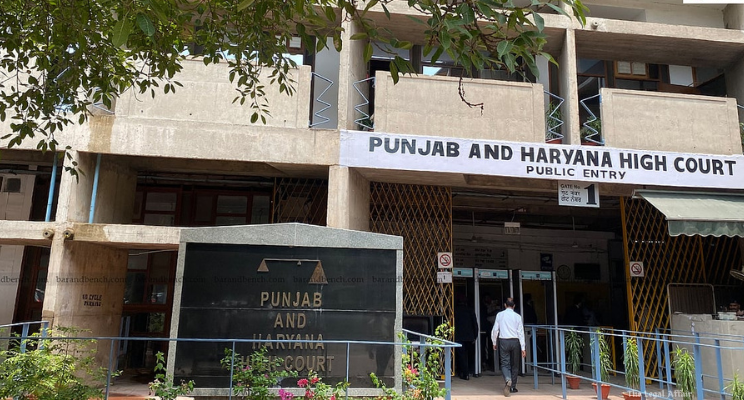
Introduction:
The Punjab & Haryana High Court, in the case of State of Punjab and Another v. Karamjeet Kaur, addressed significant issues regarding the accessibility of exam centres for college students and the validity of degrees obtained through distance education. The Court’s ruling focused on the hardship caused to students who were required to travel long distances to attend exams at remote centres, violating their constitutional right to education under Article 21. The bench, comprising Justice Sureshwar Thakur and Justice Vikas Suri, emphasised that study and exam centres should be easily accessible, especially for students studying through distance learning or online courses. The case also delved into the validity of non-technical degrees obtained through distance education, particularly those awarded by universities without proper UGC approval for off-site study centres. The Court’s observations also addressed the importance of verifying the academic standards of private institutions, deemed universities, and state universities, stressing the need for proper audits to ensure the quality of education and degree recognition.
Arguments of Both Sides:
Karamjeet Kaur, the petitioner in this case, was appointed as a Punjabi teacher on a contractual basis in 2012. Her appointment was subject to regularisation, but the government refused to do so because her M.Ed. degree was obtained through distance learning from Vinayaka Mission University, which was not recognised as per the government’s standards for regularisation. Kaur argued that the denial of regularisation was unfair, as her degree was legitimate, and she had obtained it through an accredited distance learning program. She petitioned the Court for a direction that her degree be recognised, and that she be regularised from April 2, 2016, with all associated benefits. She also sought a ruling that would address the validity of non-technical distance education degrees.
On the other hand, the State of Punjab defended its stance by citing a policy that required approval from the University Grants Commission (UGC) for any degree awarded through distance learning. It contended that the degree obtained by Karamjeet Kaur from Vinayaka Mission University did not meet the necessary criteria for recognition as per the prevailing rules, and thus, her appointment could not be regularised. Furthermore, the State argued that there was a need for strict verification of distance education degrees, especially concerning universities offering off-site centres for exams and study. It argued that such degrees should not be automatically validated unless they were issued by institutions that complied with the UGC’s guidelines.
In response, Karamjeet Kaur pointed out that her degree had been duly awarded by an accredited institution, and there was no evidence of any fraud or malpractices. She argued that the government’s failure to recognise her degree was arbitrary and violated her right to education under Article 21 of the Constitution. Additionally, she contended that requiring students to travel long distances to attend exams at remote centres added unnecessary financial and emotional strain, especially for students from marginalised communities.
Court’s Judgment:
The Punjab & Haryana High Court, after considering the arguments from both sides, found merit in Karamjeet Kaur’s petition. The Court observed that requiring students to travel long distances to remote areas to take exams created undue hardship and violated their right to education under Article 21 of the Constitution. The bench emphasised that accessibility to study and exam centres should be facilitated in a way that ensures that no student is disadvantaged due to geographical or financial constraints. The Court also pointed out that the policy of requiring exam centres to be located only at the main campus of the university was impractical and burdensome for students, particularly those studying online or through distance learning. The judges noted that such a policy could place a heavy financial burden on students, especially those from poor or marginalised backgrounds.
In its ruling, the Court highlighted that the constitutional right to education was being infringed upon by the policy mandating remote exam centres. The Court’s observations included the assertion that such a policy undermined the constitutional mandate that guaranteed the right to education. The bench made it clear that the accessibility of study and exam centres should be in line with the principles of fairness and equality, ensuring that students are not unduly burdened by logistical or financial obstacles.
The Court also addressed the issue of distance education degrees, specifically the M.Ed. degree obtained by Karamjeet Kaur through distance learning. The Court pointed out that there was no evidence to suggest that Kaur’s degree was fraudulent or unrecognised, and thus, it should be considered valid. The State of Punjab had failed to adhere to earlier Supreme Court directions regarding the recognition of distance education degrees and the creation of a portal for degree verification. In light of this, the Court ruled that degrees obtained through distance learning, such as Kaur’s, were valid, provided there was no evidence of fraud or misconduct.
Furthermore, the Court directed that the University Grants Commission (UGC) must ensure that the courses offered by deemed universities, private institutions, and state universities meet academic standards. It also ordered that the UGC should conduct case-by-case verifications of distance education programs to ensure that they met academic criteria. The Court stressed the importance of conducting regular audits of these institutions to verify that they provided the necessary infrastructure and support for distance learning programs. The Court directed that UGC approvals should not be based solely on territorial limits or technicalities but should focus on the academic quality of the programs offered.
The bench also quashed the cut-off date that had been established to de-recognise degrees obtained through distance learning, emphasising that such a policy was arbitrary. The Court held that without evidence of poor quality or misconduct, the degrees obtained through distance education should not be derecognised based solely on the location of the exam centres or the date of the degree’s award.