


Introduction:
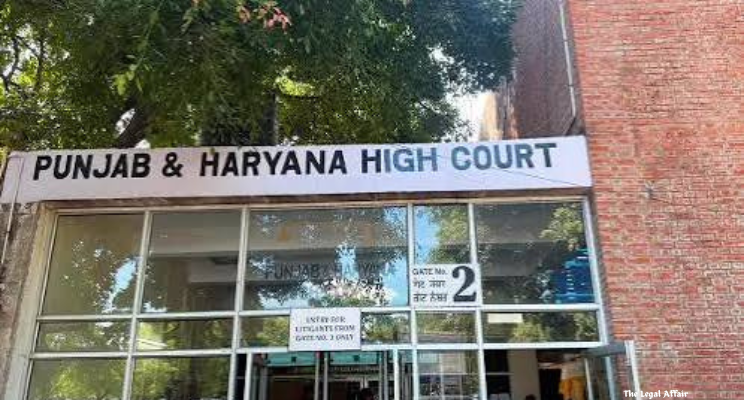
The Punjab and Haryana High Court has directed the Municipal Commissioner, Chandigarh, and the Chief Engineer, Union Territory, Chandigarh, to forthwith inspect the passage leading to a Government Model Middle School in Sector 13, Chandigarh, and take appropriate remedial measures if it is found that students do not have a proper road to access the institution.
A Division Bench comprising Chief Justice Ashwani Kumar Mishra and Justice Rohit Kapoor passed the directions while hearing a public interest litigation filed by Deify Jindal in Deify Jindal v. Union Territory of Chandigarh and Others. The petition was instituted under Article 226 of the Constitution, seeking intervention by the High Court to ensure a safe, hygienic and secure environment for children studying at the Government Model Middle School, Sector 13, Chandigarh.
The school is a co-educational institution providing education from Classes I to VIII and operates in two shifts, including an evening shift. The PIL raised concerns regarding the physical conditions surrounding the school, particularly the alleged absence of a proper road leading to the institution. According to the petitioner, students were required to use an unpaved, uneven and steep dirt passage to reach the school.
The petition alleged that the problems were not limited to the condition of the road. The area surrounding the school was stated to have overgrown vegetation, accumulated garbage, inadequate street lighting and makeshift jhuggis or informal settlements. A drain or nallah was also alleged to be situated approximately 50 to 60 feet from the school boundary wall.
The petitioner contended that these conditions collectively created an unsafe environment for schoolchildren. Particular concern was expressed regarding students leaving the premises after the evening shift, especially during winter months when visibility becomes poor earlier in the day. The petition also alleged that waste continued to be dumped in the vicinity of the school despite the area’s proximity to an educational institution.
Before approaching the High Court, the petitioner had issued a legal notice dated March 9, 2026, to the concerned authorities. The response from the school authorities acknowledged the existence of the unpaved road and the drain and stated that a request had been made to the Municipal Corporation for providing street lighting.
The Engineering Department subsequently communicated on August 13, 2026, that the relevant open area fell within the jurisdiction of the Municipal Corporation. According to the petitioner, the School authorities’ jurisdiction was confined essentially to works within the school boundary, while the surrounding open area and civic infrastructure fell within the responsibility of the Municipal Corporation.
Despite the correspondence, the petitioner maintained that the problems had not been resolved. A site inspection was conducted on September 2, 2026, and photographs were placed on record to demonstrate the alleged condition of the area.
The PIL consequently sought coordinated action by the authorities. Among other measures, the petitioner sought inspection and demarcation of the area, improvement of the approach road, adequate street lighting, removal of garbage and excessive vegetation, proper maintenance and protection of the adjoining drain or nallah, and action against encroachments or unauthorised occupation.
The High Court, however, did not immediately make a final finding that the road did not exist or that each allegation in the PIL stood established. Instead, it adopted a fact-verification approach. The Bench directed the Municipal Commissioner and the Chief Engineer to inspect the passage forthwith and, if it was found that no proper road existed for students to access the school, to take appropriate remedial measures.
The Court also directed the authorities to file a status report before the next date of hearing. The matter has been listed for October 9, 2026.
Arguments of the Parties:
The petitioner, Deify Jindal, approached the High Court in public interest, asserting that young children attending the Government Model Middle School were being compelled to use an unsafe and unhygienic route to access their school.
The petitioner’s case was that the condition of the approach road could not be viewed as an ordinary civic inconvenience. The alleged absence of a proper road directly affected the safety of children who were required to travel through the area every day. The petitioner relied upon photographs annexed to the PIL to demonstrate the condition of the passage and surrounding area.
It was submitted that the road adjoining and leading to the school was unpaved, uneven and steep. According to the petitioner, the physical condition of the route created particular difficulties for young children, who had to use it to enter and leave the school premises.
The petitioner further alleged that the surroundings were affected by overgrown vegetation and accumulated garbage. The presence of waste near an educational institution was projected as a public-health and hygiene concern. The petition alleged that dumping continued despite the area’s proximity to the school.
Another concern raised was inadequate street lighting. Since the school operates in two shifts, including an evening shift, the petitioner contended that students leaving the school later in the day could face greater risks because of poor visibility. The concern was stated to become more serious during the winter months when darkness sets in relatively early.
The petitioner also brought to the Court’s attention the presence of makeshift jhuggis or informal settlements in the vicinity. A drain or nallah was stated to be located around 50 to 60 feet from the school boundary wall. The petitioner argued that the condition and maintenance of this drain required attention because it formed part of the immediate surroundings through which children were required to pass.
The petitioner had already attempted to raise these concerns with the authorities before filing the PIL. A legal notice dated March 9, 2026, was issued to the concerned authorities. The response from the school authorities, according to the petition, acknowledged that an unpaved road and drain existed in the area.
The school authorities also stated that a request had been made to the Municipal Corporation for providing street lighting. This correspondence was relied upon by the petitioner to demonstrate that the concerns had been brought to the notice of the authorities and were not being raised for the first time before the High Court.
Thereafter, on August 13, 2026, the Engineering Department clarified that the relevant open area fell within the Municipal Corporation’s domain. The school itself, according to the communication, was concerned with construction and related works within its boundary wall.
The petitioner argued that the correspondence demonstrated a need for coordinated action among the different authorities. According to the petitioner’s case, the school authorities could not independently rectify problems occurring outside the boundary of the institution, while the civic authorities responsible for the surrounding public area needed to act upon the reported deficiencies.
A subsequent site inspection on September 2, 2026, was relied upon to contend that the situation remained substantially unresolved. Photographs from the inspection were placed before the Court as supporting material.
The petitioner consequently sought directions covering several aspects of the alleged problem. These included proper inspection and demarcation of the area, construction or improvement of the approach road, installation of adequate street lighting, removal of garbage and excessive vegetation, maintenance and safeguarding of the adjoining drain or nallah, and removal of encroachments or unauthorised occupations where found.
The petitioner’s broader submission was that children attending a government school should have safe ingress and egress and should not be required to negotiate an allegedly filthy or unsafe passage simply to reach their educational institution.
The respondents, represented before the Court by counsel including Mr. Jaivir Chandail with Ms. Ekakshra Mahajan Mandher, were required to address the allegations concerning the civic infrastructure surrounding the school. The material placed before the Court indicated that there had already been correspondence between the school and civic authorities regarding the road and street lighting.
The Engineering Department’s communication dated August 13, 2026, was particularly relevant to the allocation of responsibility. It stated that the open area in question fell within the Municipal Corporation’s domain, while the School’s own responsibility extended to works within its boundary wall.
The reported hearing does not record a detailed counter-submission from the respondents disputing each of the factual allegations or establishing that all remedial works had already been completed. Nor does it record a final admission that the road was in the precise condition alleged by the petitioner.
The Court therefore proceeded cautiously. Rather than accepting the petitioner’s photographs and allegations as conclusively establishing every factual issue, it directed the responsible authorities to inspect the passage themselves and verify whether a proper road existed.
This approach was particularly relevant because the PIL involved questions of fact concerning the condition and jurisdiction of a particular area. The Court’s direction effectively required the civic and engineering authorities to verify the position on the ground and take remedial action if the petitioner’s principal grievance was found to be correct.
The respondents were therefore placed under an obligation to undertake the inspection and report the position to the Court. The status report would allow the High Court to assess whether the directions had been complied with and whether further intervention was necessary.
Court’s Judgment:
The Division Bench approached the matter by focusing first on the immediate issue raised in the PIL: whether schoolchildren had a proper and safe passage to reach the Government Model Middle School in Sector 13.
Chief Justice Ashwani Kumar Mishra and Justice Rohit Kapoor noted that the petitioner had alleged that young students were being required to travel through “filthy dirt roads” to access their school. The Court also took note of the photographs placed on record, which were relied upon to show that there was allegedly no clear passage available for students.
The Bench did not, however, make an unconditional factual finding that the allegations had been established. Instead, it directed the competent authorities to inspect the passage “forthwith.” The inspection was to determine whether there was in fact a proper road available for students to access the school.
The Court’s direction was therefore fact-specific and remedial. If the inspection establishes that no proper road exists, the Municipal Commissioner and Chief Engineer have been directed to take appropriate measures.
This distinction is important because the High Court did not substitute the judicial process for technical or administrative inspection. The authorities possessing responsibility over the civic infrastructure were directed to verify the physical conditions and act accordingly, with the Court retaining supervisory jurisdiction through the requirement of a status report.
The direction also reflects the nature of proceedings under Article 226 of the Constitution. A writ court exercising public law jurisdiction can issue appropriate directions to public authorities where issues concerning the discharge of public duties are raised. In the present matter, the petition alleged deficiencies affecting schoolchildren and sought coordinated action from public authorities responsible for civic infrastructure.
The Court’s order did not finally determine liability against any particular official or authority. Instead, it identified the need for immediate verification and remedial action where the factual allegation was found to be correct.
The Municipal Commissioner, Chandigarh, and the Chief Engineer, Union Territory, Chandigarh, were specifically named in the direction. This was significant because the material before the Court indicated a question regarding which authority was responsible for the area outside the school’s boundary.
The Engineering Department’s communication had stated that the relevant open area fell within the Municipal Corporation’s domain. The Court’s direction consequently placed the concerned civic and engineering authorities under a joint obligation to inspect the passage rather than allowing the issue to remain unresolved because of an inter-departmental division of responsibility.
The Court’s approach also addressed the urgency inherent in the petition. Instead of waiting for a prolonged exchange of affidavits before directing an inspection, the Bench required the inspection to be carried out forthwith. If the allegation concerning the absence of a proper road was established, remedial measures were to follow.
The direction was not confined to merely filing a response. The authorities were required to act on the result of their inspection. If the factual position supported the grievance, appropriate measures would have to be taken to provide students with a proper access road.
The Court further directed that a status report be filed before the next hearing. This ensures that the matter remains subject to judicial monitoring. The report would provide the Bench with information regarding the inspection, the condition of the passage and the steps taken if deficiencies were identified.
The matter was listed for October 9, 2026.
The order also has significance in the context of the wider allegations contained in the PIL. Although the immediate operative direction concerns the passage leading to the school, the petition raised several related concerns, including street lighting, garbage, vegetation, the adjoining drain and alleged encroachments.
The present direction does not record a final adjudication on each of these issues. The Court’s order specifically focused on the allegation concerning the absence of a proper road and directed the authorities to verify that claim. The status report and subsequent proceedings may determine whether additional directions are required concerning the other issues raised in the PIL.
Similarly, the Court did not make a final finding that the drain or nallah constituted a danger to students, nor did it conclusively determine the allegations concerning informal settlements or dumping of waste. Those issues remain part of the broader public interest concerns placed before the Court and may be considered on the basis of the material subsequently produced.
The Court’s restrained approach is significant. While public interest litigation enables constitutional courts to address issues affecting vulnerable sections of society, factual questions concerning infrastructure often require verification by the competent authorities. The Court therefore balanced the urgency of the petition with the need for factual assessment.
The order also demonstrates that the Court’s concern was not limited to the physical school building. The safety of students necessarily involves the conditions through which they enter and leave the institution. An educational facility may be structurally adequate within its boundary, but students can nevertheless face risks if the surrounding access route is unsafe.
The facts placed before the Court suggested precisely such a concern. The school reportedly operated in two shifts, including an evening shift, making the condition of the approach route and street lighting particularly relevant to the safety of students leaving the premises.
The Court’s direction therefore places the immediate responsibility upon the authorities to verify whether students have a proper road and, if they do not, to take corrective measures.
No specific judicial precedent was cited in the reported order in relation to the directions issued. The Bench’s intervention was primarily based on the facts and the public law obligations arising from the allegations concerning schoolchildren’s access to their institution.
The High Court also did not pronounce upon the merits of every allegation made in the PIL. The order should consequently not be understood as a judicial finding that all the alleged deficiencies were established. The Court has directed inspection precisely because the factual position required verification.
The final outcome at this stage is therefore an interim or procedural direction rather than final disposal of the substantive concerns. The PIL remains pending, with the authorities required to inspect the passage, take appropriate measures if the alleged absence of a proper road is confirmed, and place a status report before the Court.
The matter will next be considered on October 9, 2026. At that stage, the Court will have the benefit of the authorities’ report and can determine whether further directions are necessary.
The proceedings nevertheless underline an important public interest concern: access to education cannot be viewed solely through the availability of classrooms. For children attending government schools, safe access to the institution is also an essential component of a functional educational environment. Where civic infrastructure surrounding a school is alleged to expose students to avoidable risks, the responsibility of the relevant authorities requires effective coordination and timely remedial action.
In Deify Jindal v. Union Territory of Chandigarh and Others, the High Court has therefore required the authorities to move beyond correspondence and verify the situation physically. If the petitioner’s central allegation is found to be correct, the concerned authorities must act. The requirement to file a status report also ensures that the Court remains informed about the steps taken before the matter is considered again.
The order thus keeps the focus on the safety and accessibility of the schoolchildren while leaving factual and administrative questions to be verified through the inspection and subsequent report.