


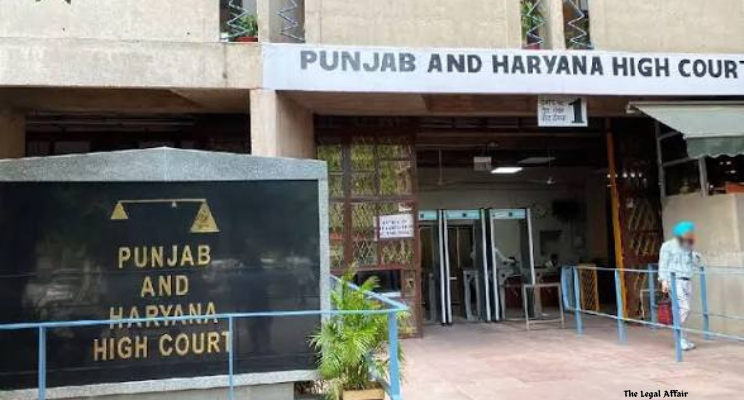
Introduction:
The case of Rattandeep Singh Dhaliwal v. State of Punjab came before the Punjab and Haryana High Court, where Justice Aman Chaudhary was called upon to examine the legality of multiple police complaints and inquiries initiated against journalist and YouTuber Rattandeep Singh Dhaliwal following the publication of a political podcast concerning the forthcoming Punjab Assembly elections. The petition raised significant questions regarding the scope of police powers at the pre-FIR stage, the balance between freedom of speech and lawful investigation, and the extent to which constitutional courts should intervene when multiple complaints arise from a single publication.
Rattandeep Singh Dhaliwal, who operates digital media platforms under the names “Rattandeep Singh Dhaliwal” and “Talk with Rattan,” is known for producing political commentary and current affairs content on YouTube and other online platforms. In May 2026, he aired a podcast discussing political developments ahead of the 2027 Punjab Assembly elections. During the broadcast, he stated that nearly thirty-two sitting Members of the Legislative Assembly (MLAs) belonging to the ruling Aam Aadmi Party (AAP) might not be fielded by the party in the upcoming elections. The statement quickly generated political controversy, prompting numerous AAP legislators from different constituencies to lodge complaints with the police, alleging that the content was false, misleading, and damaging.
As a consequence of these complaints, police authorities from multiple districts in Punjab issued notices requiring Dhaliwal to appear before them in connection with separate preliminary inquiries. Faced with more than thirty notices from different police jurisdictions, the petitioner approached the High Court seeking judicial protection. He prayed for a stay on all proceedings arising from the impugned podcast, challenged the legality of the multiple inquiries and summons, and sought protection against coercive action by the police.
The petition brought into focus an increasingly common legal issue arising in the digital era. With political commentary now disseminated through online platforms capable of reaching millions of viewers, statements made by journalists, YouTubers, podcasters, and digital content creators often invite legal scrutiny from multiple complainants located across different jurisdictions. Consequently, courts are increasingly required to balance an individual’s constitutional right to freedom of speech under Article 19(1)(a) of the Constitution with the State’s obligation to investigate allegations that may disclose cognizable offences.
The proceedings also raised questions concerning the scope of police powers before the registration of a First Information Report (FIR). While the petitioner argued that no statutory provision authorizes such preliminary inquiries in the present circumstances, the State maintained that calling a person to present his version during an inquiry is a legitimate investigative exercise and does not, by itself, amount to harassment or coercive action.
Against this backdrop, the Punjab and Haryana High Court examined whether the petitioner was entitled to blanket judicial protection at a stage when no FIR had yet been registered and the police were merely conducting preliminary inquiries pursuant to complaints received from elected representatives belonging to different constituencies.
Arguments of the Parties:
Senior Advocate R.S. Bains, appearing for the petitioner, argued that the multiple complaints and notices issued against Rattandeep Singh Dhaliwal constituted an abuse of the investigative process and amounted to harassment. It was submitted that the entire controversy arose from a single podcast broadcast in May 2026. Nevertheless, more than thirty separate notices had been issued by police authorities stationed in different districts across Punjab, requiring the petitioner to appear before them individually. According to the petitioner, compliance with all these notices was practically impossible and imposed an unreasonable burden upon him.
The petitioner contended that the multiplicity of inquiries arising from one publication demonstrated an attempt to intimidate and silence him through the process of law rather than by lawful prosecution. Counsel argued that compelling the petitioner to travel across various districts to participate in separate inquiries would interfere with his professional activities and effectively subject him to repeated investigative proceedings for substantially the same set of allegations.
A central plank of the petitioner’s challenge related to the legal authority of the police to conduct inquiries before registering an FIR. Senior counsel submitted that there exists no statutory provision empowering the police to summon an individual for inquiry in the absence of a registered criminal case under the circumstances presented. It was argued that unless the police first register an FIR in accordance with law, they could not compel the petitioner to appear before investigating authorities merely on the basis of complaints.
The petitioner further submitted that the notices carried an implicit threat of coercive action and created an atmosphere of intimidation. Given the large number of complaints filed by legislators belonging to the ruling political party, it was argued that judicial intervention was necessary to safeguard the petitioner’s constitutional rights, including his right to free speech and protection against arbitrary police action. Accordingly, the Court was requested to stay all proceedings arising from the impugned podcast and restrain the police from taking coercive measures pending adjudication of the petition.
During the hearing, the Court sought clarification regarding the petitioner’s professional credentials. Justice Aman Chaudhary questioned the nature of his journalistic background, observing that merely having a large number of followers on social media does not necessarily establish professional status. When informed that the petitioner had a substantial YouTube following, the Court orally remarked that gaining followers had become relatively easy in the digital age. The Court also sought information regarding the petitioner’s educational qualifications and source of income.
Responding to the Court’s queries, the petitioner submitted that he had studied journalism and that his primary source of income was his YouTube platform. These exchanges formed part of the Court’s attempt to understand the context in which the impugned publication had been made and the nature of the petitioner’s activities as a digital journalist.
Appearing on behalf of the State of Punjab, Advocate General Maninderjit Singh Bedi opposed the petition. He submitted that the proceedings were still at a preliminary stage and that no exceptional circumstances existed warranting judicial intervention. According to the State, the petitioner had merely been called upon to participate in inquiries and present his version in response to complaints received by the police. No coercive action had yet been initiated that would justify the grant of blanket protection.
The Advocate General argued that granting sweeping relief at such an early stage would effectively prevent the police from performing their statutory duty of examining complaints received from citizens. It was emphasized that once complaints alleging unlawful conduct are received, the police are obligated to verify the allegations before deciding whether further legal action is warranted. Such preliminary inquiries, according to the State, cannot be equated with harassment merely because multiple complainants have approached different police authorities.
The State further submitted that the petitioner himself had chosen to publish statements concerning a large number of sitting legislators representing different constituencies. It was therefore natural that individual legislators from various districts would file separate complaints before their respective local police authorities. Consequently, the multiplicity of notices was a direct consequence of the content published by the petitioner rather than any mala fide conduct on the part of the investigating agencies.
Accordingly, the State urged the High Court to decline interference and allow the police to complete the preliminary inquiry in accordance with law.
Court’s Judgment:
After considering the rival submissions, the Punjab and Haryana High Court declined to grant the relief sought by the petitioner. Justice Aman Chaudhary held that the case did not warrant judicial intervention at the present stage and refused to stay the proceedings arising from the various complaints.
The Court observed that once the petitioner had published content making assertions concerning numerous sitting legislators belonging to different constituencies, it was only natural that those legislators might individually approach the police with complaints if they believed the statements to be false or defamatory. Consequently, the Court found no legal infirmity merely because multiple complaints had been filed before different police authorities.
Justice Chaudhary further observed that if the police had failed to act upon complaints submitted by elected representatives alleging commission of cognizable offences, they themselves could have been accused of neglecting their statutory duties. The Court emphasized that the registration or examination of complaints forms part of the ordinary functioning of law enforcement agencies and cannot automatically be characterized as harassment simply because several complaints have been received.
The Court also addressed the petitioner’s apprehension regarding repeated inquiries. Rather than granting blanket protection from investigation, the Court observed that participation in the inquiry would be in the petitioner’s own interest. By joining the inquiry, the petitioner would have an opportunity to place his version before the investigating authorities, explain the basis of his statements, and clarify any factual or legal issues arising from the complaints. Such participation, according to the Court, would assist in ensuring a fair and informed decision regarding the future course of action.
Importantly, the Court declined to accept the petitioner’s request for comprehensive protection against all ongoing proceedings at a stage when the investigative process had not substantially progressed. Constitutional courts ordinarily exercise restraint while interfering with investigative functions, particularly where the police are only conducting preliminary inquiries and no exceptional circumstances demonstrating abuse of process are established. Judicial intervention at such an incipient stage may unnecessarily impede lawful investigation and undermine the statutory responsibilities entrusted to investigating agencies.
Although declining substantive relief, the Court did provide the petitioner with an alternative remedy. Justice Chaudhary observed that if the petitioner experienced practical difficulties arising from the multiplicity of notices issued by police authorities across different districts, he was at liberty to submit an appropriate representation before the Director General of Police, Punjab. The Court indicated that such an administrative representation would enable the State’s highest police authority to examine the practical issues raised by the petitioner and consider whether any suitable administrative solution could be devised.
The order reflects the well-established principle that High Courts exercising jurisdiction under Article 226 of the Constitution ordinarily refrain from obstructing investigative processes unless there is clear evidence of mala fides, lack of jurisdiction, or abuse of statutory powers. Merely because multiple complaints arise from a single publication does not automatically justify judicial intervention where the complaints originate from different individuals claiming to be independently aggrieved.
The Court’s observations during the hearing regarding journalism and digital platforms also underscore the changing nature of modern media. By questioning the petitioner’s qualifications and source of livelihood, the Court appeared to distinguish between the popularity of online content creators and the legal responsibilities that accompany publication of political content capable of affecting public figures and democratic discourse. Although these observations were oral and did not form the substantive basis of the decision, they reflect judicial awareness of the evolving landscape of digital journalism and social media influence.
Ultimately, the High Court refused to grant any interim protection against the ongoing inquiries and directed the petitioner to cooperate with the investigative process. At the same time, by permitting him to approach the Director General of Police regarding the logistical difficulties arising from multiple notices, the Court sought to balance the interests of effective investigation with the practical concerns expressed by the petitioner.
The decision serves as a reminder that while freedom of speech and journalistic expression remain constitutionally protected, such rights do not confer immunity from lawful investigation where complaints alleging legal violations have been received. Equally, investigating authorities must exercise their powers fairly and in accordance with law, while constitutional courts will ordinarily permit investigative mechanisms to function unless compelling grounds exist for judicial intervention at the threshold stage.