


Introduction:
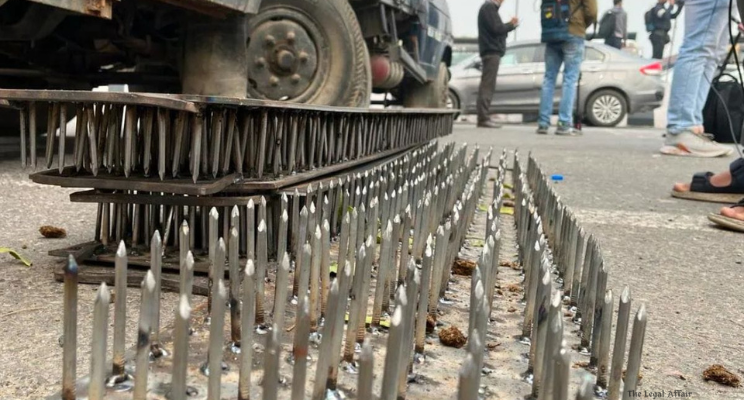
Amidst the ongoing farmer protests demanding a law guaranteeing Minimum Support Price (MSP) and marching towards Delhi, the Punjab and Haryana High Court has intervened, calling for an amicable settlement between the parties. A division bench, comprising Acting Chief Justice GS Sandhawalia and Justice Lapita Banerji, has issued notices to the Centre and the state governments of Punjab, Haryana, and Delhi. Two PILs were presented before the court—one challenging Haryana’s decision to seal its borders and another against protestors blocking state and national highways.
Arguments:
The first petition, filed by Chandigarh-based lawyer Uday Pratap Singh, challenges the obstructive actions of the Central and State governments, including border sealing and suspension of communication services. Singh argued that fundamental rights allow the exercise of liberty without censorship, emphasizing the distinguishing feature of democracy—legitimate dissent. The second petition, filed by lawyer Arvind Seth, seeks directions to prevent blockades of national and state highways and railway tracks, citing public inconvenience and potential harm to those needing access to hospitals.
Court’s Judgment:
The High Court emphasized the balance between citizens’ fundamental right to move freely and the state’s duty to protect its citizens from inconvenience. It called for an amicable resolution, urging all parties to sit down and resolve the issue. The Central government assured its openness to negotiations on MSP. The matter is adjourned to February 15, with states given time to file a statusreport.