


Introduction:
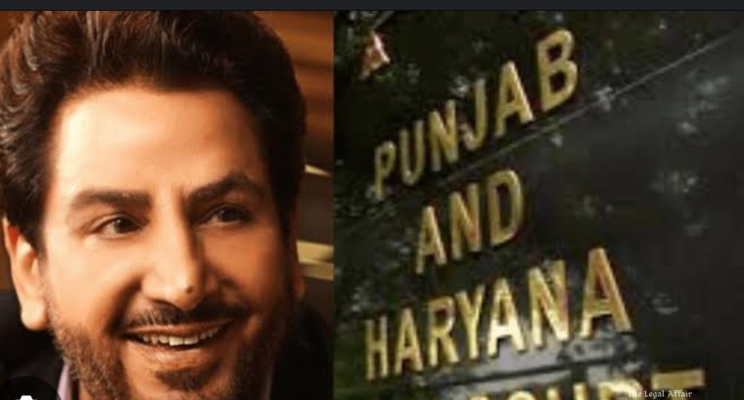
In a recent ruling, the Punjab and Haryana High Court addressed a case involving allegations against singer Gurdas Maan for offending religious sentiments under Section 295-A IPC. The case, Harjinder Singh @ Jinda & Ors. v. State of Punjab & Ors. (2024 LiveLaw (PH) 231), centered on Maan’s statements regarding the lineage of Laddi Shah, allegedly claiming descent from the third Sikh Guru, Sri Guru Amar Dass.
Arguments:
Advocates Mr. Ramandeep Singh Gill and Mr. Jatin Bansal Kotshamir argued on behalf of the petitioners that Gurdas Maan’s statements intentionally insulted religious beliefs, potentially causing public unrest. They emphasized that such deliberate acts should be prosecuted to maintain communal harmony and respect for religious sentiments.
Additional Advocate General Mr. ADS Sukhija and Deputy Advocate General Mr. JS Rattu, representing the State of Punjab, supported the cancellation report filed by the Punjab Police. They argued that there was no sufficient evidence to prove malicious intent on Maan’s part, emphasizing the importance of protecting free speech under constitutional guarantees.
Court’s Judgment:
Justice Sandeep Moudgil of the Punjab and Haryana High Court opined that Gurdas Maan’s statements did not constitute intentional or deliberate insult under Section 295-A IPC. The Court noted that there was no evidence to suggest Maan forced anyone to accept Laddi Shah’s claimed lineage. Justice Moudgil emphasized the protection of free speech, stating that mere expression of controversial beliefs does not warrant criminal prosecution unless it directly incites public unrest or other offenses.
The Court cited the Supreme Court’s precedent in Secy. Ministry of Information and Broadcasting v. Cricket Assn. of Bengal (1995), expanding the scope of freedom of speech to include education, information, and entertainment. It highlighted that the trial court had already found no malicious intent in Maan’s actions after reviewing video footage and transcripts, including Maan’s apology.
Therefore, the High Court upheld the trial court’s decision to accept the cancellation report, affirming that Maan’s expressions, while controversial, did not rise to the level of outraging religious sentiments under Section 295-A IPC.