


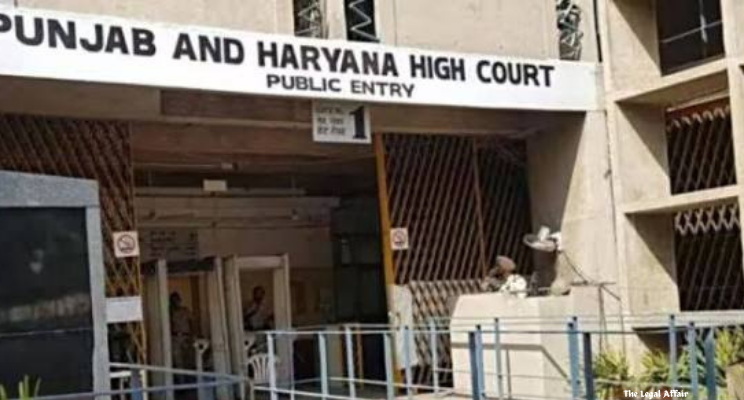
Introduction:
The Punjab and Haryana High Court has refused to grant anticipatory bail to a man accused of attempting to smuggle heroin into Central Jail, Amritsar, allegedly by concealing the contraband inside cold cream boxes intended for his brother, who was lodged in the prison as an undertrial prisoner. The Court held that the circumstances surrounding the recovery, the specific role attributed to the petitioner and the investigating agency’s stated need for custodial interrogation did not justify granting him protection from arrest.
Justice Neerja K. Kalson, while dismissing the anticipatory bail petition, emphasised the serious implications of introducing narcotic substances into prison premises. The Court observed that such activities could undermine institutional security and perpetuate criminality within the very system intended to rehabilitate offenders. It further held that allegations involving the introduction of narcotics into a correctional institution warranted scrutiny proportionate to the circumstances in which the alleged offence occurred.
The petitioner had approached the High Court seeking pre-arrest protection under Section 482 of the Bharatiya Nagarik Suraksha Sanhita, 2023 (BNSS), in connection with an FIR registered on July 29, 2026, at Police Station Islamabad, Amritsar. The FIR invoked Sections 21 and 29 of the Narcotic Drugs and Psychotropic Substances Act, 1985 (NDPS Act), along with Section 42 of the Prisons Act.
According to the prosecution, the petitioner visited Central Jail, Amritsar, to deposit articles for his brother, Rajwinder Singh alias Rinka, who was being held there as an undertrial prisoner. When the jail authorities inspected the articles, they allegedly discovered two packets containing approximately 43.95 grams of heroin and 44.05 grams of tobacco. Both substances were reportedly concealed inside two boxes of Emami cold cream.
The petitioner denied involvement in the alleged offence. His counsel argued that the petitioner had merely visited the prison to meet his brother and that nothing had been recovered from his conscious possession. The defence further contended that the petitioner’s implication rested primarily on the disclosure statement of his co-accused brother and that such a statement, without independent corroboration, could not justify denying anticipatory bail.
The State opposed the petition, maintaining that the investigation had attributed a specific role to the petitioner in bringing and depositing the articles. It submitted that custodial interrogation was necessary to establish the source of the heroin, the manner in which it had been concealed and whether other individuals were involved in the alleged attempt to introduce narcotics into the prison.
The High Court acknowledged that a co-accused’s disclosure statement could not, by itself, be treated as substantive evidence establishing guilt. However, it clarified that the question at the anticipatory bail stage was not whether the prosecution had conclusively proved the petitioner’s involvement. The relevant consideration was whether the circumstances emerging from the investigation justified the exceptional protection sought by him.
The Court also noted that the quantity of heroin allegedly recovered was non-commercial and that the stringent restrictions under Section 37 of the NDPS Act were therefore not attracted on the facts presented. Nevertheless, it held that the absence of those statutory restrictions did not create an automatic entitlement to anticipatory bail.
Considering the nature of the allegations, the circumstances of the recovery inside a correctional institution and the stated investigative requirements, the High Court found no sufficient ground to grant pre-arrest protection and dismissed the petition.
Arguments of the Parties:
Petitioner’s Arguments: False Implication and Absence of Conscious Possession
The petitioner sought anticipatory bail under Section 482 of the BNSS, challenging the criminal proceedings arising from the FIR registered on July 29, 2026. His principal contention was that he had been falsely implicated in a case concerning the alleged recovery of narcotic substances from articles deposited at Central Jail, Amritsar.
Appearing for the petitioner, Advocate Rajiv Kumar Saini submitted that the petitioner’s visit to the prison was connected with his brother, Rajwinder Singh alias Rinka, who was lodged there as an undertrial prisoner. According to the defence, the petitioner had gone to the jail to meet his brother and had deposited articles intended for him. The counsel argued that this ordinary act of visiting a family member could not, without sufficient supporting material, be treated as proof of participation in a narcotics offence.
The defence emphasised that the alleged contraband had been discovered during an inspection conducted by the jail authorities. It was not recovered directly from the petitioner’s person. On this basis, counsel argued that the prosecution had failed to establish that the petitioner had conscious possession of the heroin or knowledge that the articles allegedly contained prohibited substances.
The concept of conscious possession is significant in cases involving narcotic substances because mere physical proximity to an object does not invariably establish the knowledge or control necessary to attribute criminal responsibility. Whether possession can be attributed to a particular person depends on the evidence and the circumstances of the case.
The petitioner relied on this distinction to argue that the recovery from articles intended for his brother could not automatically establish that he knowingly attempted to introduce heroin into the prison. The defence maintained that the prosecution was required to demonstrate a sufficient connection between the petitioner and the alleged contraband rather than infer criminal involvement merely from his role in depositing the articles.
Another important ground raised by the petitioner concerned the disclosure statement allegedly made by his co-accused brother on July 31, 2026. According to the defence, the petitioner’s name emerged through this statement, which attributed to him the act of bringing the articles containing the contraband.
Counsel argued that a statement made by a co-accused could not, by itself, furnish an adequate basis for denying anticipatory bail. The defence maintained that the prosecution had not demonstrated sufficient independent corroboration of the alleged role attributed to the petitioner.
The argument was directed at the evidentiary limitations associated with statements made by accused persons during an investigation. Such statements cannot automatically be treated as conclusive proof of another person’s guilt, and their admissibility and evidentiary value depend on the applicable law and the circumstances in which they were made.
The petitioner therefore contended that the prosecution’s case was insufficient to justify the immediate deprivation of liberty through arrest. Since the alleged recovery was made by the jail authorities during the inspection of the deposited articles, the defence argued that the prosecution could proceed with the available evidence without requiring the petitioner’s custodial interrogation.
The request for anticipatory bail was thus founded on three connected submissions: the absence of recovery from the petitioner’s conscious possession, the alleged dependence on the disclosure statement of a co-accused and the claim that the investigation did not disclose sufficient grounds for denying pre-arrest protection.
The petitioner sought protection from arrest while challenging the allegation that he had knowingly participated in an attempt to smuggle heroin into the prison.
State’s Arguments: Specific Role and Need for Custodial Interrogation
The State, represented by Additional Advocate General Nitesh Sharma, opposed the anticipatory bail petition and urged the High Court to consider the circumstances of the alleged recovery and the requirements of the ongoing investigation.
According to the prosecution, the petitioner had visited Central Jail, Amritsar, and deposited articles intended for his undertrial brother. When jail authorities checked the articles, they allegedly recovered two packets of heroin weighing approximately 43.95 grams and tobacco weighing approximately 44.05 grams. The substances were reportedly concealed inside two Emami cold cream boxes.
The State relied on the disclosure statement made by the co-accused brother on July 31, 2026, which allegedly attributed the act of bringing the articles to the petitioner. It maintained that the petitioner’s role was not being alleged merely because of his family relationship with the undertrial prisoner. Rather, the prosecution had attributed to him a specific act connected with the delivery of the articles in which the contraband was allegedly concealed.
The State also disputed the suggestion that the absence of recovery directly from the petitioner’s person was sufficient to justify anticipatory bail. The prosecution’s case concerned the alleged transportation and delivery of articles containing narcotics into a regulated prison environment. The fact that the substances were discovered during inspection did not, according to the State’s position, eliminate the need to investigate who procured the heroin, how it was concealed and who was intended to receive it.
A central submission concerned the need for custodial interrogation. The State argued that questioning the petitioner while in custody was necessary to determine the source of the contraband, the circumstances in which it was placed inside the cold cream boxes and whether other persons had participated in the alleged activity.
The investigation, according to the prosecution, could not be confined to the immediate recovery of the packets. It also needed to examine the possible chain of procurement and delivery, the manner in which the articles reached the prison and whether the alleged incident was an isolated act or part of a wider arrangement.
The State’s position was that granting anticipatory bail at this stage could restrict the investigating agency’s ability to pursue these questions effectively. It therefore sought dismissal of the petition, emphasising the seriousness of the alleged conduct and the need to establish the complete circumstances surrounding the recovery.
The prosecution also pointed out that the Special Court at Amritsar had already rejected the petitioner’s anticipatory bail application on September 3, 2026. Although the earlier rejection did not prevent the petitioner from approaching the High Court, it formed part of the procedural background against which the fresh request for pre-arrest protection was considered.
The State further emphasised the particular location of the alleged offence. The contraband was reportedly discovered within Central Jail, Amritsar, where the movement of people and delivery of articles are subject to regulated procedures. Introducing narcotics into such a facility, the prosecution argued, raises concerns extending beyond the individual recipient because the substances may affect prison discipline, institutional security and the safety of inmates and staff.
The State consequently submitted that the allegations required a thorough investigation and that the petitioner should not receive anticipatory bail merely because the alleged quantity was below the commercial threshold or because the contraband was recovered from articles rather than directly from his person.
Court’s Judgment:
Seriousness of Introducing Narcotics Into Prison Premises
Justice Neerja K. Kalson began the Court’s assessment by recognising the broader implications of allegations involving the introduction of narcotics into a correctional institution. The Court observed that prison premises are controlled environments in which access, movement and the delivery of articles are regulated for security and administrative reasons.
The Court stated:
“The infiltration of narcotics into prison premises has the potential not only to compromise institutional security but also to perpetuate the very criminality which the correctional system seeks to address. Its ramifications cannot be regarded as confined to the prison walls, for the consequences of such activities inevitably extend to the wider social order.”
The observation highlights the institutional context in which the alleged offence occurred. The Court considered that narcotics entering a prison could undermine the purpose of incarceration and rehabilitation while creating risks to the orderly functioning of the facility.
A prison is not simply another location where contraband may be discovered. The introduction of prohibited substances into a correctional institution can create particular challenges for prison authorities, who must maintain security among inmates, staff and visitors. The alleged concealment of heroin inside everyday personal-care products therefore had to be examined against the safeguards governing the delivery of articles to prisoners.
The Court accordingly observed that an accusation of this nature warranted scrutiny proportionate to the circumstances in which the offence was alleged to have occurred.
However, the seriousness of the setting did not itself establish the petitioner’s guilt. The Court’s task at the anticipatory bail stage was to assess whether the available circumstances justified granting protection from arrest while the investigation continued.
The decision therefore involved balancing the petitioner’s claim to liberty against the prosecution’s stated need to investigate the alleged transportation and concealment of narcotics. The Court considered both the specific role attributed to the petitioner and the fact that the alleged recovery had taken place inside a correctional institution.
Disclosure Statement Not Substantive Evidence of Guilt
One of the principal arguments raised by the petitioner was that his implication rested on the disclosure statement made by his co-accused brother. The defence argued that such a statement, without independent corroboration, could not justify denying anticipatory bail.
The High Court accepted the legal distinction underlying this submission. It acknowledged that a disclosure statement could not, by itself, be treated as substantive evidence conclusively establishing the petitioner’s guilt.
Nevertheless, the Court explained that the legal question at the pre-arrest stage was different from the question that would ultimately arise during the trial.
The Court observed:
“…the question presently arising is not whether the prosecution has conclusively established the petitioner’s complicity, but whether the circumstances disclosed during investigation warrant the extraordinary protection of anticipatory bail.”
This distinction formed an important part of the Court’s reasoning. An application for anticipatory bail does not ordinarily require the court to conduct a full trial or conclusively determine whether the accused committed the alleged offence. Instead, the court examines the relevant circumstances to decide whether protection from arrest is justified.
The evidentiary value of the co-accused’s statement would have to be assessed in accordance with the applicable law and at the appropriate stage. The High Court did not treat the statement as conclusive proof of guilt. Rather, it considered the statement alongside the prosecution’s account of the recovery and the specific role attributed to the petitioner.
The Court rejected the suggestion that the case could be characterised as resting exclusively on an uncorroborated disclosure. According to the prosecution, the petitioner had brought and deposited the articles in which the contraband was allegedly concealed. The jail authorities subsequently discovered the packets while inspecting those articles.
The recovery was therefore an independent event within the prosecution’s account, even though the question of the petitioner’s knowledge and involvement remained disputed.
The Court considered that these circumstances required further investigation before the petitioner’s request for extraordinary pre-arrest protection could be accepted. Its conclusion was not that the disclosure statement had conclusively established criminal liability, but that the overall circumstances could not be reduced to the existence of that statement alone.
Recovery From Deposited Articles and the Question of Knowledge
The petitioner had argued that nothing was recovered from his conscious possession and that the substances were found only when the jail authorities checked the articles intended for his brother.
The High Court considered this argument but found that the fact of inspection and recovery did not, by itself, resolve the question of the petitioner’s knowledge or involvement.
The Court observed that the articles had allegedly been brought to the prison by the petitioner and that the contraband was discovered inside the cold cream boxes during the inspection. Whether the petitioner knew that heroin had been concealed inside those boxes remained a matter for investigation and eventual adjudication in accordance with law.
The distinction is important because the physical recovery of a prohibited substance from an article does not automatically establish the criminal liability of every person who has handled or transported that article. The prosecution must establish the legally relevant connection between the accused and the contraband.
At the same time, the absence of a recovery directly from the accused’s body does not necessarily end the inquiry where the allegation concerns the transportation or delivery of a concealed substance. The surrounding circumstances may be relevant to determining the person’s role, knowledge and involvement.
The Court therefore declined to treat the location of the recovery as sufficient, on its own, to establish that anticipatory bail should be granted.
Instead, it considered the recovery in conjunction with the alleged delivery of the articles, the statement attributing a specific role to the petitioner and the investigative questions that remained unanswered.
The Court did not conduct a final determination of whether the petitioner had conscious knowledge of the heroin. Its conclusion was limited to the bail application and the circumstances relevant to deciding whether pre-arrest protection was warranted.
Why the Prison Setting Required Further Investigation
The High Court attached particular significance to the fact that the alleged recovery took place inside Central Jail, Amritsar.
The Court observed that access to a correctional institution, the movement of persons and the delivery of articles are subject to regulated procedures. In this context, an investigation into the alleged introduction of narcotics could not necessarily end with identifying the articles in which the substances were found.
The investigating agency had sought to determine where the heroin originated, how it was procured, how it was concealed inside the cold cream boxes and whether other individuals had participated in the alleged activity.
These questions concerned the circumstances leading to the recovery and the possible involvement of persons beyond the immediate recipient of the articles. The Court considered that the investigation required examination of the process by which the contraband was allegedly brought into the prison.
The need to investigate the source and intended delivery of the narcotics was particularly relevant to the State’s request for custodial interrogation. According to the prosecution, questioning the petitioner while in custody could assist nvestigators in tracing the chain of procurement and determining wheth