


Introduction:
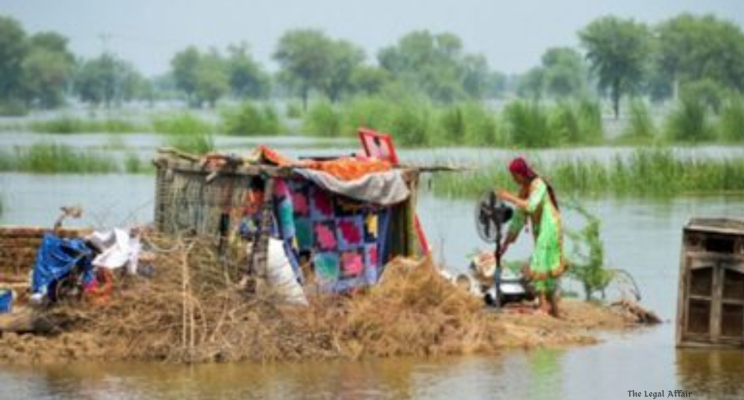
The case titled Shubham v. State of Punjab & Ors. came before the Punjab and Haryana High Court in the aftermath of devastating floods that swept across Punjab and parts of Haryana between 25 August 2025 and 29 August 2025. The petitioner, Shubham, a lawyer by profession, represented through Advocate Angrej Singh, invoked the extraordinary jurisdiction of the Court under Article 226 of the Constitution, filing a Public Interest Litigation (PIL) with prayers that both States be directed to provide minimum standards of relief and rehabilitation to the flood-affected population in terms of Section 12 of the Disaster Management Act, 2005. The plea emphasized the urgent need for ensuring availability of food, potable water, shelter, sanitation, lighting, and medical care for victims. The petitioner also sought a Court-monitored Oversight Committee, special girdawari for assessing crop and property loss, disbursement of compensation, and directions to national authorities such as the Union Government, National Disaster Management Authority (NDMA), Central Water Commission (CWC), Bhakra Beas Management Board (BBMB), and the India Meteorological Department (IMD) for activation of Emergency Action Plans under the Dam Safety Act, 2021. The matter came up before a division bench comprising Chief Justice Sheel Nagu and Justice Yashvir Singh Rathor, who, while acknowledging the gravity of the situation, refused to pass immediate directions, emphasizing that judicial intervention at this stage could potentially divert crucial administrative resources from relief operations to litigation.
Petitioner’s Arguments:
The petitioner’s case rested upon the assertion that the State machinery had failed in its constitutional and statutory duties to protect and rehabilitate flood victims. Drawing strength from Section 12 of the Disaster Management Act, 2005, which mandates minimum standards of relief to affected persons, the petitioner argued that the right to life under Article 21 includes the right to live with dignity, which cannot be compromised even in times of natural disaster. The counsel submitted that on the ground, flood victims were left without access to clean drinking water, food supplies, proper shelters, sanitation facilities, and medical care, thereby endangering their health and survival. The petitioner highlighted multiple news reports pointing out the scale of devastation, including the tragic loss of over 29 lives within a span of just four days, which, according to him, demonstrated systemic lapses in the functioning of disaster management authorities. It was further argued that the State cannot shirk its obligations under the Disaster Management Act by making generalized claims of ongoing relief efforts, when the ground reality showed continued suffering and lack of coordination.
In addition, the petitioner sought constitution of a Court-monitored Oversight Committee to ensure accountability and transparency in relief operations. He argued that such judicial monitoring was necessary to bridge the gap between policy promises and their execution on the ground. The petitioner also prayed for a special girdawari to record actual losses of farmers, traders, livestock owners, and households so that compensation may be disbursed in a time-bound manner. Highlighting the significance of water management, the petitioner sought directions to the Union Government and relevant authorities under the Dam Safety Act, 2021, to activate Emergency Action Plans for the Pong and Bhakra reservoirs, contending that lack of timely disclosures and preventive mechanisms had exacerbated the floods.
The underlying theme of the petitioner’s submissions was that while natural disasters may be acts of God, the scale of human suffering often results from administrative negligence or delayed response. He urged the Court to step in and exercise its jurisdiction to ensure the minimum humanitarian standards that law and justice demand in such times of crisis.
Respondents’ Position and Court’s Oral Observations:
The State and its authorities did not file a formal response at this stage, as the Court itself refrained from issuing notice or calling for affidavits. However, the oral remarks of the Bench reflected the perspective that the government machinery was indeed engaged in active relief measures. The Chief Justice orally observed that while the death of 29 individuals was undoubtedly tragic, such figures by themselves cannot be construed as conclusive proof that the State machinery was failing in its duties. He emphasized that disaster management authorities must already be engaged in their work, and judicial intervention in the form of interim orders could unintentionally impede these operations.
The Bench explained that issuing directions at this stage would compel the States to divert their already-stretched resources and personnel toward preparing replies and attending to litigation instead of focusing entirely on relief efforts. “The moment we pass an order, their energy will be diverted from helping to filing reply…let them help. They will pull out an officer and he will be sitting on the desk and filing reply instead of working for the flood victims,” remarked Chief Justice Nagu. The Court thus expressed reluctance to interfere through immediate orders, pointing instead to the need for the petitioner to provide better particulars in his pleadings to enable a more informed judicial assessment.
The Bench also implicitly recognized the doctrine of separation of powers, underlining that while the judiciary has the role of ensuring legality and protecting fundamental rights, the operational aspects of disaster management fall within the domain of the executive. At this preliminary stage, the Court considered it premature to substitute its oversight for that of specialized statutory bodies such as NDMA, State Disaster Management Authorities, and district-level officers who are tasked with immediate on-ground relief.
Court’s Judgment:
In its brief but significant order, the Punjab and Haryana High Court declined to pass any interim directions on the petitioner’s prayers. Instead, the Bench directed the petitioner to “provide better particulars” with respect to the alleged failures on part of the State and Central agencies. The Court reasoned that without specific data, instances, or affidavits demonstrating clear lapses in relief measures, it would not be proper for the judiciary to assume non-performance on part of the executive authorities. The Court stressed that general references to newspaper reports or tragic casualties, while indicative of the seriousness of the disaster, cannot automatically be taken as evidence of dereliction of duty by the government.
The order underscored that relief and rehabilitation of flood victims is primarily the responsibility of the State, which operates through statutory frameworks under the Disaster Management Act, 2005, and the Dam Safety Act, 2021. The judiciary, the Bench remarked, must be cautious not to interfere in such matters unless a clear case of neglect or violation of statutory or constitutional duties is made out.
By refusing to pass immediate orders, the Court demonstrated judicial restraint, balancing its constitutional role of protecting fundamental rights with the practical realities of disaster management. The Court implicitly recognized that excessive judicial intervention in the middle of a disaster could do more harm than good by tying up officials in court-related procedures at a time when their undivided attention is required on the ground.
At the same time, by directing the petitioner to provide better particulars, the Court left the door open for a more substantive judicial examination if sufficient material is later placed on record. This indicates that while the Bench refrained from intervention at the present stage, it did not dismiss the petition outright, thereby preserving the possibility of future relief once specific evidence is presented.
Broader Implications:
This case raises important questions about the role of the judiciary in times of natural disasters. On the one hand, constitutional courts have, on several occasions, stepped in to protect fundamental rights of disaster victims, especially when there is prima facie evidence of administrative apathy. On the other hand, courts have also recognized the limitations of judicial oversight in areas that require real-time executive decision-making and technical expertise. The Punjab and Haryana High Court’s approach in this case reflects a cautious balancing of these considerations, ensuring that judicial orders do not inadvertently obstruct ongoing relief work.
The refusal to constitute a Court-monitored Oversight Committee at this stage also reflects judicial prudence, as premature creation of such parallel oversight mechanisms may create confusion and jurisdictional overlap with statutory disaster management bodies. By insisting on better particulars, the Court has placed the onus on the petitioner to substantiate claims with verifiable facts rather than rely on general assertions or media reports. This not only ensures that judicial resources are used effectively but also prevents misuse of PIL jurisdiction, which must be exercised with care and responsibility.
Furthermore, the case highlights the significance of proactive disaster preparedness, particularly the importance of Emergency Action Plans under the Dam Safety Act, 2021. While the Court did not issue specific directions, the petitioner’s plea underscores a growing recognition that disasters are not merely natural phenomena but are exacerbated by human mismanagement, infrastructural neglect, and lack of early warning systems. Future litigation may well focus on holding authorities accountable for lapses in preventive measures rather than merely post-disaster relief.
In conclusion, the Punjab and Haryana High Court’s handling of Shubham v. State of Punjab & Ors. reflects judicial restraint rooted in pragmatic considerations. While empathizing with the plight of flood victims, the Court refused to interfere in ongoing relief efforts through interim orders, instead directing the petitioner to substantiate his allegations with greater detail. The case remains open for further consideration, and its eventual trajectory will likely depend on whether the petitioner can provide concrete material demonstrating systemic failures in the State’s disaster response.