


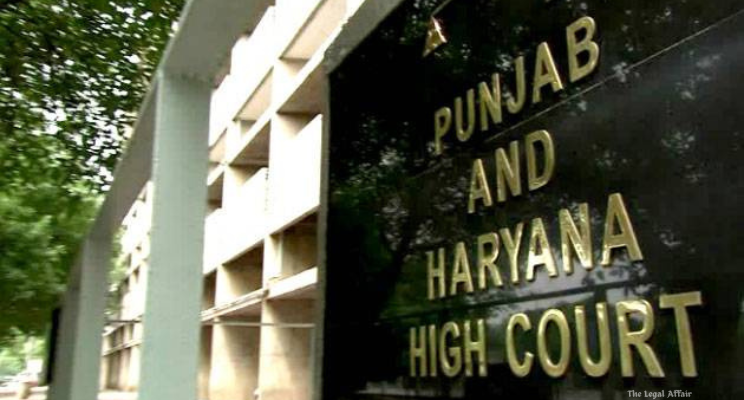
Introduction:
A disturbing incident within the Punjab and Haryana High Court premises has brought the spotlight on internal clashes among advocates and raised urgent questions about safety, professional ethics, and institutional discipline within the judiciary. The matter revolves around allegations by the Punjab and Haryana High Court Bar Association that two advocates, Ms. Ravneet Kaur and Mr. Simranjit Singh Blassi, were involved in violent misconduct, including assaulting bar members, misbehaving with office-bearers, and even brandishing a weapon within the court premises. According to the Bar Association’s Executive Committee, Ms. Ravneet Kaur made frivolous allegations before the Chief Justice’s Court, claiming that her bag and laptop had been confiscated by the Bar Secretary, and sought urgent accommodation for her matter. Despite objections from over 100 bar members present, her request was allowed. Matters escalated when, after exiting the courtroom, Ms. Kaur, along with Advocate Blassi, allegedly created chaos, entered the Executive Office, and physically assaulted members, including the Secretary. The Bar further alleged that Blassi was openly seen with a sword inside the court premises and used it to threaten and attack bar members. The situation culminated in both individuals being taken away by the police. However, the Bar Association has expressed strong dissatisfaction with the police’s failure to register an FIR against the two accused, warning of an indefinite strike unless immediate action is taken.
Arguments of the Bar Association (Petitioner’s Side):
The Punjab and Haryana High Court Bar Association, through its Executive Committee, advanced serious allegations highlighting the gravity of the misconduct. According to the Bar, the incident began inside the courtroom of the Chief Justice, where Ms. Ravneet Kaur levelled unsubstantiated and false accusations against the Bar Secretary, alleging that he had confiscated her personal belongings, including her bag and laptop. The Bar members, numbering nearly 100 present at the time, strongly objected to her plea for urgent accommodation of her matter, arguing that such baseless claims should not have been entertained. Yet, despite collective objections, her request was allowed, which the Bar argued emboldened her disruptive behavior.
The Committee further alleged that after leaving the courtroom, Ms. Kaur created further ruckus and, in concert with Advocate Blassi, stormed the Bar’s Executive Office. There, she is said to have misbehaved with the Secretary and assaulted members of the Bar. The most alarming aspect, according to the Bar, was the presence of Advocate Blassi armed with a sword. The Bar claimed that he openly roamed within the court premises with the weapon and attacked bar members, including the Secretary, thereby creating an atmosphere of fear and intimidation within a sacred legal space. Such behavior, they argued, was not just an assault on individuals but an assault on the institution of the judiciary itself, undermining the decorum, discipline, and safety expected in a court of law.
The Bar Association contended that both advocates were apprehended by the police at the scene, yet despite the serious nature of the allegations — including assault, intimidation, and the unlawful carrying of a weapon within court premises — no FIR had been registered. This, they claimed, amounted to a failure of the law enforcement machinery to act decisively in the face of grave misconduct. The Bar maintained that immediate registration of FIR and prompt arrest of the accused were essential, not only for justice to the aggrieved members but also to preserve the sanctity of the legal profession and to ensure that such acts of intimidation were not repeated. They further threatened to resort to indefinite strike action if the authorities continued to neglect their demands.
Arguments of the Accused Advocates (Defense Side):
On the other hand, while the detailed defense version of Ms. Ravneet Kaur and Mr. Simranjit Singh Blassi has not been formally recorded in public domain, potential lines of argument on their part can be reasonably inferred. Ms. Ravneet Kaur might argue that her initial grievance was genuine, insisting that her bag and laptop were indeed mishandled or confiscated, and that her approach to the Chief Justice’s Court was a legitimate attempt to secure relief. She could contend that the strong objections by nearly 100 bar members reflected not impartial concern but rather a collective bias against her, aimed at silencing her voice. From her perspective, her request being granted by the Court itself demonstrated that her matter had merit sufficient to warrant judicial accommodation.
As for the subsequent allegations of misbehavior and assault, Ms. Kaur might argue that the events have been exaggerated or misrepresented by the Bar Association to malign her reputation. She could assert that any confrontation in the Bar Executive Office arose from heated exchanges and not deliberate violence, thereby downplaying the narrative of assault.
Advocate Blassi, in defending himself, could adopt a similar stance, disputing the allegations of carrying a sword or threatening members. He may argue that the claim of roaming the court premises with a sword strains credibility, given the heightened security protocols of High Court premises. He might suggest that any weapon allegedly seen was either planted, misidentified, or part of a fabricated story aimed at vilifying him. Both advocates could collectively assert that their arrest by police was not based on substantiated evidence of wrongdoing but was the result of undue pressure from an influential Bar Association. They could stress that professional rivalries and internal politics within the Bar may have fueled the narrative against them, converting what may have been a minor altercation into a scandal of disproportionate magnitude.
Ultimately, their defense would likely rest on challenging the credibility of the allegations, the absence of impartial investigation, and the procedural irregularities in police action.
Court’s Judgment and Observations:
At this stage, the matter is still unfolding and no final judicial determination has been recorded. However, the involvement of the Punjab and Haryana High Court and its Bar Association in such a serious dispute signals that the Court itself may soon be called upon to intervene. If the issue reaches the bench, the Court will likely focus on two primary aspects: maintaining law and order within the court premises and safeguarding the dignity of the legal profession. Courts in India have consistently underscored that advocates, as officers of the court, bear heightened responsibility to uphold decorum and discipline. Any instance of physical violence, especially within court precincts, would be treated as professional misconduct of the gravest kind, possibly warranting not just criminal prosecution but also disciplinary action under the Advocates Act.
The High Court is also likely to take a strict view on the allegation of a weapon being brandished within its premises. If verified, such an act would amount to a serious criminal offense and a contemptuous affront to judicial authority. The Court would likely demand an immediate police report, direct registration of FIRs, and monitor the investigation closely to ensure impartiality and efficiency. Additionally, the Court may remind the Bar Association of its own responsibility to maintain professional solidarity without descending into factionalism or intimidation tactics. While the Bar’s concern for members’ safety is legitimate, threats of indefinite strike action could also hamper judicial functioning and deny justice to litigants, something courts are traditionally wary of encouraging.
In balancing these considerations, the Court’s ultimate judgment would likely involve stern directions to law enforcement authorities to register FIRs promptly, conduct an unbiased investigation, and prosecute any advocate found guilty of misconduct. At the same time, the Court may urge the Bar to exercise restraint and resolve internal disputes without compromising the dignity of the legal profession or the functioning of the judiciary.