


Introduction:
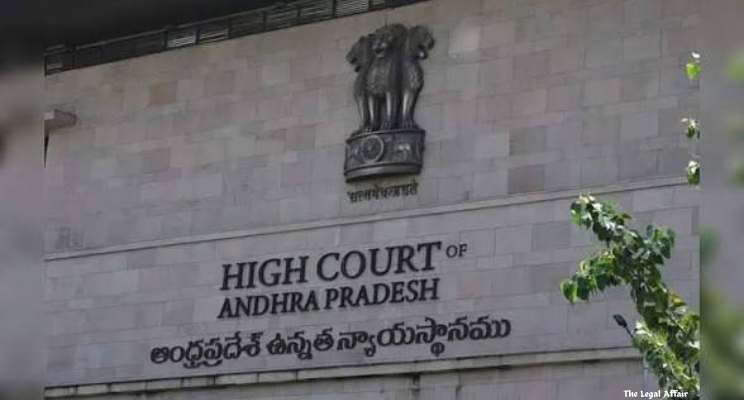
The Andhra Pradesh High Court has held that a prosecution sanction granted under Section 19 of the Prevention of Corruption Act, 1988 cannot be withdrawn merely on the basis of a subsequent change of opinion when the sanction has already been acted upon and criminal proceedings have commenced. The Court clarified that reconsideration of a sanction decision may be permissible where fresh material comes to light or where relevant material was earlier overlooked, but the same material cannot ordinarily be used to unsettle a decision that has already resulted in prosecution.
Justice Balaji Medamalli made the observation while dismissing a writ petition filed by retired Executive Engineer Metta Appana, who challenged the Government’s decision to restore an earlier sanction for his prosecution in a disproportionate assets case. The petition, W.P. No. 25988 of 2024, was directed against G.O.Rt. No. 763 dated October 3, 2024, by which the Government cancelled its subsequent order withdrawing the prosecution sanction and revived the original sanction.
The dispute arose from a long-running corruption case concerning allegations that the petitioner had accumulated assets disproportionate to his known sources of income while serving in the Municipal Administration and Urban Development Department. The Anti-Corruption Bureau had registered the case in 2010 and, after investigation, filed a charge sheet before the Special Court for ACB Cases at Visakhapatnam. The Government had thereafter granted sanction for prosecution under Section 19 of the Prevention of Corruption Act through G.O.Ms. No. 200 dated September 20, 2014.
Section 19 of the Prevention of Corruption Act places an important procedural safeguard around the prosecution of public servants for specified offences. Before a Court can take cognizance of such offences against a public servant, previous sanction from the competent authority is required in the circumstances prescribed by the provision. The object of the sanction requirement is not merely administrative. Courts have repeatedly recognised that the sanctioning authority must independently apply its mind to the material placed before it and determine whether prosecution should proceed.
The Supreme Court has described sanction as a safeguard against frivolous and vexatious prosecution, while also emphasising that it cannot become a mechanism for shielding a public servant against a prosecution otherwise supported by material. In Mansukhlal Vithaldas Chauhan v. State of Gujarat, the Supreme Court explained that the sanctioning authority is required to consider the relevant material and arrive at an objective conclusion before granting sanction. The exercise is therefore expected to reflect application of mind rather than a mechanical approval.
The controversy before the Andhra Pradesh High Court, however, was not about the original grant of sanction alone. It concerned the Government’s subsequent decision to withdraw that sanction after the criminal prosecution had already been initiated and the Special Court had taken cognizance. The central question was whether the Government could revisit and undo the sanction on the same material that had already been considered earlier, particularly when the withdrawal had the effect of disrupting a prosecution that was already pending before the competent criminal Court.
The High Court ultimately held that the Government’s restoration of the original sanction was legally sustainable. It found that the later withdrawal of sanction had been based on the same material and that the issue regarding the calculation of disproportionate assets was essentially a matter for the trial Court to determine on evidence. The Court therefore refused to interfere with the Government’s decision to allow the criminal prosecution to proceed.
Arguments of the Parties:
The petitioner, represented by Advocate V.V. Satish, challenged G.O.Rt. No. 763 dated October 3, 2024, by which the Government cancelled G.O.Ms. No. 63 dated May 16, 2024. The latter order had withdrawn the original prosecution sanction granted in 2014.
The petitioner had served in the Municipal Administration and Urban Development Department after joining government service in 1977 and retired in 2017. The ACB had registered a disproportionate assets case against him in 2010, alleging that he had accumulated assets beyond what could be accounted for through his known sources of income. Following investigation, a charge sheet was filed before the Special Court for ACB Cases at Visakhapatnam, and the criminal proceedings continued on the basis of the sanction granted through G.O.Ms. No. 200 dated September 20, 2014.
The petitioner’s case was that the calculation underlying the disproportionate assets allegation did not properly account for several legitimate sources of income and other relevant financial circumstances. According to him, once these factors were correctly taken into account, the alleged disproportionate assets fell within the permissible 20 per cent variation referred to in the Government’s 2008 memorandum.
The petitioner therefore made several representations to the Government seeking reconsideration of the matter. His contention was essentially that the original sanction had been granted without properly considering all the relevant financial material. After examining the representations and the documents placed before it, the Government accepted this position to the extent that it concluded that certain income and other relevant factors had not been properly considered.
On that basis, the Government issued G.O.Ms. No. 63 dated May 16, 2024, withdrawing the earlier prosecution sanction granted through G.O.Ms. No. 200.
The petitioner subsequently faced a reversal of that decision. The Director General of the ACB addressed the Government and advised reconsideration of the withdrawal. The ACB pointed out that the original sanction had already been acted upon, that a charge sheet had been filed and that the competent criminal Court had already taken cognizance. The prosecution was therefore no longer at a preliminary administrative stage.
The Government thereafter examined the ACB’s communication and the legal position relied upon by the investigating agency. It ultimately issued G.O.Rt. No. 763 dated October 3, 2024, cancelling G.O.Ms. No. 63 and thereby restoring the original sanction for prosecution.
The petitioner argued before the High Court that this second reversal was impermissible because the Government had not received any fresh material. According to him, the Government had first examined the material and concluded that the sanction ought to be withdrawn. It could not subsequently change its mind merely because the ACB requested reconsideration.
The petitioner therefore characterised the impugned Government order as a change of opinion on the same material. His argument was that the principles governing reconsideration of prosecution sanction do not permit an authority to repeatedly revisit the same question simply because a different view is subsequently preferred.
The petitioner also relied upon the broader judicial principle that a sanctioning authority must independently apply its mind and that a decision under Section 19 cannot be treated as an administrative formality capable of being repeatedly altered without a legally sustainable basis.
The State and the ACB, on the other hand, defended the restoration of the sanction. Their case was that the Government’s withdrawal of the original sanction had overlooked the legal consequence of the fact that the sanction had already been acted upon and criminal proceedings had already commenced.
The ACB specifically brought to the Government’s notice that a charge sheet had been filed and that cognizance had been taken by the competent Court. According to the respondents, this circumstance was legally significant because the issue was no longer confined to an administrative assessment of whether a prosecution should initially be sanctioned.
The respondents also contended that the Government had reconsidered the matter after receiving the ACB’s report and the relevant judicial position. Therefore, the impugned order could not simply be treated as an arbitrary change of opinion.
The State’s position was also that the petitioner’s substantive defence concerning the calculation of his assets and income could be raised before the Special Court. Whether the alleged disproportionate assets actually exceeded the permissible threshold was a matter requiring consideration in the criminal proceedings and could not be conclusively determined through a writ proceeding challenging the sanction.
The respondents accordingly maintained that the restoration of the sanction merely enabled the criminal case to proceed in accordance with law and did not itself amount to a finding of guilt against the petitioner.
The legal principles concerning reconsideration of sanction were particularly relevant to the dispute. Courts have consistently held that a sanctioning authority cannot simply review an earlier decision on the same material merely because it has subsequently changed its opinion. In State of Himachal Pradesh v. Nishant Sareen, the Supreme Court considered the question of reconsideration of a sanction decision and recognised that a mere change of opinion on the same material cannot ordinarily justify reopening an earlier decision. At the same time, reconsideration may be possible where fresh material is subsequently collected and placed before the competent authority.
This principle has also been reiterated in subsequent decisions dealing with Section 19 of the Prevention of Corruption Act. The Supreme Court has treated the distinction between a genuine reconsideration based on new material and a mere change of opinion as crucial to the legality of the sanctioning process. (Live Law)
Thus, the dispute before the Andhra Pradesh High Court required the Court to examine not only whether the Government had changed its decision but also the circumstances in which the later decision was taken and the stage which the criminal prosecution had reached.
Court’s Judgment:
The Andhra Pradesh High Court dismissed the writ petition and upheld the Government’s decision to restore the prosecution sanction.
The Court began by examining the nature and purpose of sanction under Section 19 of the Prevention of Corruption Act. It recognised that the provision is intended to protect public servants from unnecessary or vexatious prosecution. At the same time, the statutory safeguard cannot be understood as creating an absolute immunity from prosecution.
The sanctioning authority is required to examine the material placed before it and determine whether there is a sufficient basis for prosecution. Once that process has been completed and sanction has been granted, the subsequent withdrawal of that sanction cannot be treated as an unrestricted administrative power.
The Court particularly emphasised the importance of the distinction between a genuine reconsideration and a mere change of opinion. A sanctioning authority cannot repeatedly revisit the same material and arrive at different conclusions without a legally recognised basis for doing so.
The principle finds support in the Supreme Court’s decision in State of Himachal Pradesh v. Nishant Sareen, where the Court held that a mere change of opinion on the same material cannot constitute a valid basis for reviewing or reconsidering an earlier sanction decision. Reconsideration may, however, become permissible where fresh material has subsequently been collected by the investigating agency and placed before the sanctioning authority. (Live Law)
The same distinction was reflected in the legal position considered by various High Courts. In Jagdish Rathi v. State of Madhya Pradesh, for example, the Madhya Pradesh High Court examined whether a sanctioning authority could revisit an earlier decision in the absence of fresh material and relied upon the Supreme Court’s decisions in Nishant Sareen and Mansukhlal Vithaldas Chauhan. The Court reiterated that a change of opinion on identical material does not by itself justify reconsideration, while fresh material may provide a legally permissible basis for reopening the issue. (Indian Kanoon)
The Andhra Pradesh High Court applied the same underlying principle to the facts before it. It noted that, in the present case, the Government had initially considered the material and granted sanction for prosecution. The sanction was subsequently acted upon, a charge sheet was filed and the criminal Court took cognizance.
The Court found significance in the fact that the Government’s subsequent withdrawal of sanction was not based on the emergence of some genuinely new factual material concerning the alleged disproportionate assets. Instead, the withdrawal followed the petitioner’s representations asserting that relevant income and other circumstances had not been properly taken into account.
The Court observed that if the Government had originally considered the material and granted sanction, the subsequent withdrawal on the basis of the same material could not be sustained merely because a different view was later formed. In other words, the sanctioning process cannot become an endless administrative exercise in which the same record is repeatedly reconsidered and the prosecution is alternately authorised and halted.
However, the Court drew an important distinction between the petitioner’s withdrawal of sanction and the subsequent decision of the Government to cancel that withdrawal.
According to the Court, the Director General of the ACB had brought relevant material and the applicable legal position to the Government’s attention, particularly the fact that the prosecution had already been set in motion. The charge sheet had been filed and cognizance had been taken by the competent Court.
The Court therefore found that the Government was justified in reconsidering the effect of its earlier withdrawal and in restoring the sanction so that the criminal proceedings could continue in accordance with law.
A significant part of the Court’s reasoning concerned the petitioner’s argument that his alleged disproportionate assets were within the permissible 20 per cent variation. The petitioner had relied upon the Government’s 2008 memorandum and contended that, once all legitimate income and other relevant financial factors were taken into consideration, the alleged excess would fall within the permissible limit.
The High Court declined to determine that issue in the writ proceedings.
It held that the question whether the petitioner’s assets were in fact disproportionate to his known sources of income, and whether they exceeded or fell below the alleged permissible threshold, was a matter that could properly be examined by the competent criminal Court during the trial.
This approach was important because the sanction proceeding and the criminal trial perform different functions. The sanctioning authority is not expected to conduct a full criminal trial or conclusively determine the guilt or innocence of the public servant. Its function is to consider the material for the limited statutory purpose of deciding whether prosecution should be permitted.
Once the prosecution is before the competent criminal Court, questions concerning the reliability of evidence, computation of income and expenditure, legitimacy of particular sources of funds, ownership of assets and the actual extent of disproportion are matters that can be tested through evidence and cross-examination.
The Court therefore held that the petitioner would have a full opportunity to raise his contentions concerning the alleged disproportionate assets before the Special Court. The existence of a defence on the merits could not, by itself, justify withdrawal of the prosecution sanction after the criminal case had already commenced.
The Court’s reasoning also preserved the basic purpose of Section 19. The sanction requirement remains an important safeguard against arbitrary prosecution, but it cannot be transformed into a device through which an accused public servant can prevent a criminal Court from adjudicating the allegations once the prosecution has validly commenced.
The Court’s approach is consistent with the broader principle that sanction must reflect application of mind. The Supreme Court in Mansukhlal Vithaldas Chauhan v. State of Gujarat had underscored that sanction is not an empty formality and that the sanctioning authority must consider the relevant material before arriving at its decision. The object is to ensure that a public servant is not subjected to prosecution on the basis of frivolous, vexatious or unsubstantiated allegations. At the same time, once the statutory requirements have been satisfied, the sanction cannot be treated as a substitute for the trial itself.
The Court consequently found no illegality or procedural infirmity in G.O.Rt. No. 763 dated October 3, 2024.
The effect of the judgment is that the original prosecution sanction granted through G.O.Ms. No. 200 dated September 20, 2014 remains operative, while the Government’s subsequent order G.O.Ms. No. 63 dated May 16, 2024 withdrawing that sanction stands cancelled.
Importantly, the High Court did not itself determine whether the petitioner had actually possessed disproportionate assets or whether the allegations made by the ACB would ultimately be proved. The judgment only dealt with the validity of the Government’s decision to restore the prosecution sanction and allow the pending criminal proceedings to continue.
The decision therefore leaves the substantive allegations to be determined by the competent criminal Court in accordance with evidence and law.
The judgment also reinforces an important procedural principle concerning prosecution sanctions under the Prevention of Corruption Act. A sanctioning authority cannot ordinarily move back and forth on the same material merely because its assessment changes. Where fresh material emerges, reconsideration may be justified. Similarly, where relevant material had been omitted from consideration or an irrelevant consideration had affected the original decision, the circumstances may warrant a fresh examination. But an unexplained change of mind on identical material cannot by itself justify repeated intervention in the sanction process.
In the present case, the High Court ultimately considered the restoration of the sanction justified because the Government had been apprised of the fact that the sanction had already been acted upon and that the criminal prosecution had progressed to the stage of cognizance. The petitioner’s objections regarding the calculation of disproportionate assets were left open for adjudication before the trial Court.
Accordingly, finding no illegality or infirmity in the impugned Government order, the Andhra Pradesh High Court dismissed the writ petition filed by Metta Appana.
The decision thus draws a clear line between the administrative decision to sanction prosecution and the judicial determination of guilt. While Section 19 provides an important preliminary safeguard for public servants, once a validly sanctioned prosecution has commenced, the criminal Court remains the appropriate forum to determine disputed factual questions concerning the alleged offence. The sanctioning authority cannot use reconsideration as a mechanism for repeatedly revisiting the same material, while an accused cannot ordinarily use disputed factual questions that are part of his defence at trial as a basis for bringing an already instituted prosecution to an administrative halt.