


Introduction:
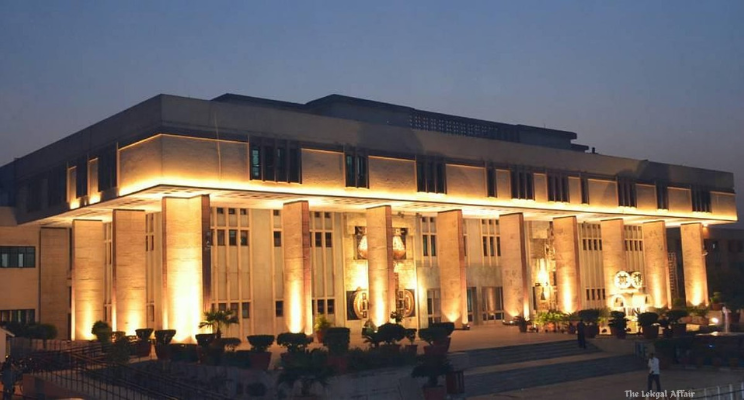
The Delhi High Court, in Mr. Gautam Mondal through his wife Mrs. Ashima Mukherjee Mondal v. Union of India & Others (W.P.(CRL) 3529/2025), examined a writ petition filed by the wife of a detenu seeking quashing of a preventive detention order dated March 20, 2025, passed under the Prevention of Illicit Traffic in Narcotic Drugs and Psychotropic Substances Act, 1988 (PITNDPS Act), where the detention order as well as rejection of representations had been issued by authorities located in Delhi, but the criminal cases forming the basis of detention were registered and pending in the State of West Bengal, and the Court was called upon to decide whether it should exercise its writ jurisdiction merely because part of the cause of action had arisen within its territorial limits; the Bench comprising Justice Vivek Chaudhary and Justice Manoj Jain noted that while jurisdiction under Article 226(2) of the Constitution was technically available, the real question was whether this Court was the most appropriate forum to adjudicate the dispute when all substantive facts, investigation records, and predicate offences were rooted in another State.
Arguments of the Petitioner:
The petitioner contended that since the detention order had been issued in Delhi and representations were also rejected by authorities located in Delhi, a part of the cause of action had undeniably arisen within the territorial jurisdiction of the Delhi High Court, making the writ petition maintainable under Article 226(2), it was argued that preventive detention affects fundamental rights under Articles 21 and 22, and therefore courts should not refuse to examine legality merely on grounds of convenience, the petitioner further submitted that statutory safeguards under the PITNDPS Act, including procedural compliance, subjective satisfaction of detaining authority, and timely consideration of representations, could be effectively scrutinized by the Delhi High Court because the detaining authority was situated there, and hence denying access to this forum would burden the detenu and his family with additional hardship and delay, particularly when liberty was at stake.
Arguments of the Respondents:
The Central Government, represented by the CGSC, raised a preliminary objection on maintainability and appropriateness, arguing that all predicate offences, investigation materials, criminal antecedents, and factual foundations forming the basis of detention were located in West Bengal, the proposal for detention had also originated from authorities in that State, and therefore the most appropriate High Court to examine legality of detention was the Calcutta High Court, it was contended that merely because formal orders were issued from Delhi could not override the fact that the real cause of action and relevant evidence lay elsewhere, reliance was placed on the doctrine of forum conveniens, which empowers a court to decline exercise of jurisdiction when another forum is clearly more suitable for adjudication, the respondents further argued that allowing petitions in Delhi merely because administrative approvals were issued there would lead to forum shopping, overburden courts, and dilute the federal structure of judicial review.
Court’s Judgment:
After examining rival submissions, the Division Bench held that although the Delhi High Court did possess territorial jurisdiction because the detention order and rejection of representation were issued in Delhi, jurisdiction under Article 226(2) is enabling and discretionary, not mandatory, and does not compel a High Court to entertain every petition where even a small or incidental part of the cause of action arises within its limits, the Court emphasized that judicial discretion must be exercised in accordance with the doctrine of forum conveniens, which requires courts to consider whether another forum is more appropriate, convenient, and better equipped to deal with the dispute, applying this doctrine, the Court found that all material records, criminal cases, investigation details, and factual matrix relating to the detenu’s alleged involvement in narcotic offences were situated in West Bengal, and that effective adjudication would require access to those records and contextual understanding of local proceedings, the Court further observed that the petitioner had failed to disclose any compelling reason as to why jurisdiction of the Delhi High Court should be invoked instead of approaching the High Court of the State where the alleged offences occurred and where the detention proposal originated, relying on settled precedents, the Bench reiterated that Article 226(2) cannot be used to encourage forum shopping or strategic litigation choices based solely on administrative location of authorities, and that the appropriate forum doctrine promotes judicial efficiency, fairness to parties, and coherent adjudication, therefore, while acknowledging existence of jurisdiction, the Court consciously declined to exercise its discretionary writ powers and disposed of the petition, granting liberty to the petitioner to approach the appropriate forum, namely the Calcutta High Court, for redressal of grievances against the preventive detention order, thereby reinforcing that territorial jurisdiction alone does not guarantee adjudication if another court is better suited to hear the matter.