


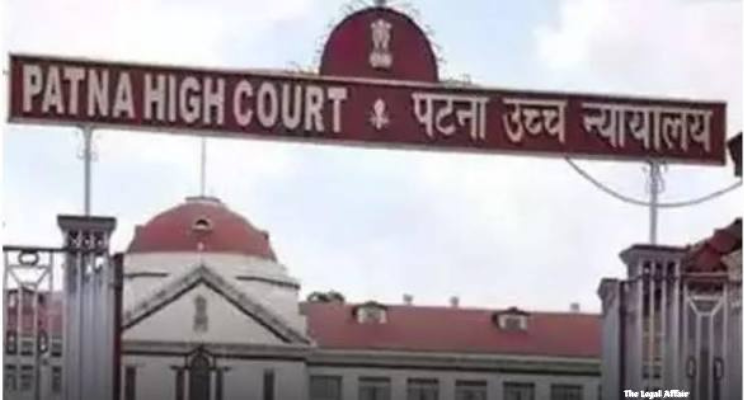
Introduction:
The Patna High Court, in M/s R.S. Construction v. State of Bihar and Others (Civil Writ Jurisdiction Case No. 19706 of 2025), delivered a significant judgment on the legality of debarment of government contractors, holding that a debarment order cannot continue indefinitely after the work for which it was imposed has been completed and accepted by the concerned department. The Division Bench comprising Acting Chief Justice Sudhir Singh and Justice Rajesh Kumar Verma observed that once the contractual obligations have been fulfilled and accepted by the employer, the very foundation of the debarment ceases to exist. In the absence of a fresh order extending the debarment with cogent reasons, its continued operation assumes the character of an impermissible indefinite debarment.
The dispute arose from a government contract awarded to the petitioner for the construction of a 5,000 MT capacity godown at Jamui for the Bihar State Food and Civil Supplies Corporation Limited. Although the petitioner was unable to complete the work within the stipulated contractual period, resulting in a debarment order dated March 29, 2025, the contractor subsequently completed the project to the satisfaction of the respondent authorities. Recognising the successful execution of the work, the Corporation issued a work experience certificate on July 17, 2025, acknowledging that the project had been completed satisfactorily.
Following completion of the project, the petitioner requested the authorities to revoke the debarment. However, no decision was taken on these representations. Subsequently, when a fresh tender was floated for the construction of a prefabricated composite godown at Samastipur, the petitioner participated in the bidding process. Despite fulfilling the eligibility requirements, the petitioner’s technical bid was rejected solely on the basis of the earlier debarment order. The authorities also declined the petitioner’s request for reconsideration and proceeded to award the contract to another bidder.
Aggrieved by the continued reliance upon the earlier debarment despite successful completion of the previous contract, the petitioner approached the Patna High Court under Article 226 of the Constitution. The principal issue before the Court was whether a debarment imposed for delay in execution could continue even after the department had accepted the completed work and issued a work experience certificate, or whether such continuation amounted to an unlawful indefinite debarment.
The judgment is significant because it reiterates the constitutional requirement that blacklisting and debarment must satisfy the principles of fairness, proportionality and reasonableness. It also reinforces that executive powers affecting the right to participate in public tenders cannot be exercised in a manner resulting in perpetual exclusion without lawful justification.
Arguments of the Parties:
The petitioner contended that the debarment order had served its intended purpose once the delayed work was ultimately completed and accepted by the respondent Corporation. It was submitted that after completion of the construction work, the authorities themselves issued a work experience certificate acknowledging the satisfactory execution of the project. This official recognition demonstrated that the contractual obligations had been fully discharged and that the department no longer had any grievance regarding the quality or completion of the work.
The petitioner argued that once the respondents accepted the completed project without objection, the original basis for the debarment ceased to survive. Despite this, the authorities continued to rely upon the earlier debarment while evaluating the petitioner’s eligibility in a subsequent tender process. According to the petitioner, such continued reliance was arbitrary, unreasonable and contrary to settled principles governing debarment and blacklisting.
It was further submitted that the debarment order itself did not specify any fixed duration for which it would remain operative. Nor did it prescribe any objective conditions governing its termination. Consequently, by continuing to operate indefinitely despite subsequent completion of the contract, the order effectively transformed into a permanent disqualification from future government contracts.
The petitioner also emphasised that several representations seeking revocation of the debarment had been submitted after completion of the project. However, the authorities neither revoked the debarment nor passed any fresh reasoned order explaining why it should continue despite the work having been successfully executed. Such inaction, according to the petitioner, violated the constitutional principles of fairness and non-arbitrariness embodied in Article 14 of the Constitution.
The respondents, comprising the State of Bihar and the Bihar State Food and Civil Supplies Corporation Limited, defended the rejection of the petitioner’s technical bid. It was submitted that the debarment had been lawfully imposed because the petitioner had admittedly failed to complete the original work within the contractual time schedule. The delay constituted a breach of the contractual conditions and justified the imposition of debarment.
The respondents argued that subsequent completion of the work did not erase the earlier contractual default. According to them, the petitioner could not claim automatic revocation of the debarment merely because the project was eventually completed. They maintained that the authorities were entitled to rely upon the existing debarment order while evaluating the petitioner’s eligibility for participation in subsequent tenders.
The respondents therefore contended that the rejection of the technical bid was consistent with the subsisting debarment order and that no interference by the High Court was warranted.
Court’s Judgment:
Allowing the writ petition, the Patna High Court held that the continued operation of the debarment after successful completion and acceptance of the contractual work was legally unsustainable. The Court observed that while the initial debarment may have been justified because of delay in execution, its indefinite continuation after fulfilment of the contractual obligations violated settled principles governing debarment and blacklisting.
At the outset, the Division Bench examined the nature and scope of the impugned debarment order dated March 29, 2025. The Court found that although the order prohibited the petitioner from participating in the immediately succeeding tender process, it did not specify any definite period during which the debarment would remain operative. Nor did it identify any objective circumstances under which the debarment would automatically come to an end.
The Court noted that this omission assumed considerable importance because the petitioner subsequently completed the project to the satisfaction of the respondent Corporation. The authorities themselves acknowledged this fact by issuing a work experience certificate on July 17, 2025, certifying the successful execution of the work.
The Bench observed that the issuance of the work experience certificate fundamentally altered the factual basis upon which the debarment had originally been imposed. Once the employer formally accepted the completed work without reservation, the contractual breach arising from delayed execution stood substantially remedied.
The Court held that the respondents could not simultaneously certify satisfactory completion of the project and continue treating the petitioner as disqualified without independently examining whether the debarment had exhausted its purpose. Such inconsistent conduct, according to the Court, lacked fairness and rationality.
To determine the legality of the continued debarment, the High Court relied upon the landmark judgment of the Supreme Court in Kulja Industries Ltd. v. Chief General Manager, Western Telecom Project, BSNL. In that decision, the Supreme Court recognised that every public authority possesses an inherent power to blacklist or debar contractors in appropriate circumstances. However, the exercise of such power must satisfy the constitutional requirements of fairness, reasonableness and proportionality.
The High Court observed that Kulja Industries makes it clear that debarment cannot be imposed arbitrarily or continue indefinitely without adequate justification. Since blacklisting has serious civil consequences by preventing a contractor from participating in government contracts, it must always remain proportionate to the misconduct alleged.
Applying these principles, the Division Bench held that the respondents were justified in initially debarring the petitioner because the contractual work had not been completed within the stipulated time. Timely completion of public infrastructure projects remains an important contractual obligation, and authorities are entitled to take disciplinary measures where contractors default.
However, the Court emphasised that the justification for such disciplinary action cannot continue forever irrespective of subsequent developments. Once the petitioner completed the work and the department itself accepted it by issuing the work experience certificate, the very foundation supporting the debarment ceased to exist.
The Bench observed that if the respondents intended to continue the debarment beyond that stage, they were required to pass a fresh reasoned order explaining why continued exclusion remained necessary despite satisfactory completion of the contract. No such order had been passed in the present case.
The Court found that the authorities merely continued relying upon the earlier debarment order while rejecting the petitioner’s technical bid without examining whether its purpose had already been achieved. Such mechanical reliance, the Court held, effectively converted the temporary debarment into an indefinite one.
The High Court categorically held that indefinite debarment is impermissible in law. The absence of any specified duration or fresh order extending the debarment meant that the petitioner remained excluded from future tenders without any legally sustainable basis.
The Bench further observed that administrative decisions affecting valuable commercial rights must always satisfy the constitutional mandate of non-arbitrariness under Article 14. Government contracts cannot be administered in a manner that permanently excludes contractors without a clear statutory or contractual basis.
The Court reiterated that while public authorities undoubtedly possess the power to protect public interest by debarring defaulting contractors, that power must always be exercised proportionately. Once the object sought to be achieved by the debarment has been fulfilled, its continued operation becomes arbitrary unless supported by fresh reasons.
On the facts of the present case, the Court concluded that the issuance of the work experience certificate clearly demonstrated that the respondents themselves were satisfied with the completed project. Consequently, the earlier debarment could not continue to operate merely because it had never been formally withdrawn.
Holding that the respondents had acted illegally in rejecting the petitioner’s technical bid solely on the basis of the earlier debarment, the High Court declared that the debarment order dated March 29, 2025, could not continue after completion and acceptance of the contractual work.
The judgment reinforces the principle that executive powers relating to debarment are corrective rather than punitive. Such powers exist to protect the integrity of public procurement and ensure contractual discipline, not to impose perpetual disabilities upon contractors who have subsequently fulfilled their obligations. By insisting that continued debarment must be supported by a fresh reasoned decision, the Court has strengthened the constitutional safeguards against arbitrary administrative action.
The decision is likely to serve as an important precedent in public procurement law by reaffirming that blacklisting and debarment must always remain proportionate, time-bound and consistent with the principles of natural justice. It also underscores that once a contracting authority accepts completed work and certifies satisfactory performance, it cannot indefinitely rely upon an earlier default to exclude the contractor from future public contracts without lawful justification.