


Introduction:
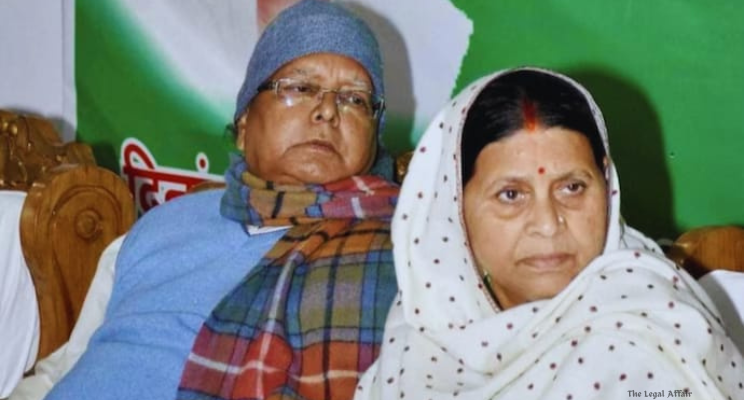
The Patna High Court has intervened to stay further proceedings against former Chief Ministers of Bihar, Lalu Prasad Yadav and Rabri Devi. The charges, arising from the 2010 Assembly Elections, accused the duo of violating the Model Code of Conduct by taking security guards inside a polling booth. The petitioners filed a quashing application challenging the order taking cognizance of the offense. Senior Advocate YV Giri argued that there was no prima facie evidence of the alleged offenses under Section 188 of the IPC and Section 131 of the Representation of People Act, 1951. The court’s decision to stay further proceedings raises questions about the legal interpretation of the Model Code of Conduct violations during elections.
Arguments of Both Sides:
Senior Advocate YV Giri, representing the petitioners, emphasized the lack of evidence supporting the charges. He contended that the FIR failed to specify which order promulgated by a public servant was violated under Section 188 of the IPC. Giri argued that even if there was a breach, the proper course would be a complaint rather than an FIR. Regarding Section 131 of the Representation of People Act, he asserted that none of its clauses were violated based on the nature of the allegations. The senior counsel also raised concerns about the rejection of their application under Section 258 of the CrPC to stop the trial, claiming it was beyond the limitation period.
The Additional Public Prosecutor, Mr. Chandra Bhushan Prasad, representing the State, requested a four-week extension to submit the counter-affidavit. The State’s response will likely address the legal validity of the charges and the rejection of the application to stop the trial.
Court’s Judgment:
Justice Satyavrat Verma of the Patna High Court stayed further proceedings against Lalu Prasad Yadav and Rabri Devi, directing that proceedings related to the case remain stayed until the next hearing scheduled for March 11, 2024. The court did not provide detailed reasons for the stay, but it appears to be influenced by the arguments presented by the petitioners, particularly the absence of clear evidence supporting the charges. The decision indicates a cautious approach, awaiting a comprehensive examination of the legal aspects surrounding the alleged Model Code of Conduct violations during the 2010 Assembly Elections.