


Introduction:
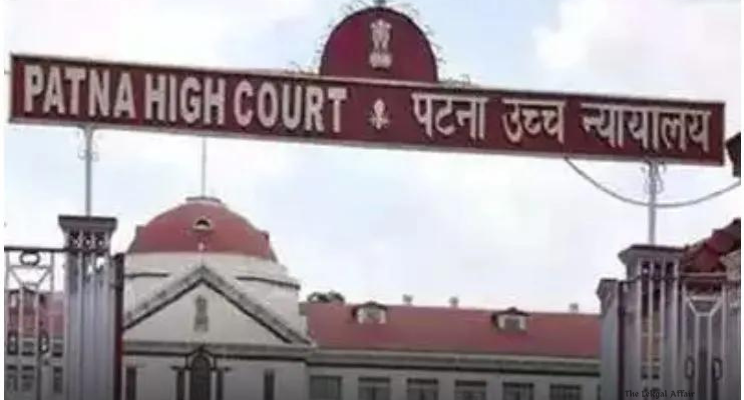
The Patna High Court, in Prashant Rajak v. Union of India and Others (Civil Writ Jurisdiction Case No. 2736 of 2026), addressed a recurring administrative issue that has increasingly burdened constitutional courts—petitions seeking correction of personal details in Aadhaar records despite applicants fulfilling all statutory requirements. The case was heard by a Single Judge Bench of Justice Ajit Kumar, who expressed serious concern over the growing trend of individuals being compelled to approach the judiciary for routine corrections that ought to be handled efficiently by the concerned authorities.
The petitioner, Prashant Rajak, approached the High Court seeking a direction for correction of his date of birth in his Aadhaar card from 24.07.2008 to 24.07.2007. He contended that the correct date of birth was duly reflected in his matriculation certificate, which is a valid and recognized proof under the applicable statutory framework. Despite submitting an application to the relevant authorities along with the necessary documents, the correction was not carried out, and no satisfactory explanation was provided for the delay or inaction.
The matter thus brought into focus the functioning of the Unique Identification Authority of India (UIDAI) and its regional offices, particularly in dealing with requests for correction of personal details in Aadhaar records. The Court took this opportunity to examine not only the grievance of the petitioner but also the systemic inefficiencies that lead to unnecessary litigation, thereby placing an avoidable burden on the judiciary.
Arguments on Behalf of the Petitioner:
Counsel for the petitioner, Mr. Dhananjay Kumar, submitted that the petitioner had complied with all the statutory requirements for correction of his date of birth in the Aadhaar database. It was argued that the matriculation certificate, being a government-recognized document, clearly reflected the correct date of birth as 24.07.2007, and therefore, there was no justification for the authorities to delay or deny the correction.
The petitioner contended that he had duly submitted an application before the competent authority along with the necessary supporting documents. However, despite the passage of a reasonable period, the application had not been processed, nor had any communication been made to him regarding the status of his request. This inaction, it was argued, amounted to arbitrariness and violated the principles of natural justice.
It was further submitted that the petitioner was left with no alternative remedy but to approach the High Court under Article 226 of the Constitution. The failure of the administrative machinery to discharge its duties effectively had compelled him to seek judicial intervention for a matter that was essentially procedural and did not require any adjudication on merits.
The petitioner emphasized that such delays in correcting basic personal information can have far-reaching consequences, affecting access to government schemes, educational opportunities, and other essential services where Aadhaar is used as a primary identity document. The denial of timely correction, therefore, not only caused inconvenience but also infringed upon his fundamental rights.
Arguments on Behalf of the Respondents:
On behalf of the Union of India, counsel Mr. Saradha Suman submitted that the grievance of the petitioner could be addressed administratively without the need for judicial intervention. It was stated that the petitioner may approach the Director of the UIDAI Regional Office at Patna with a fresh representation, along with all relevant documents, including his matriculation certificate.
The respondents assured the Court that upon such representation being made, the authorities would verify the documents in accordance with the prescribed procedure and carry out the necessary correction in the Aadhaar database. It was emphasized that the UIDAI has established mechanisms for updating and correcting demographic details, and the petitioner’s case would be processed in line with these procedures.
The counsel did not dispute the petitioner’s entitlement to seek correction but suggested that the issue arose due to procedural or administrative delays rather than any deliberate refusal. It was implied that the system, though functional, may occasionally experience lapses, which could be rectified through appropriate directions.
The respondents also sought to reassure the Court that necessary steps would be taken to streamline the process and ensure that similar grievances are addressed more efficiently in the future.
Judgment of the Court:
Justice Ajit Kumar, after considering the submissions of both parties, expressed strong dissatisfaction with the state of affairs that compelled citizens to approach the High Court for routine administrative corrections. The Court observed that it was witnessing an increasing number of such petitions, where applicants had already fulfilled all statutory requirements but were still forced to seek judicial intervention due to inaction on the part of the authorities.
The Court described the situation as a “very sorry state of affairs,” highlighting the disconnect between the existence of statutory mechanisms and their actual implementation. It emphasized that when valid documents are produced, the concerned authorities are duty-bound to carry out the necessary corrections without delay.
The Court observed that the burden on the judiciary is being unnecessarily increased due to the failure of administrative bodies to perform their functions effectively. It stressed that courts should not be converted into forums for resolving routine procedural issues that can and should be addressed at the administrative level.
In a significant direction, the Court expressed its expectation that the Director of the UIDAI Regional Office, Patna, would take cognizance of the issue and issue appropriate instructions to the officials responsible for handling such matters. The aim, the Court noted, should be to ensure that applications for correction of Aadhaar details are processed promptly and efficiently, thereby reducing the need for litigation.
The Court further held that where statutory documents are already available and there is no dispute regarding their authenticity, the authorities must proceed to make the necessary corrections without insisting on unnecessary formalities or causing undue delay.
In the specific case of the petitioner, the Court directed him to approach the Director, UIDAI Regional Office, Patna, within one week with a representation and the relevant documents. It further observed that upon such approach, the authorities are expected to verify the documents and carry out the correction in accordance with law.
The Court refrained from issuing a direct mandamus for correction, opting instead to provide an opportunity for the administrative mechanism to function as intended. However, the strong observations made by the Court serve as a clear warning to the authorities to address such issues proactively and avoid forcing citizens to seek judicial remedies for matters that fall within their administrative domain.