


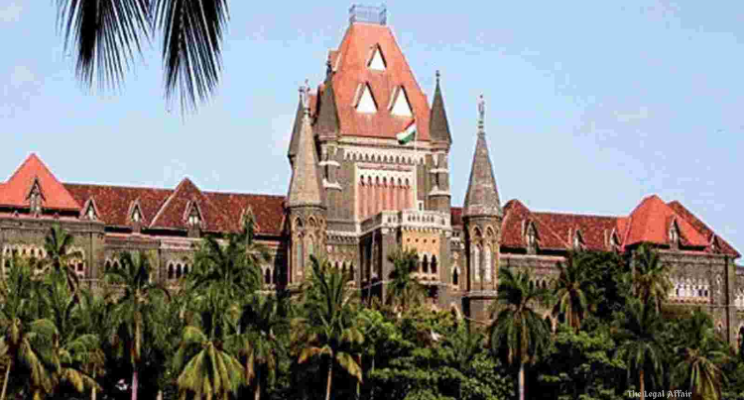
Introduction:
In Anand Khosla v. Punam Kumari Singh, Commercial Arbitration Petition No. 228 of 2024, reported as 2026 LLBiz HC (BOM) 10, the Bombay High Court, through a Single Judge Bench of Justice Sandeep V. Marne, examined the limits of arbitral jurisdiction in disputes touching upon intellectual property rights and held that questions relating to ownership of a software product and its associated trademark cannot be conclusively determined by a private arbitral tribunal because such questions involve rights in rem that affect the public at large and therefore fall outside the scope of private arbitration. the case arose from a business relationship that began in 2012 when the parties came together to run a software venture through Universal Test Solutions LLP, in which the respondent, along with her husband, had earlier developed a software product titled “Test Magic an Innovative Test Solution” and had also secured a registered trademark for the mark “Test Magic” in 2010, prior to the formation of the LLP. Subsequently, the petitioner invested funds into the venture and the business was carried on through the LLP structure, but serious differences emerged between the partners, leading to the expulsion of the respondent from the LLP in April 2016, which in turn triggered arbitral proceedings where the respondent challenged her expulsion and raised various claims against the petitioner and the LLP. by an award dated July 2019, the arbitral tribunal upheld the expulsion and rejected all claims of the respondent, while also rejecting the counterclaims of the petitioner and the LLP, including their demand that the arbitrator declare that the software and trademark belonged to the LLP and restrain the respondent and her husband from using the same. The respondent did not challenge the arbitral award, but the petitioner and the LLP approached the High Court under the Arbitration and Conciliation Act, limited to challenging the rejection of their counterclaims, thereby placing before the Court the specific issue of whether an arbitrator could decide questions of intellectual property ownership in such a commercial dispute.
Arguments:
On behalf of the petitioner and the LLP, it was argued that the arbitral tribunal had committed a serious jurisdictional and legal error in refusing to decide the ownership of the “Test Magic” software and trademark, particularly after having recorded findings that the respondent and her husband had siphoned off funds of the LLP and had acted against its interests by poaching clients and diverting business. It was submitted that once the tribunal had accepted that the respondent’s conduct was detrimental to the LLP and that she stood validly expelled, it ought to have gone further and protected the business interests of the LLP by declaring that the software and related intellectual property formed part of the assets of the LLP. the petitioner’s side contended that their grievance was not about infringement of copyright or trademark in the classical sense, but about wrongful and unauthorised use of a business asset that had, by conduct and investment, become the property of the LLP, and therefore the dispute was essentially contractual and commercial in nature, squarely falling within the scope of arbitration. They further argued that the reliefs sought were limited to damages for misuse and an injunction restraining the respondent and her husband from using or exploiting the software, and that such reliefs could well be granted by an arbitral tribunal without trenching upon exclusive statutory regimes of intellectual property law. It was also urged that relegating the parties to a separate civil suit would lead to multiplicity of proceedings and defeat the very objective of arbitration, which is speedy and efficient resolution of commercial disputes. The petitioner thus maintained that the arbitrator’s refusal to decide the issue amounted to abdication of jurisdiction and justified judicial interference.
On the other hand, the respondent strongly defended the arbitral award and the approach adopted by the tribunal, submitting that the arbitrator had consciously and correctly refrained from deciding questions that would directly affect intellectual property rights, which are not merely inter partes but operate against the whole world. It was argued that ownership of a trademark and copyright in software cannot be determined solely on the basis of partnership or LLP arrangements, especially when statutory registrations and prior claims are involved, and that such determinations necessarily require adjudication by courts vested with jurisdiction under intellectual property statutes. The respondent’s counsel emphasized that once the arbitrator entered into the question of who owned the software and trademark, the decision would bind not only the parties but also potentially affect third parties and the public, which is the hallmark of rights in rem and therefore outside the domain of arbitration. It was further submitted that the arbitrator had already upheld the expulsion and had made adverse findings against the respondent on issues of conduct, and therefore there was no miscarriage of justice in refusing additional reliefs that were not supported by concrete proof of loss or legally determinable ownership. On the claim of damages, it was pointed out that the petitioner had relied only on projected figures of revenue without producing cogent evidence of actual loss of profits, and that under settled law, loss of revenue cannot automatically be equated with loss of profits. Accordingly, it was contended that the arbitral award reflected a reasonable and legally sustainable view and did not warrant interference under the limited scope of judicial review of arbitral awards.
Judgment:
The Bombay High Court, after carefully considering the rival submissions, upheld the arbitral award and dismissed the petition, affirming the principle that disputes involving determination of intellectual property ownership and statutory rights in rem cannot be conclusively resolved through private arbitration. Justice Sandeep V. Marne observed that deciding who owns the “Test Magic” software would inevitably require adjudication on trademark and copyright rights, which are rights enforceable against the world at large and therefore cannot be treated as mere contractual disputes between two private parties. The Court categorically held that the rights arising out of ownership of the mark “Test Magic” would be rights in rem incapable of being resolved through private arbitration, and that an arbitral tribunal, which derives its authority solely from the consent of parties, cannot pronounce upon such public law type rights. The Court noted that while the arbitrator had upheld the expulsion of the respondent and had recorded findings of siphoning of funds and diversion of clients, those findings had already attained finality since the respondent did not challenge the award, and therefore the petitioner could not complain that the tribunal had failed to protect the interests of the LLP on those aspects. On the claim for damages towards loss of revenue and profits, the Court agreed with the arbitrator that mere projections of income or business potential are not sufficient to establish actual loss of profits, and that there must be reliable and concrete evidence to demonstrate that the alleged wrongful acts directly resulted in quantifiable financial loss. The Court reiterated the settled principle that loss of revenue does not automatically translate into loss of profits, and that damages cannot be awarded on speculative or hypothetical calculations. Most importantly, on the issue of software and trademark ownership, the Court clarified that while the arbitrator was correct in declining to decide that question, this did not leave the petitioner remediless, as they were at liberty to approach a competent civil court to seek appropriate reliefs such as injunction against use, sale, or licensing of the software, if they could establish their rights under intellectual property law. The Court thus struck a balance by preserving the domain of civil courts and statutory authorities over intellectual property disputes, while respecting the limited and consensual nature of arbitral jurisdiction. finding no perversity, patent illegality, or jurisdictional error in the arbitral award, the High Court refused to interfere and dismissed the petition in its entirety.