


INTRODUCTION:
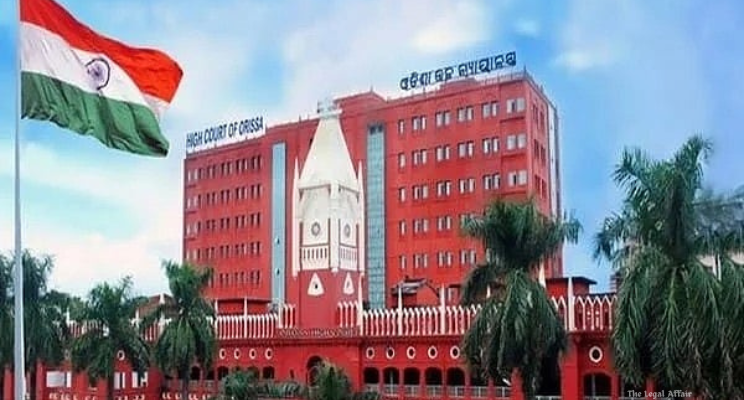
In Tata Steel Ltd., Mumbai vs State of Odisha & Ors., W.P.(C) No. 31035 of 2025, the Orissa High Court, through a bench comprising Chief Justice Harish Tandon and Justice Murahari Sri Raman, delivered an important interim order granting protection to Tata Steel from coercive measures linked to a massive ₹2,410 crore demand issued by the State mining authorities. The dispute centers on the Sukinda Chromite Block, one of India’s most significant chromite reserves, where Tata Steel operates under a Mine Development and Production Agreement (MDPA). On October 3, 2024, the Deputy Director of Mines, Jajpur, issued a demand alleging shortfall in chrome ore dispatch for the fifth year of the MDPA, covering the period from July 23, 2024 to July 22, 2025. The demand notice invoked alleged breaches of the Minerals (Other than Atomic & Hydrocarbon Energy Minerals) Concession Rules, 2016, and stated that the alleged shortfall also warranted appropriation of the performance security. Fearing severe coercive consequences—including the potential cancellation or rejection of its trading licence—Tata Steel approached the High Court seeking immediate protection and a stay on the enforcement of the demand notice. Senior Advocate Dr. Abhishek Manu Singhvi, leading the petitioner’s legal team, argued that the case was not an isolated one and that several identical writ petitions were already pending before the same court. He emphasized that Tata Steel was entitled to receive the same interim safeguards as similarly placed petitioners. The Court, finding prima facie merit in this contention, restrained the authorities from taking coercive action until the next date of hearing, December 3. The case is now tagged with a batch of similar matters, reflecting broader concerns regarding the statutory interpretation of mining obligations and the State’s regulatory approach to large-scale mineral extraction.
ARGUMENTS ON BEHALF OF THE PETITIONERS (TATA STEEL LTD.):
The petitioners advanced their contentions in a detailed and cohesive narrative, asserting that the ₹2,410 crore demand raised by the Deputy Director of Mines was arbitrary, disproportionate, and legally unsustainable, arising from an erroneous interpretation of the Mine Development and Production Agreement and the Minerals (Other than Atomic & Hydrocarbon Energy Minerals) Concession Rules, 2016. They argued that the concept of “shortfall in dispatch” is neither conclusively established nor correctly computed, and the authorities ignored essential contractual and statutory safeguards that govern production targets, geological variations, market fluctuations, and operational realities of mining, especially for a mineral as sensitive and unpredictable in yield as chromite. Represented by Senior Advocate Dr. Abhishek Manu Singhvi, the petitioners submitted that the impugned demand did not follow the principles of natural justice, as no prior notice, explanatory hearing, or opportunity to dispute the alleged shortfall was granted before issuing such a colossal financial liability. They stated that the authorities attempted to appropriate the performance security without legal foundation, which amounted to a coercive first step intended to force compliance rather than promote fair adjudication. Dr. Singhvi argued that the issues raised by Tata Steel were identical to those raised in several other pending writ petitions where the Court had already granted interim protection, and therefore, treating Tata Steel differently would violate Article 14 of the Constitution, which requires uniform treatment of similarly situated parties. He emphasized that the threat of coercive action—especially the possible rejection or suspension of the company’s trading licence—could severely disrupt ongoing operations, supply chains, and export obligations, leading to significant financial and reputational harm. The petitioners further argued that the authorities had misconceived the MDPA, which distinguishes between production obligations and dispatch obligations, and contended that natural variations in ore grade and extraction feasibility cannot automatically lead to punitive recovery. They reiterated that the demand was pre-mature for the fifth year of the MDPA, as the period in question (July 2024–July 2025) had not even fully elapsed, making it impossible to conclude that a shortfall had occurred in the first place. Overall, Tata Steel argued that the impugned demand was arbitrary, unjust, violative of due process, and reflective of a mechanical regulatory approach, necessitating immediate judicial intervention.
ARGUMENTS ON BEHALF OF THE RESPONDENTS (STATE OF ODISHA & UNION OF INDIA):
The respondents presented their counter-contentions in a unified and continuous narrative, asserting that the demand notice issued to Tata Steel was fully in accordance with statutory mining regulations and derived directly from obligations stipulated in the Mine Development and Production Agreement. Represented by Additional Government Advocate Debasis Tripathy and Deputy Solicitor General of India P.K. Parhi, the State contended that Tata Steel had failed to meet its mandatory dispatch obligations for the fifth year under the MDPA, and such failures have broader implications for mineral conservation, revenue collection, and equitable utilization of natural resources. The respondents argued that the Minerals (Other than Atomic & Hydrocarbon Energy Minerals) Concession Rules, 2016 empower the authorities to monitor dispatch levels and impose financial penalties where shortfalls are observed. They maintained that the demand notice was a routine and legally mandated step, not a coercive or punitive action. The State further claimed that the dispatch data clearly indicated a shortfall, and asserted that the petitioners were fully aware of these deficiencies due to regular reporting requirements and could not claim surprise or lack of opportunity. The respondents argued that performance security appropriation is a statutory consequence of contractual non-compliance and not an extraordinary measure. They insisted that the State acted uniformly and consistently in issuing similar notices to other mining entities and that granting relief to Tata Steel would undermine regulatory enforcement. The respondents also emphasized that interim relief must not be granted lightly in matters involving significant financial implications for the public exchequer, mineral conservation, and compliance with national resource policy. Finally, they submitted that the filing of similar petitions by other companies does not automatically entitle Tata Steel to interim protection, as each case must be assessed on its specific facts, statutory obligations, and compliance history.
COURT’S JUDGMENT:
The Orissa High Court, after hearing both sides and examining the broader context, issued a single continuous and firmly reasoned judgment paragraph granting interim protection to Tata Steel. The bench held that at the present stage, there appeared to be no justification for placing the petitioners on a different footing from other mining companies who were facing identical issues and had already been granted interim relief. The Court emphasized that judicial consistency is a fundamental component of fairness and that similarly situated parties must receive similar treatment unless substantial distinguishing factors exist, which the respondents failed to demonstrate. The Court observed that the magnitude of the demand—₹2,410 crore—coupled with the threat of coercive consequences such as the rejection of the trading licence, justified the issuance of interim protection, as such actions could cause irreparable harm to the petitioners before the adjudication of the matter on merits. The bench clarified that granting interim protection does not amount to accepting the petitioners’ case but is essential to prevent undue hardship during pendency of the proceedings. The Court also noted that the impugned period of alleged shortfall had not fully expired, raising legitimate questions regarding the basis on which the alleged deficiency was concluded. Accordingly, the Court restrained the authorities from taking any coercive steps against Tata Steel until the next date of hearing, December 3, and directed that the present petition be tagged with the batch of similar cases already listed on that date. This interim measure ensures that the issues raised will be heard comprehensively as part of a coordinated judicial assessment of the recurring legal questions surrounding dispatch obligations, performance security, and statutory interpretation under the mining regulatory framework.