


Introduction:
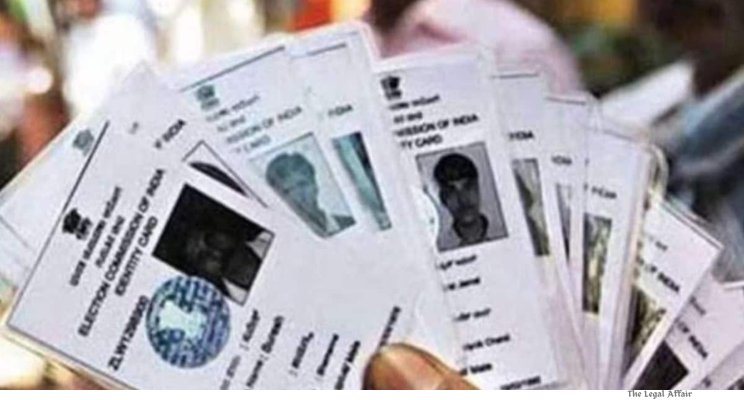
In a significant ruling on July 24, 2024, the Orissa High Court clarified the evidentiary value of voter ID cards in determining an individual’s date of birth, particularly in insurance disputes. The case involved the Life Insurance Corporation of India (LIC) and a petitioner whose insurance claim was repudiated due to discrepancies between the date of birth recorded on the voter ID card and other documents. The single bench, presided over by Dr. Justice Sanjeeb Kumar Panigrahi, emphasized that while voter ID cards are recognized as public documents under Section 35 of the Indian Evidence Act, they do not provide conclusive proof of an individual’s actual date of birth. This decision sheds light on the complex interplay between various identification documents and their reliability in legal matters.
Factual Background:
The dispute arose after the petitioner’s father, a policyholder, passed away in 2012. The deceased had purchased three life insurance policies from LIC, providing his date of birth as March 18, 1952, on the applications. Upon his death, the petitioner, as the nominee, sought the insured amounts from LIC. Although two claims were honored, the third was repudiated by LIC on the grounds that the date of birth mentioned in the insurance policy did not match the date on the voter ID card.
Faced with this rejection, the petitioner approached the Insurance Ombudsman seeking resolution. However, the Ombudsman upheld LIC’s decision, citing suppression of the policyholder’s age. Dissatisfied with this outcome, the petitioner filed a writ petition in the Orissa High Court challenging both the Ombudsman’s decision and LIC’s repudiation of the claim.
Arguments:
Petitioner’s Argument:
The petitioner argued that LIC wrongfully repudiated the insurance claim based on an incorrect assessment of the policyholder’s date of birth. They contended that the voter ID card was not the most reliable document for determining the policyholder’s age and that LIC’s reliance on it over more authoritative records, such as the school certificate and previous policy documents, was unjustified.
The petitioner also argued that the Insurance Ombudsman failed to consider the entire context, particularly that the date of birth recorded in the other two policies issued by LIC matched the school certificate, a more reliable and commonly accepted proof of date of birth. The petitioner asserted that the discrepancy in the voter ID card should not have been the sole basis for repudiating the insurance claim when other credible documents were available.
Respondent’s Argument (LIC):
The Life Insurance Corporation of India (LIC), represented by their counsel, defended the repudiation of the claim, arguing that the policyholder had suppressed his actual age when purchasing the policy. LIC emphasized that the date of birth mentioned in the voter ID card, a public document under Section 35 of the Indian Evidence Act, conflicted with the date provided in the insurance application. LIC contended that this discrepancy amounted to a material misrepresentation, justifying the rejection of the claim.
The respondent argued that insurance policies are contracts of utmost good faith, where accurate disclosure of personal information, including date of birth, is crucial. LIC claimed that the inconsistency between the voter ID card and the insurance policy documents indicated an attempt by the policyholder to conceal his real age, which directly impacted the risk assessment and premium calculation.
LIC further asserted that the Insurance Ombudsman had correctly upheld the repudiation, arguing that the voter ID card was a valid and legally recognized document. They maintained that the petitioner’s reliance on school certificates or prior policy documents lacked merit since the voter ID card was also a legally recognized document.
Court’s Judgement:
After meticulously examining the case, the Orissa High Court delivered a nuanced judgment underscoring the limitations of voter ID cards as proof of date of birth in insurance disputes. The Court acknowledged that voter ID cards and electoral rolls are public documents under Section 35 of the Indian Evidence Act and carry a certain degree of evidentiary value. However, the Court clarified that these documents are not conclusive proof of an individual’s actual date of birth, especially when discrepancies exist with other more authoritative records.
Dr. Justice Sanjeeb Kumar Panigrahi, referring to precedents set by the Supreme Court and other High Courts, noted that the date of birth recorded in voter ID cards is typically based on the information provided by the individual at the time of registration, often without stringent verification, leading to potential inaccuracies. The Court cited Susil Kumar v. Rakesh Kumar, where the Supreme Court held that the date of birth in voter ID cards and electoral rolls could not be considered definitive proof of age, as these entries primarily establish voter eligibility and are not intended for legal or contractual purposes.
Furthermore, the Court referred to Babloo Pasi v. State of Jharkhand, where the Supreme Court emphasized that merely presenting a voter ID or electoral roll is insufficient to conclusively establish age without corroborating evidence. This stance was similarly supported by the Allahabad High Court in Ram Kripal alias Chirkut v. Deputy Director of Consolidation & Ors., where it was ruled that voter ID cards could not be solely relied upon for determining an individual’s age or date of birth.
The Court also analyzed the insurance industry’s practices regarding acceptable proofs of age, observing that insurance companies typically regard documents like school certificates, birth certificates, or certified municipal records as more reliable indicators of a person’s date of birth. These documents are issued by recognized authorities based on verified information, making them more credible than voter ID cards, which are designed primarily for electoral purposes.
In this context, the Court found that LIC erred in repudiating the petitioner’s claim based solely on the discrepancy between the voter ID card and the insurance policy document. Since the date of birth mentioned in the insurance policy was supported by a school certificate, which is a more authoritative document, LIC’s decision to reject the claim was deemed unjustified. The Court held that the inconsistency in the voter ID card should not have been the deciding factor, especially when other reliable documents corroborated the policyholder’s stated date of birth.
Consequently, the Orissa High Court set aside the Insurance Ombudsman’s award that upheld the claim repudiation. The Court directed LIC to honor the petitioner’s claim under the third insurance policy, emphasizing that the decision to reject the claim was based on a flawed assessment of evidence.
The judgment serves as a critical reminder of the need for careful consideration of the evidentiary value of documents in legal and contractual disputes. The ruling reinforces the principle that not all public documents carry the same weight in proving key personal details, such as date of birth, particularly in contexts where accuracy is paramount, like in insurance claims.
Conclusion:
The Orissa High Court’s ruling has far-reaching implications for the insurance industry and beyond. It underscores the importance of evaluating the reliability of different identification documents when determining critical personal information, such as date of birth. By clarifying that voter ID cards, while recognized as public documents, do not provide conclusive proof of age, the Court has set a precedent that will likely influence future disputes in similar contexts. The decision also highlights the judiciary’s role in ensuring that contractual obligations, particularly in insurance, are met with fairness and adherence to the principles of justice.