


Introduction:
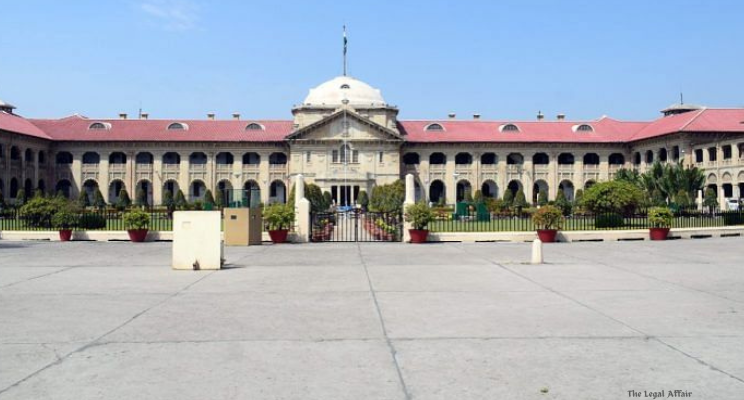
The Allahabad High Court, in The Yog Satsanga Samiti Through Its Director/ General v. State of U.P. and 4 Others [WRIT – C No. – 41969 of 2024], ruled that no organization can claim a vested right to a specific land allotment in the Maha Kumbh Mela based solely on past allotments. The petition was filed by the Yog Satsanga Samiti, seeking land allotment at the junction of Triveni Marg and Mukti Marg, as allotted to it during the Kumbh Melas of 2001, 2007, and 2013. The Court, however, held that the evolving nature and scale of the Kumbh Mela necessitated flexible land allotment policies and disposed of the petition while allowing the petitioner to file a fresh representation for consideration by the authorities.
Arguments of the Petitioner:
The petitioner argued that its participation in the Maha Kumbh Mela required a specific allotment at the junction of Triveni Marg and Mukti Marg, a location granted to it in previous Kumbh Melas. Claiming this allotment as a vested right, the petitioner emphasized its spiritual and organizational activities, which, according to them, necessitated proximity to this prominent location for public accessibility. It was further contended that their application complied with all procedural requirements and that allotment at a different location would adversely impact their functioning and interactions with devotees.
The petitioner also highlighted that the authorities’ decision to withhold the requested allotment violated the principles of consistency and fairness. They claimed that the denial was arbitrary and lacked valid reasoning, as similar organizations had been allotted their preferred locations.
Arguments of the Respondent Authorities:
Counsel for the respondent authorities opposed the petition, stating that the land in question was reserved for allocation to Shankaracharyas, Akharas, and Maha Mandleshwars, as per the established policy for the Maha Kumbh Mela. They argued that accommodating the petitioner at the requested location would disrupt the allotment framework and necessitate reorganization, potentially affecting other prominent organizations.
The respondents also pointed out that in the 2019 Kumbh Mela, the petitioner did not contest the allotment of a different location, undermining their claim of a vested right. They emphasized that the Maha Kumbh Mela is an ever-evolving event, with its scale and complexity increasing every year. Thus, land allotments are made based on logistical, administrative, and policy considerations rather than past precedents.
Court’s Judgment:
The High Court, comprising Justice Shekhar B. Saraf and Justice Nand Prabha Shukla, dismissed the petitioner’s claim of a vested right to a specific land allotment. The Court acknowledged the petitioner’s past allotments but emphasized that the unique nature of the Maha Kumbh Mela requires flexible land allocation based on current circumstances, policies, and logistical needs.
The Court observed that the 2025 Maha Kumbh Mela differs significantly from its previous iterations due to its increasing size and complexity. Recognizing the State’s responsibility to manage such a massive event effectively, the Court supported the respondents’ policy-driven approach to land allotment. It ruled that no organization can claim entitlement to a specific plot of land solely based on past allocations, as this would disrupt the State’s equitable and efficient allocation processes.
The Court further noted that the petitioner’s acceptance of a different location in 2019 demonstrated their acknowledgement of the evolving nature of the event and undermined their claim of a vested right. The judges appreciated the authorities’ efforts in ensuring an organized and fair allocation process for various organizations and institutions participating in the Maha Kumbh Mela.
While dismissing the writ petition, the Court granted liberty to the petitioner to file a fresh representation to the authorities. It directed the authorities to consider the representation and issue a reasoned order while making efforts to accommodate the petitioner closer to their preferred location, subject to logistical feasibility and policy considerations.