


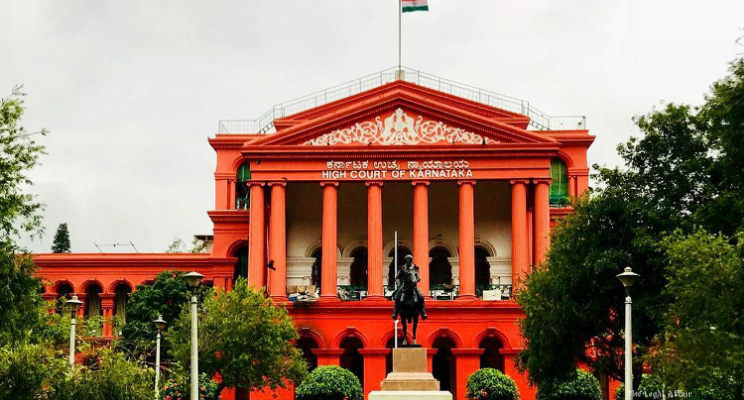
Introduction:
In Glastronix LLP v. Glastronix Karmika Sangha & Ors., the Karnataka High Court addressed a significant question arising from the transition between the Industrial Disputes Act, 1947 and the Industrial Relations Code, 2020. Justice Anant Ramanath Hegde was called upon to determine whether Labour Courts and Industrial Tribunals constituted under the repealed 1947 Act could continue exercising jurisdiction after the Industrial Relations Code came into force on 21 November 2025. The writ petition was filed by Glastronix LLP challenging the State Government’s order dated 19 December 2025 referring an industrial dispute between the management and the employees’ union to the Industrial Tribunal Bengaluru under the 1947 Act. The petitioner also sought quashing of the Central Government notification dated 08 December 2025 issued under Section 103 of the 2020 Code. The core contention was that once the Industrial Relations Code was notified and enforced the State lacked jurisdiction to invoke the repealed statute. The case thus presented an important issue regarding legislative transition statutory interpretation and the doctrine of saving clauses to prevent institutional vacuum in labour adjudication.
Arguments:
The petitioner Glastronix LLP contended that with effect from 21 November 2025 the Industrial Relations Code 2020 had come into force and by virtue of Section 104 the Industrial Disputes Act 1947 stood repealed. It was argued that after the repeal the State Government could not exercise powers under the 1947 Act including making a reference of an industrial dispute to the Industrial Tribunal. According to the petitioner the reference order dated 19 December 2025 was without jurisdiction and liable to be quashed. The petitioner further challenged the Central Government notification dated 08 December 2025 issued under Section 103 of the 2020 Code which empowers the Government to remove difficulties. It was submitted that Section 103 could not be invoked to override or dilute the substantive repeal effected by Section 104. The petitioner relied on Section 1(3) of the Code to contend that once the Code was brought into force the earlier regime ceased to operate. It was also urged that Section 51 of the Code contemplates transfer of pending cases to newly constituted Tribunals under the Code and therefore continuation of references under the old Act would defeat legislative intent. A specific argument was raised that Section 104(1A) did not expressly mention Labour Courts and therefore such courts could not claim protection under the saving clause. The petitioner maintained that the absence of explicit reference to Labour Courts indicated that the legislature intended a clean break from the old regime and that fresh adjudication could commence only once Tribunals under the Code were constituted.
On the other hand the respondents including the employees’ union and the State defended the reference order. They contended that although the Industrial Relations Code had been notified the Tribunals and National Industrial Tribunals contemplated under the new Code had not yet been constituted and were not functional. In such circumstances accepting the petitioner’s argument would result in a complete vacuum in labour adjudication leaving workers and employers without any forum to resolve disputes. The respondents relied heavily on the amendment made to Section 104 on 16 February 2026 which clarified that notwithstanding the repeal of the 1947 Act and other enactments the Tribunals and statutory authorities functioning under the repealed Acts shall continue to function until corresponding bodies under the Code become operational. It was argued that this amendment demonstrated legislative intent to ensure seamless continuity. The respondents also invoked Section 6 of the General Clauses Act, 1897 which saves rights liabilities and proceedings initiated under a repealed enactment unless a contrary intention appears. According to them even if the 1947 Act was treated as repealed the reference order dated 19 December 2025 was protected as an action taken when the Act was in force. They further submitted that the expression statutory authorities in Section 104(1A) was wide enough to include Labour Courts constituted under the 1947 Act and that a narrow interpretation would defeat the purpose of the saving clause. The respondents emphasized that transitional legislation must be construed pragmatically to avoid disruption of justice delivery mechanisms.
Judgment:
After examining the statutory scheme Justice Anant Ramanath Hegde dismissed the writ petition and upheld the reference made under the 1947 Act. The Court undertook a detailed analysis of Sections 1(3) 51 103 and 104 of the Industrial Relations Code 2020. It noted that although Section 51 provides for transfer of pending cases to Tribunals constituted under the Code it was undisputed that such Tribunals and National Industrial Tribunals had not yet been constituted. Therefore there was no functional forum under the new regime to which disputes could be transferred. The Court observed that legislation must be interpreted in a manner that advances its purpose and avoids absurdity. If the petitioner’s argument were accepted it would create a situation where no adjudicatory body existed to resolve industrial disputes which could not have been the intention of Parliament.
Regarding Section 103 the Court held that the power to remove difficulties cannot be exercised inconsistently with substantive provisions of the Code. However in the present case the notification did not override the repeal but merely facilitated transitional continuity. The Court placed significant reliance on the amendment to Section 104 made on 16 February 2026 which expressly clarified that Tribunals and statutory authorities functioning under repealed enactments shall continue until new bodies become functional. This amendment was seen as declaratory and clarificatory in nature reinforcing that no vacuum was intended.
Addressing the argument that Labour Courts were not specifically mentioned in Section 104(1A) the Court held that the phrase statutory authorities is broad and inclusive. Labour Courts constituted under the Industrial Disputes Act 1947 are undeniably statutory bodies and therefore fall within the ambit of that expression. The Court rejected the hyper technical interpretation suggested by the petitioner and emphasized that purposive construction must prevail over literal rigidity in transitional contexts.
The Court further observed that even assuming retrospective repeal Section 6 of the General Clauses Act 1897 would operate to save actions taken under the repealed statute including the reference order dated 19 December 2025. There was no indication of contrary legislative intent to extinguish pending or initiated proceedings. On the contrary the amendment to Section 104 clearly demonstrated an intent to preserve continuity. The Court also took note of a recent decision of the Kerala High Court which upheld a similar notification permitting continuation of Labour Courts and Industrial Tribunals after enforcement of the Code.
In conclusion the Court held that the Labour Courts Industrial Tribunals and other statutory authorities constituted under the Industrial Disputes Act 1947 will continue to exercise jurisdiction until the corresponding Tribunals under the Industrial Relations Code 2020 are constituted and become functional. The repeal does not create a vacuum and the saving clause ensures uninterrupted adjudication. Consequently the writ petition was dismissed and the reference order sustained.