


Introduction:
The Calcutta High Court has delivered an important ruling on the limits of criminal prosecution and the power of constitutional courts to prevent the misuse of judicial process. While courts ordinarily exercise caution before quashing criminal proceedings at a preliminary stage, the High Court held that a prosecution cannot be permitted to continue when unimpeachable official records conclusively demonstrate that an accused could not possibly have been present at the alleged scene of occurrence. In such circumstances, requiring a person to undergo the ordeal of a criminal trial would not advance the cause of justice but would itself become an abuse of the process of law.
In Arun Prasad & Anr. v. State of West Bengal & Ors., CRR 2356 of 2024, Justice Uday Kumar considered a criminal revision petition filed by two brothers, Arun Prasad and Arjun Prasad, seeking quashing of criminal proceedings arising from Uttarpara Police Station Case No. 445 of 2023. The case involved allegations of wrongful restraint, voluntarily causing hurt, intentional insult and criminal intimidation under Sections 341, 323, 504 and 506 of the Indian Penal Code.
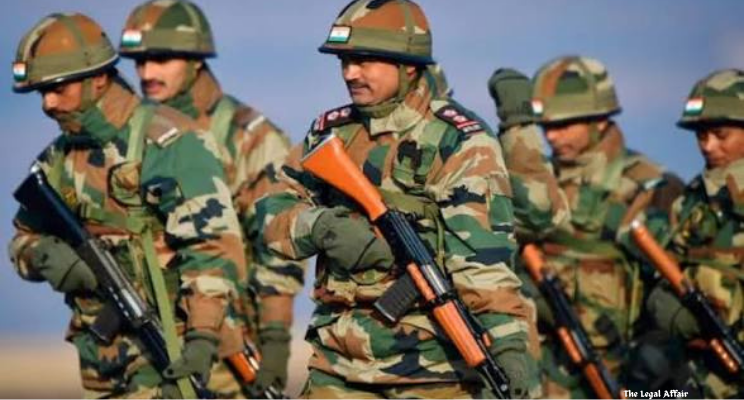
The Court, however, adopted a carefully differentiated approach towards the two petitioners. It quashed the criminal proceedings against Arun Prasad, a serving member of the Territorial Army, after official military records conclusively established that he was on active duty in Imphal, Manipur, at the exact time when he was allegedly involved in an assault in Hooghly, West Bengal. The Court refused to extend the same relief to his brother, Arjun Prasad, against whom the case diary contained eyewitness statements and medical material disclosing a prima facie case.
The criminal dispute had its origins in a long-standing neighbourhood conflict between two families over a four-foot common passage and drainage easement at Saradapally, Sector-II, Makhla, in Hooghly district. The dispute had not arisen suddenly or in isolation. The petitioners’ family had already instituted civil proceedings concerning the passage, and the continuing friction between the neighbouring families had also resulted in police diary entries and preventive proceedings.
Such facts gave the dispute a mixed civil and criminal background. Property and access disputes frequently generate allegations and counter-allegations, and courts are often required to determine whether criminal proceedings genuinely disclose an independent offence or are being used as a means of exerting pressure in an underlying civil dispute. At the same time, the mere existence of civil litigation does not automatically render criminal allegations unsustainable. The crucial question is whether the materials collected during investigation disclose the essential ingredients of a criminal offence.
In the present case, the complainant eventually approached the Magistrate under Section 156(3) of the Code of Criminal Procedure, seeking police investigation. An FIR was consequently registered against Arun Prasad, Arjun Prasad and other alleged associates.
According to the prosecution case, on October 5, 2023, at approximately 6:30 AM, the two brothers, along with certain unknown persons, intercepted the complainant near Satadol Club in the concerned locality. It was alleged that the complainant was assaulted and subjected to threats in connection with the ongoing property dispute. The complaint further alleged that the accused demanded that the complainant’s sister vacate her property, forcibly took away ₹7,500 and threatened the complainant with further consequences.
The allegation against Arun Prasad, however, encountered a fundamental factual difficulty during investigation. Unlike a routine case in which an accused merely asserts that he was elsewhere and seeks to establish an alibi during trial, Arun’s whereabouts were independently verified through official military channels.
The Commanding Officer of B-Company, 25 BRTE, Imphal, Manipur, certified that Arun Prasad was on active military duty at Imphal on October 5, 2023, including at the relevant time of the alleged occurrence. The investigation thus produced an objective and officially authenticated record placing him far away from the alleged scene of crime.
On the basis of this verification, the investigating agency itself accepted that Arun could not be connected with the incident in the manner alleged. A Final Report was submitted in his respect, and he was dropped from the chargesheet. The chargesheet proceeded only against his brother, Arjun Prasad.
Despite this development, the proceedings concerning Arun remained the subject of challenge, leading the High Court to consider whether he could still be compelled to face a criminal trial when the investigating agency’s own verified records established his physical absence from the alleged place of occurrence.
The case therefore raised an important question regarding the exercise of the High Court’s inherent and supervisory jurisdiction to prevent abuse of the judicial process. Ordinarily, disputed questions of fact, including a plea of alibi, are matters to be tested during trial. Courts exercising jurisdiction to quash criminal proceedings do not generally conduct a mini-trial or assess the credibility of competing versions.
However, the present case involved more than a conventional assertion of alibi. The claim of physical impossibility was supported by official military records and had already been independently verified and accepted by the investigating agency. The High Court therefore had to decide whether the general rule requiring a defence of alibi to be proved during trial should apply even when the prosecution’s own investigation had established that the accused was stationed thousands of kilometres away on official duty.
Justice Uday Kumar answered this question in the negative. The Court held that forcing a serving Territorial Army personnel to undergo the humiliation and psychological burden of a criminal trial despite conclusive official evidence of his absence would be an unconscionable misuse of the criminal justice system.
At the same time, the Court refused to permit the exceptional circumstances relating to Arun to benefit Arjun automatically. Arjun’s presence in the locality was not disputed, and the case diary contained witness statements recorded under Section 161 CrPC and injury reports that prima facie supported allegations of wrongful restraint and simple hurt. The competing versions regarding his role required evidentiary examination at trial.
The ruling thus demonstrates the nuanced approach required in quashing proceedings. A High Court must intervene where prosecution is demonstrably impossible or maliciously pursued against an innocent person, but it cannot extend that protection to a co-accused merely because the broader dispute has a civil background or because another accused has been conclusively exonerated.
Arguments of the Parties:
The petitioners, Arun Prasad and Arjun Prasad, approached the Calcutta High Court seeking quashing of the criminal proceedings on the ground that the case arose out of an ongoing neighbourhood and property dispute concerning the common passage and drainage easement. Their case was that the criminal prosecution had to be viewed against the background of existing civil litigation and long-standing hostility between the neighbouring families.
The petitioners relied upon the fact that disputes regarding the four-foot passage had already resulted in civil proceedings, police diary entries and preventive action. According to their case, the criminal complaint was not an isolated allegation of violence but formed part of an escalating dispute in which criminal law was being invoked as a weapon against members of the opposing family.
Arun Prasad advanced a particularly strong and distinct case for quashing. His defence was not based merely on a statement that he was somewhere else when the alleged incident occurred. He relied upon official records of the Indian Army establishing that he was on active military duty in Imphal, Manipur, at the precise date and time when he was allegedly present in Hooghly.
The petitioners emphasised that the military record had not merely been privately produced and left unverified. The investigating agency had independently checked Arun’s whereabouts with the competent military authority. The Commanding Officer of B-Company, 25 BRTE, Imphal, certified that he was deployed on active duty at the relevant time.
This verification was significant because it led the investigating officer himself to conclude that Arun’s involvement in the alleged incident was unsustainable. A Final Report was consequently submitted in his favour, and the chargesheet was filed only against Arjun. Arun therefore argued that continuing criminal proceedings against him despite the prosecution’s own verified conclusion would serve no legitimate purpose.
His contention was that he could not reasonably be required to undergo the burden of a criminal trial when objective official records established that his presence at the scene was physically impossible. According to him, the case fell within the exceptional category where continuation of criminal proceedings would amount to abuse of the process of law.
The petitioners also relied upon the surrounding circumstances of hostility and the pending civil dispute to contend that the allegations were motivated by vindictiveness. Arun’s counsel sought to bring the case within the principles governing malicious and mala fide prosecution, particularly the safeguards recognised by the Supreme Court in State of Haryana v. Bhajan Lal.
Arjun Prasad also sought quashing by referring to the civil nature of the underlying dispute. His case was that the allegations of assault and criminal intimidation had emerged from the same conflict over the common passage and property rights and that the criminal proceedings should therefore not be permitted to continue.
However, the State and the complainant’s position, insofar as reflected in the materials considered by the Court, differed substantially in relation to the two brothers. In respect of Arun, the official military records created an insurmountable difficulty for the prosecution. The investigation had verified his absence from the place of occurrence, and the investigating agency had itself dropped him from the chargesheet.
The Court was therefore not dealing with a case where the prosecution sought to contest Arun’s alibi and leave the issue for trial. Rather, the prosecution’s own investigation supported his physical absence from the alleged scene.
The position concerning Arjun was materially different. He was a local resident, and there was no official material establishing that he was elsewhere when the incident allegedly occurred. His participation in the incident was disputed, but the case diary contained statements of eyewitnesses recorded under Section 161 CrPC. The investigation had also produced injury reports supporting, at least at a prima facie level, allegations of wrongful restraint and simple hurt.
The respondents therefore maintained that the truthfulness of the witnesses, the exact sequence of events and the role played by Arjun were matters requiring examination through the ordinary criminal process. Such disputed questions could not be conclusively resolved at the stage of quashing.
The respondents also relied upon the settled principle that a civil dispute does not automatically eliminate criminal liability. A single set of facts may give rise to both civil and criminal consequences. Where the allegations and materials independently disclose the ingredients of an offence, the pendency of civil litigation cannot by itself justify termination of criminal proceedings.
The central distinction between the parties’ positions thus lay in the nature of the material available against each accused. Arun relied upon conclusive and officially verified records demonstrating physical impossibility, whereas Arjun’s case involved disputed factual allegations supported by prima facie witness and medical evidence.
Court’s Judgment:
Justice Uday Kumar partly allowed the criminal revision petition and drew a clear distinction between the exceptional case of Arun Prasad and the ordinary factual dispute involving his brother, Arjun Prasad.
In respect of Arun, the Court held that the continuation of criminal proceedings would amount to an abuse of the process of law. The decisive consideration was the official military record confirming that he was on active duty in Imphal, Manipur, at the exact time when he was allegedly involved in an assault in Hooghly.
The Court observed that the factual position was not based on a doubtful or unverified plea of alibi. Arun’s whereabouts had been officially confirmed by his Commanding Officer, and the investigating agency had independently verified and accepted the information. Following that verification, the police had submitted a Final Report in his respect and excluded him from the chargesheet.
Justice Kumar emphasised the obvious physical impossibility of the prosecution’s allegation against Arun. The Court noted that an individual cannot simultaneously be present at two geographical locations separated by thousands of miles. Once official records conclusively established his active military presence in Imphal, the allegation that he was participating in an assault in Hooghly at the same time became incapable of rational continuation.
The Court distinguished the present case from an ordinary plea of alibi. Generally, an accused who claims to have been elsewhere when an offence occurred must establish that plea through evidence during trial. Courts exercising jurisdiction to quash proceedings are ordinarily reluctant to assess such a defence at the threshold.
But the High Court held that this principle cannot be mechanically applied where the alibi is supported by unimpeachable official records and has already been verified by the investigating agency itself. The Court was not required to conduct an evidentiary trial to decide between competing versions because the official military record objectively established that Arun was not at the place of occurrence.
The Court’s strong observations reflected its concern about the human consequences of an unjust prosecution. It held that compelling a serving soldier to undergo the ignominy and trauma of a criminal trial based on a demonstrably false and vindictive accusation would amount to an unconscionable abuse of the judicial process.
This reasoning brought Arun’s case within the principles laid down by the Supreme Court in State of Haryana v. Bhajan Lal. The Bhajan Lal decision identifies exceptional situations in which criminal proceedings may be quashed to prevent abuse of the process of court. One such category concerns proceedings that are manifestly attended with mala fides or instituted with an ulterior motive for wreaking vengeance.
The High Court found that the surrounding property dispute, combined with the conclusively established impossibility of Arun’s presence, justified intervention at the threshold. Continuing the prosecution despite the verified findings of the investigation would have subjected an innocent person to an unnecessary and unjust criminal process.
Accordingly, the Court quashed Uttarpara Police Station Case No. 445 of 2023 and the consequential proceedings insofar as Arun Prasad was concerned. The Court also formally took note of the fact that the investigating agency had already submitted a Final Report in his favour.
The Court, however, refused to apply the same reasoning to Arjun Prasad. It observed that Arjun’s presence at the relevant place was not disproved by any comparable official record. The material collected during investigation included eyewitness statements under Section 161 CrPC and injury reports which, on a prima facie examination, disclosed allegations of wrongful restraint and simple hurt.
At the stage of considering quashing, the High Court could not undertake a detailed assessment of whether each witness was truthful or whether the injuries were caused in the precise manner alleged. Those questions required appreciation of evidence and examination during trial.
The Court also rejected the argument that the existence of the civil dispute required the criminal case against Arjun to be terminated. Relying upon the principles recognised in Mohammed Ibrahim v. State of Bihar, the Court reiterated that civil and criminal remedies may coexist when the facts disclose distinct legal wrongs.
A dispute concerning property rights, access to a common passage or drainage easement may be civil in character. But if, during the course of such a dispute, one party wrongfully restrains or assaults another, the conduct may independently constitute a criminal offence. The presence of a civil dispute does not grant immunity from criminal prosecution.
The Court therefore held that the pending civil proceedings could not, by themselves, provide a ground for quashing the prosecution against Arjun. The truth or falsity of the eyewitness accounts, the nature of the alleged altercation and the extent of Arjun’s involvement were disputed questions of fact.
Such questions, the Court observed, could not be conclusively adjudicated in a proceeding seeking quashing. To do so would effectively amount to conducting a mini-trial, which is beyond the scope of the jurisdiction exercised at this preliminary stage.
The Court accordingly found that the materials against Arjun disclosed a prima facie case warranting trial. The prayer for quashing in his favour was therefore rejected.
The Trial Court was directed to proceed with the case against Arjun expeditiously. At the same time, the High Court clarified that its observations regarding him were confined solely to the decision of the revisional application and should not influence the Trial Court’s independent assessment of the evidence and the merits of the prosecution.
The ruling is significant for the manner in which it balances two equally important principles of criminal jurisprudence. On one hand, courts must prevent the criminal justice system from becoming an instrument of harassment where unimpeachable material demonstrates that an accusation is impossible or malicious. On the other hand, courts must not prematurely terminate a prosecution merely because the accused disputes the allegations or because a related civil dispute exists.
Arun’s case represented the former situation. The evidence supporting his absence was not speculative or dependent upon an assessment of witness credibility. It came from an official military authority, was verified during investigation and was accepted by the police themselves. In such circumstances, insisting that he still face trial would have elevated procedure over justice.
Arjun’s case represented the latter situation. There was no conclusive material making his presence impossible, and the prosecution possessed witness and medical material that required testing in accordance with law. The High Court therefore correctly left those questions to the Trial Court.
Ultimately, the decision reinforces that the power to quash criminal proceedings must be exercised neither mechanically nor reluctantly where justice clearly demands intervention. Courts must look at the nature and quality of the material before them. A genuine factual dispute belongs at trial, but a prosecution founded on allegations that are conclusively contradicted by verified and unimpeachable official records cannot be allowed to continue merely for the sake of procedural formality.
The Calcutta High Court’s decision thus protects both individual liberty and the integriy of criminal justice. It ensures that a serving soldier