


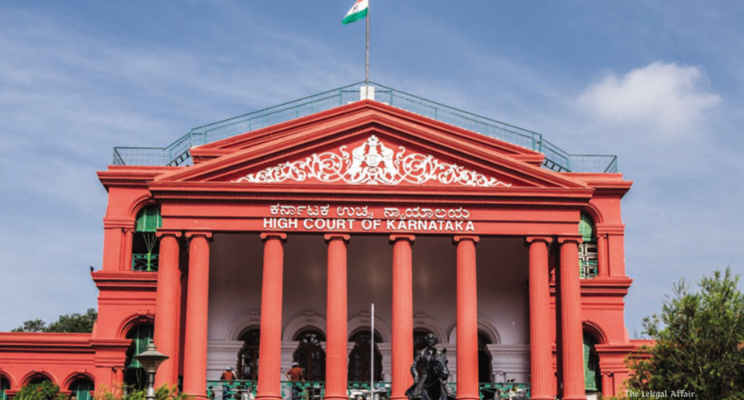
Introduction:
In a significant ruling reinforcing the principle that criminal liability under cheque dishonour law cannot be imposed without proof of direct involvement in company affairs, the Karnataka High Court in Sujith Sudhakaran v. Lalu Jacob Mammen (Criminal Petition No. 10408 of 2023; 2025 LiveLaw (Kar) 7) quashed proceedings initiated under Section 138 of the Negotiable Instruments Act, 1881, against the petitioner, who was earlier associated with an infrastructure company, the case arose from a complaint filed by the respondent alleging dishonour of two cheques dated 27.09.2014 and 29.09.2014 issued by M/s Dreamz Infra India Pvt. Ltd., pursuant to which statutory notice was issued and a criminal complaint was registered on 29.11.2014, the trial court took cognizance and issued summons to the petitioner treating him as one of the responsible officers of the company, aggrieved by this, the petitioner approached the High Court seeking quashing of proceedings, contending that he was neither a Director nor an officer of the company on the relevant dates when the cheques were issued and hence could not be fastened with vicarious liability under Section 141 of the Negotiable Instruments Act, Justice M. Nagaprasanna examined the matter in light of statutory requirements, company law records, and settled principles of criminal liability, and the case thus turned on the crucial question whether a person who had ceased to be a Director prior to issuance of cheques could be prosecuted merely because of his past association with the company.
Arguments:
The petitioner categorically contended that he was not connected with the company at all on the dates when the cheques were issued and therefore could not be prosecuted under Section 138 read with Section 141 of the Negotiable Instruments Act, it was argued that criminal liability for cheque dishonour in the case of companies is vicarious in nature and can be imposed only on those who were in charge of and responsible for the conduct of business of the company at the time when the offence was committed, it was specifically submitted that the relevant date is the date of issuance of the cheque and not any earlier or later association with the company, the petitioner relied upon official records from the Ministry of Corporate Affairs which showed that he had been a Director from 16.01.2012 and had ceased to be associated with the company on 08.04.2013, and thereafter rejoined only on 14.09.2015, finally ceasing on 22.03.2016, meaning thereby that during the crucial period of September 2014 when the cheques were issued, he was not part of the company at all, it was further emphasized that he was not the signatory to the cheques, which clearly demonstrated absence of any role in the transaction, and that the continuation of criminal proceedings against him would amount to abuse of process of law, on the other hand, the respondent strongly opposed the quashing petition and argued that the petitioner had been involved in the affairs of the company continuously and had merely changed designations to escape liability, it was submitted that the petitioner had earlier been a Director and later became Additional Director and had allegedly orchestrated financial transactions that resulted in losses to several people, not only the complainant, it was argued that multiple cases were pending against the petitioner and therefore he could not be allowed to evade responsibility on technical grounds, the complainant further contended that issues relating to factual involvement, business control, and alleged cheating could not be adjudicated at the stage of quashing and must be left for trial, and that the High Court should not exercise inherent jurisdiction merely based on corporate filings when serious allegations of financial misconduct were involved, according to the respondent, the complaint disclosed sufficient material to proceed and hence deserved to be tried in accordance with law.
Court’s Judgment:
The Karnataka High Court allowed the petition and quashed the cheque dishonour proceedings, holding that criminal prosecution under Section 138 read with Section 141 of the Negotiable Instruments Act cannot be sustained against a person who was not in charge of the company at the time of issuance of cheques, Justice M. Nagaprasanna observed that the dates of the cheques, namely 27.09.2014 and 29.09.2014, were undisputed, and the only question was whether the petitioner was associated with the company on those dates, upon examining the official records of the Ministry of Corporate Affairs, the Court found that the petitioner had ceased to be part of the company on 08.04.2013 and re-entered only on 14.09.2015, clearly establishing that the cheques were issued during an interregnum when the petitioner had no legal or managerial connection with the company, the Court categorically held that vicarious liability cannot be fastened merely on the basis of previous association or allegations of overall involvement without statutory status at the time of offence, it was further noted that the petitioner was not the signatory to the cheques, which further weakened the case against him, the Court rejected the respondent’s argument that general allegations of involvement or existence of multiple cases could justify continuation of proceedings, holding that criminal liability must be strictly construed and cannot rest on suspicion or past roles, the Court reiterated that for attracting Section 141, it must be shown that the accused was in charge of and responsible for the conduct of business of the company at the time when the offence was committed, and such foundational requirement was completely absent in the present case, the Court held that permitting prosecution to continue in such circumstances would amount to harassment and abuse of process of law, accordingly, the criminal complaint and all consequential proceedings against the petitioner were quashed, thereby reaffirming the principle that statutory liability under cheque dishonour law must be based on contemporaneous legal responsibility and not on historical association with a company.