


Introduction:
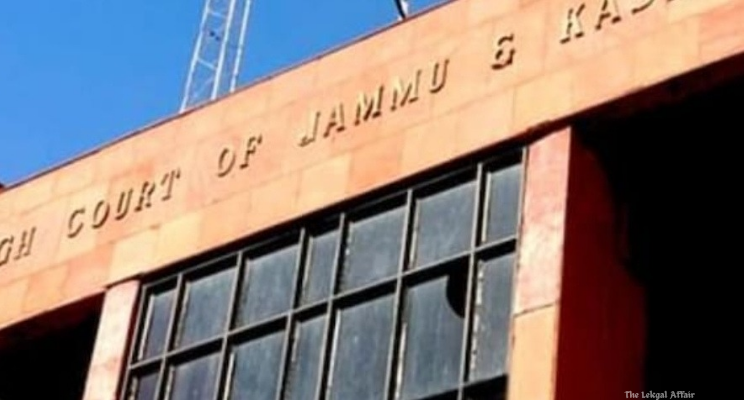
The case of Amit Kumar v. Union of India & Others came before the High Court of Jammu & Kashmir and Ladakh at Jammu, presenting a crucial question concerning the intersection of disciplinary proceedings, medical evidence, and the principles of natural justice. The petitioner, Amit Kumar, a Constable in the Central Reserve Police Force (CRPF), challenged his removal from service as well as the rejection of his statutory appeal. The controversy arose from allegations of unauthorised absence after the petitioner proceeded on sanctioned medical leave in December 2005. According to the petitioner, his health deteriorated significantly when he attempted to resume duties, leading to prolonged treatment at various government medical institutions including District Hospital Saharanpur, CHC Baraut, and District Hospital Muzaffarnagar. He claimed that he had duly informed the authorities regarding his illness and had submitted medical records along with requests for extension of leave. Despite these communications, disciplinary proceedings were initiated against him, culminating in an ex parte enquiry and eventual removal from service. Aggrieved by what he described as an unjust and arbitrary process, the petitioner approached the High Court seeking redress. The case thus required the Court to examine whether disciplinary authorities could disregard medical evidence without verification and whether such conduct violated the principles of natural justice.
Arguments of the Petitioner:
The petitioner vehemently challenged the legality of the disciplinary proceedings and the consequent order of removal, asserting that the entire process was vitiated by procedural irregularities and violation of natural justice. It was contended that the petitioner had not wilfully absented himself from duty but was compelled to remain away due to serious medical conditions, including ailments such as typhoid and hepatitis. The petitioner emphasized that his absence was neither deliberate nor negligent, but rather a consequence of circumstances beyond his control. He argued that throughout the period of his illness, he had maintained communication with the authorities and had submitted multiple representations informing them of his condition and seeking extension of leave. These communications were accompanied by medical certificates and treatment records issued by government hospitals, which, according to the petitioner, constituted credible and reliable evidence of his illness. The petitioner further contended that the enquiry was conducted ex parte without affording him a reasonable opportunity to present his case. He argued that his inability to participate in the enquiry was itself due to his medical condition, which was well-documented and communicated to the authorities. The decision to proceed ex parte, therefore, was unjustified and amounted to denial of a fair hearing. The petitioner also challenged the conduct of the disciplinary and appellate authorities, alleging that they had summarily rejected his medical evidence without any attempt to verify its authenticity. He submitted that such an approach was contrary to established legal principles, which require authorities to consider all relevant material before arriving at a decision. The petitioner relied on judicial precedents to argue that unauthorised absence cannot be treated as misconduct warranting punishment unless it is shown to be wilful and deliberate. He urged the Court to set aside the impugned orders and restore him to service, contending that the action of the respondents was arbitrary, unreasonable, and violative of his rights.
Arguments of the Respondents:
The respondents, representing the Union of India, defended the disciplinary action by asserting that the petitioner had overstayed his sanctioned leave without obtaining proper permission and had failed to comply with repeated directions to report for duty. It was contended that the petitioner’s absence was unauthorised and amounted to misconduct under the applicable service rules. The respondents argued that despite being given opportunities, the petitioner did not participate in the enquiry proceedings, thereby necessitating an ex parte enquiry. They maintained that the principles of natural justice had been adequately followed, as notices had been issued to the petitioner and he had failed to respond appropriately. The respondents further contended that the petitioner had not produced any credible medical evidence during the enquiry proceedings to substantiate his claim of illness. According to them, the absence of reliable documentation justified the conclusion that the petitioner’s absence was wilful. The disciplinary authority, therefore, was within its rights to impose the penalty of removal from service. The respondents also sought to justify the rejection of the petitioner’s statutory appeal, arguing that the appellate authority had considered the material on record and found no grounds to interfere with the disciplinary action. They maintained that the Court should not interfere in matters of departmental discipline, particularly when the findings of the enquiry were based on evidence and due process.
Judgment:
Justice Sanjay Dhar, delivering the judgment, undertook a detailed examination of the facts and legal principles governing the case and ultimately found in favour of the petitioner. The Court held that the approach adopted by the disciplinary authorities was fundamentally flawed, as they had failed to properly consider and verify the medical evidence produced by the petitioner. The Court categorically observed that neither the enquiry officer nor the disciplinary authority nor the appellate authority could discard medical records without first ascertaining their authenticity and veracity. It was noted that the petitioner had, in fact, submitted multiple communications informing the authorities about his illness and had provided medical certificates from government hospitals. Even the disciplinary authority had acknowledged receipt of these documents, yet chose to ignore them without any verification. The Court held that such conduct was contrary to the principles of natural justice, which require a fair and reasonable consideration of all relevant evidence. The Court further emphasized that unauthorised absence, by itself, does not constitute misconduct warranting punishment unless it is established that the absence was wilful and deliberate. In cases where illness is cited as the reason for absence, the authorities are duty-bound to verify the claim rather than dismiss it summarily. The Court relied on precedents such as Chhel Singh v. MGB Gramin Bank (2014) and Union of India v. I.S. Singh (1994) to reinforce this principle. It was observed that medical certificates cannot be disbelieved in the absence of any finding that they are false or fabricated. The Court also found fault with the decision to proceed ex parte, noting that if the petitioner was indeed suffering from serious ailments, it would not have been possible for him to participate in the enquiry. Proceeding with the enquiry without verifying his medical condition amounted to a denial of a fair hearing. Additionally, the Court criticized the appellate authority for rejecting the petitioner’s appeal in a cryptic manner without assigning reasons, thereby failing to discharge its duty of independent application of mind. In light of these findings, the Court concluded that the disciplinary proceedings were vitiated by a serious breach of natural justice. Accordingly, the Court set aside the order of removal and directed reinstatement of the petitioner. However, it granted liberty to the respondents to conduct a fresh enquiry, subject to proper verification of the medical records and adherence to due process. The judgment thus reaffirms the importance of fairness, reasonableness, and procedural integrity in disciplinary proceedings.