


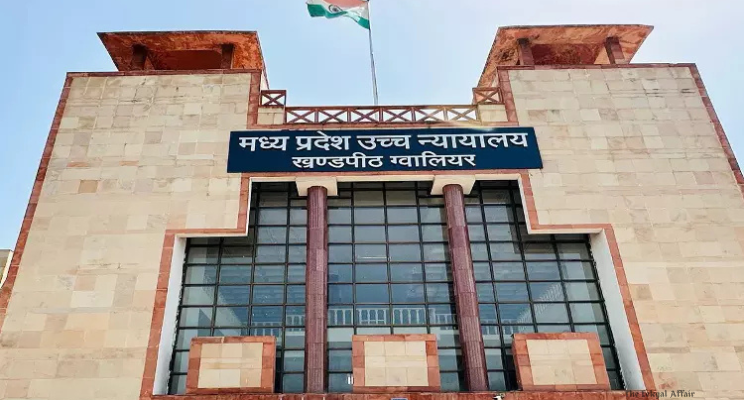
Introduction:
In the case of Sourav Gurjar And Others Versus The State of Madhya Pradesh And Others, Misc. Criminal Case No. 14536 of 2025, the Madhya Pradesh High Court was approached with a plea to quash a First Information Report (FIR) based on a compromise between the parties involved. The matter came before Hon’ble Justice Gurpal Singh Ahluwalia, who was tasked with deciding whether the compromise could override the gravity of the offences alleged. The case revolved around serious accusations involving abduction from a public space, extortion, physical assault using the butt of a pistol, wrongful confinement, and the creation of a false video under duress containing self-incriminating statements.
Arguments:
According to the complainant, while standing with his friends, a car approached and forcibly took him away under the pretext of having a conversation. When he resisted, citing he did not recognize the individuals or the context, the men inside the vehicle abducted him and transported him to another location. There, they physically assaulted him with the butt of a pistol and demanded a sum of Rs. 5,00,000. Upon the complainant’s refusal, one co-accused instigated the others to shoot him. Subsequently, the complainant was physically attacked, forced to pay Rs. 16,000 via Google Pay, and then coerced into holding a pistol while being recorded on video, falsely admitting to intentions to kill another individual and claiming that the payment had been voluntarily made. The accused further blackmailed the complainant, demanding an additional Rs. 4,84,000 under the threat of making the fabricated video viral and falsely implicating him if he disclosed the events to anyone. Following this traumatic incident, a criminal case was registered, charging the accused under Sections 308(5), 127(2), 115(2), 296, and 3(5) of the Bharatiya Nyaya Sanhita (BNS). However, the parties subsequently reached a compromise, and the accused petitioned the High Court under its inherent jurisdiction to quash the FIR on the basis of the settlement. Arguing in favor of quashing, the petitioners contended that the matter had been amicably resolved, and no useful purpose would be served by continuing the criminal proceedings. They relied on judicial precedents where courts had quashed FIRs following a compromise, especially in cases categorized as private disputes. They also pointed out that the complainant was no longer interested in pursuing the matter, and all claims had been settled voluntarily and without coercion. On the other hand, the State strongly opposed the plea. The State argued that the nature of the allegations was grave and pertained not only to the individual victim but also affected societal order and public confidence in the law. The prosecution emphasized the elements of abduction, armed assault, extortion, and coercion involved in the creation of a false video. The State maintained that these acts, being heinous and criminally aggravated, could not be condoned or nullified through private compromise. After hearing both sides and reviewing the FIR and related documents, the Court opined that the allegations made in the complaint, if taken at face value, disclosed the commission of offences that could not be termed trivial or non-serious. Justice Ahluwalia observed that the acts described by the complainant — namely, abduction in broad daylight, the use of a firearm to inflict physical harm, threats to life, extortion under duress, and the recording of a false self-incriminating confession — amounted to heinous criminal behaviour.
Judgement:
The Court held that such offences were against society at large and had serious implications for the rule of law. Referring to the Supreme Court’s judgments in Gian Singh vs. State of Punjab (2012) and Narinder Singh and Others vs. State of Punjab & Another (2014), the Court reiterated that FIRs can be quashed based on compromise only in those cases which are overwhelmingly personal and do not involve offences that are of a serious or heinous character. In the present case, the High Court found that the charges were not merely personal but involved aggravated forms of criminality, impacting societal peace and security. Therefore, applying the principles laid down by the Apex Court, Justice Ahluwalia concluded that it would not be appropriate to allow quashing of the FIR solely based on a compromise between the accused and the complainant. The Court underscored that the alleged conduct of the accused — the forcible abduction, physical assault, armed threats, coercive monetary extortion, and the creation of a fake video to manipulate future criminal liability — was a serious transgression against the rule of law. Such actions, if proven, were capable of disrupting public confidence in the criminal justice system and could not be allowed to be resolved through private settlements. Accordingly, the Court dismissed the application for quashing of FIR, reaffirming that criminal jurisprudence must strike a balance between individual reconciliation and the larger societal interest in ensuring accountability for heinous acts. The judgment sends a strong message that while courts are empowered to quash FIRS in appropriate cases, that discretion cannot be exercised in a manner that undermines justice or permits gross abuses of law to be swept under the rug under the garb of compromise.