


Introduction:
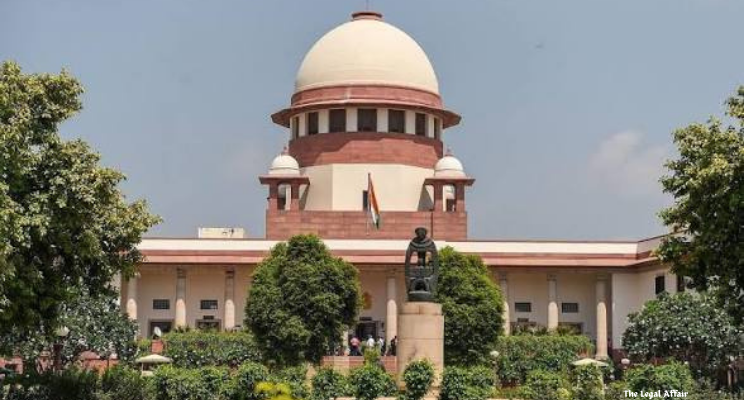
The Supreme Court of India, in State of Uttar Pradesh v. A.K. Gaba Etc., reported as 2026 LiveLaw (SC) 644, has once again reaffirmed a fundamental principle of criminal jurisprudence that criminal conspiracy cannot be presumed merely from suspicion, association, or the presence of an accused at the place where an alleged offence occurs. A Bench comprising Justice Pankaj Mithal and Justice Prasanna B. Varale dismissed the appeals preferred by the State of Uttar Pradesh against the judgment of the Allahabad High Court, which had acquitted three Central Excise Inspectors accused of participating in a conspiracy relating to the acceptance of illegal gratification under the Prevention of Corruption Act, 1988.
The decision is significant because it reiterates the strict evidentiary standards required for establishing an offence under Section 120B of the Indian Penal Code. The Court emphasized that conspiracy is a distinct and substantive offence that cannot be inferred merely from circumstances creating suspicion. Instead, the prosecution must establish through reliable and cogent evidence that there was a prior agreement or meeting of minds between the accused persons to commit an illegal act or to achieve a lawful object through unlawful means.
The dispute arose from a Central Bureau of Investigation (CBI) trap conducted in 1995. According to the prosecution, R.K. Srivastava, who was then serving as Superintendent of Central Excise, demanded a bribe of Rs.80,000 from the complainant for returning documents seized during a search of a factory. The prosecution alleged that Central Excise Inspectors A.K. Gaba, Alok Gupta, and Dushyant Kumar were also involved in the conspiracy because they were allegedly present during the demand or acceptance of the illegal gratification.
Following investigation, the accused officials were prosecuted for offences punishable under the Prevention of Corruption Act as well as criminal conspiracy under Section 120B IPC. The trial court accepted the prosecution’s version and convicted the accused. However, upon appeal, the Allahabad High Court carefully examined the evidence and concluded that the prosecution had failed to establish the essential ingredients of demand, acceptance, and conspiracy. Consequently, the High Court acquitted all three respondents.
Aggrieved by the acquittal, the State approached the Supreme Court, contending that the High Court had erred in discarding the prosecution evidence and in overlooking the circumstances demonstrating the respondents’ involvement in the conspiracy. The Supreme Court was therefore called upon to determine whether mere presence alongside the principal accused during the alleged transaction could legally justify conviction for criminal conspiracy and corruption offences.
The judgment assumes considerable importance because prosecutions under anti-corruption laws frequently involve allegations of conspiracy against multiple public servants. The Court’s decision reinforces that while corruption must be dealt with firmly, convictions cannot rest upon conjecture or assumptions. Every accused is entitled to the protection of the criminal justice system, which requires the prosecution to establish guilt beyond reasonable doubt.
Arguments of the Parties:
The appellant-State of Uttar Pradesh argued that the High Court had committed a serious error in reversing the convictions recorded by the trial court. According to the prosecution, the evidence on record clearly demonstrated that the respondents were not innocent bystanders but active participants in the events surrounding the demand and acceptance of illegal gratification. It was submitted that their continuous presence with the principal accused during the relevant period, coupled with their conduct before and after the alleged transaction, sufficiently established their involvement in the conspiracy.
The State contended that conspiracies are generally executed in secrecy and, therefore, direct evidence of an agreement between conspirators is rarely available. It was argued that courts are entitled to infer conspiracy from surrounding circumstances, conduct of the accused, and the chain of events. According to the appellant, the trial court had correctly appreciated the evidence and concluded that the respondents had acted in concert with R.K. Srivastava in facilitating the illegal demand and acceptance of the bribe.
The prosecution further maintained that the respondents’ presence during the trap proceedings and their association with the principal accused were significant incriminating circumstances that demonstrated a common intention and shared objective. It was argued that these circumstances, taken cumulatively, justified the inference that the accused officials had entered into a criminal conspiracy.
The State also questioned the High Court’s approach in reassessing the evidence, submitting that the trial court had already recorded findings of fact after examining the witnesses. According to the appellant, the High Court ought not to have interfered with those findings in the absence of compelling reasons.
On the other hand, the respondents supported the judgment of the Allahabad High Court and argued that the prosecution had completely failed to establish the essential ingredients of criminal conspiracy. They submitted that the entire prosecution case against them rested solely upon their alleged presence at certain places during the relevant period, without any independent evidence showing that they had agreed with the principal accused to demand or accept illegal gratification.
The respondents emphasized that the allegation of demand was exclusively against Superintendent R.K. Srivastava. There was no evidence that any of the respondents themselves demanded money, participated in negotiations, received any portion of the alleged bribe, or encouraged the complainant to make payment. In the absence of such evidence, they argued, the prosecution could not legally attribute criminal intent or common design to them.
It was further argued that the offence of criminal conspiracy requires proof of a prior agreement or meeting of minds. Such agreement cannot be presumed merely because individuals happen to be present together during certain events. The respondents submitted that suspicion, however strong, cannot substitute proof beyond reasonable doubt, particularly in criminal prosecutions carrying serious consequences.
The defence also highlighted significant evidentiary deficiencies in the prosecution’s case. One of the complainant’s assertions was that the alleged demand for bribe had been tape-recorded. However, despite claiming the existence of such electronic evidence, the prosecution failed to produce the recording before the Court. The respondents argued that withholding such crucial evidence substantially weakened the prosecution’s case and justified drawing an adverse inference against it.
The respondents also contended that the prosecution had failed to establish the foundational requirement of demand under Section 7 of the Prevention of Corruption Act. Since demand itself was not proved against them, the allegations of conspiracy necessarily collapsed because there was no evidence of any common intention to commit the alleged offence.
Accordingly, the respondents submitted that the High Court had correctly appreciated the evidence and rightly concluded that the prosecution had failed to discharge its burden of proving guilt beyond reasonable doubt.
Court’s Judgment:
The Supreme Court dismissed the State’s appeals and affirmed the acquittal recorded by the Allahabad High Court. The Bench held that the prosecution had failed to establish the essential ingredients necessary for convicting the respondents either for criminal conspiracy under Section 120B IPC or for offences under the Prevention of Corruption Act.
The Court began by reiterating the settled legal principles governing the offence of criminal conspiracy. It observed that conspiracy is complete when there is a meeting of minds between two or more persons to commit an illegal act or to accomplish a lawful act through illegal means. The essence of the offence lies in the agreement itself. Consequently, the prosecution must establish that the accused consciously shared the criminal design.
The Bench observed that mere association with the principal accused or presence at the place where the alleged offence occurred cannot automatically lead to an inference of conspiracy. Criminal liability cannot be imposed merely because a person happened to be present during certain events. Instead, there must be convincing evidence demonstrating that the accused knowingly participated in planning or facilitating the illegal act.
Examining the facts of the present case, the Court found that the prosecution had failed to produce any substantive evidence indicating that the respondents had entered into any prior agreement with R.K. Srivastava. Beyond alleging that they were present at certain locations during the relevant period, no witness or document established that they shared the intention to demand or accept illegal gratification.
The Court categorically observed that conspiracy cannot be inferred merely on the basis of suspicion or association. It emphasized that the prosecution must place before the Court cogent material showing a genuine meeting of minds among the accused persons. Knowledge regarding participation in either an illegal act or a lawful act by illegal means is indispensable for constituting the offence.
The Bench noted that even according to the prosecution’s own version, the principal allegation regarding demand of bribe was directed solely against R.K. Srivastava. There was no independent evidence suggesting that the respondents themselves demanded money, actively participated in the demand, or shared the criminal intention necessary to constitute conspiracy.
The Court therefore concluded that the prosecution had completely failed to establish the respondents’ active involvement in the alleged corruption. Their mere presence during the alleged acceptance of money was insufficient to impose criminal liability for conspiracy.
The Supreme Court also relied upon the well-established principles laid down in State (NCT of Delhi) v. Navjot Sandhu, (2005) 11 SCC 600, wherein it was held that before convicting an accused for conspiracy, the prosecution must produce satisfactory evidence demonstrating a meeting of minds and a prior agreement among the conspirators. Applying that principle, the Bench observed that the prosecution in the present case had “miserably failed” to satisfy this fundamental requirement.
Another significant aspect considered by the Court was the prosecution’s failure to establish demand, which is a foundational requirement for offences under Section 7 of the Prevention of Corruption Act. The Court observed that the prosecution could not produce reliable evidence showing that the respondents either demanded or participated in demanding illegal gratification. Since the allegation of demand itself was not proved against them, the High Court had rightly acquitted them.
The Court further attached considerable importance to the prosecution’s failure to produce the tape recording which, according to the complainant, contained the alleged demand for bribe. Such electronic evidence, if produced, could have significantly strengthened the prosecution’s case. However, despite claiming its existence, the prosecution withheld the recording without any satisfactory explanation.
Referring to the decision in Tomaso Bruno v. State of Uttar Pradesh, the Supreme Court held that where the prosecution withholds the best available evidence, particularly electronic evidence capable of establishing the truth, an adverse inference may legitimately be drawn against it. The unexplained non-production of the recording therefore substantially weakened the prosecution’s case.
The Bench observed that criminal courts must remain vigilant in ensuring that convictions are based upon legally admissible and reliable evidence rather than suspicion or assumptions. Anti-corruption legislation undoubtedly serves an important public purpose, but its objectives cannot dilute the fundamental principles governing criminal trials. Every accused continues to enjoy the presumption of innocence until guilt is established beyond reasonable doubt.
Ultimately, the Supreme Court concluded that the Allahabad High Court had correctly appreciated the evidence and had rightly found that the prosecution failed to prove demand, acceptance, and criminal conspiracy against the respondents. Finding no perversity or legal infirmity in the acquittal, the Court dismissed the State’s appeals.
The judgment serves as another important reaffirmation that criminal conspiracy cannot be presumed merely because public servants are present at the scene of an alleged offence. Unless the prosecution establishes through cogent, reliable, and convincing evidence that there existed a prior meeting of minds and a shared criminal intention, conviction under Section 120B IPC cannot be sustained. The ruling also reinforces the importance of producing the best available evidence, especially electronic evidence, in corruption prosecutions. By insisting upon strict adherence to established standards of criminal proof, the Supreme Court has balanced the objective of combating corruption with the equally important constitutional guarantee that no individual should be convicted on the basis of suspicion, conjecture, or mere association.