


Introduction:
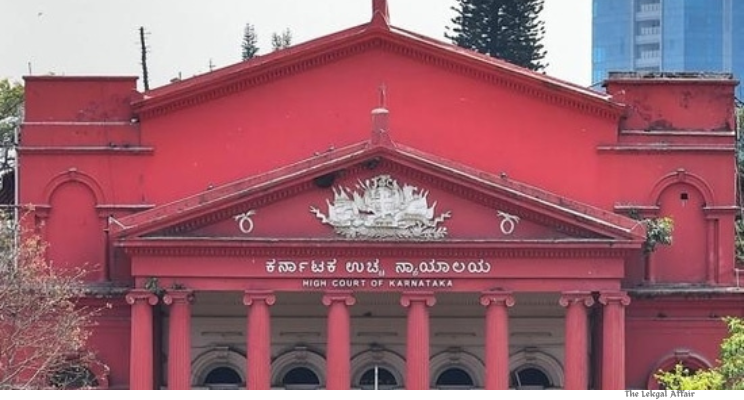
In the matter of Ningappa v. Prabhatbhai & Anr., adjudicated by the Karnataka High Court in Misc. First Appeal No. 202819 of 2023, Justice Ravi V. Hosmani delivered a significant ruling on the scope of dependency under the Motor Vehicles Act. The case revolved around the tragic death of Ningappa’s wife in a road accident, following which he claimed compensation on the grounds of loss of dependency. The Motor Accident Claims Tribunal (MACT) had accepted the accident occurred due to rash and negligent driving but denied compensation under the head of dependency, citing allegations that the deceased and her husband were not cohabiting at the time of her death. Dissatisfied with the Tribunal’s decision, Ningappa approached the High Court, which ultimately ruled in his favor, emphasizing that the status of living separately cannot extinguish the legal presumption of dependency, especially in absence of concrete evidence of separation or remarriage. The ruling clarified the burden of proof in such matters and reiterated the inclusive understanding of the term “dependent” under MV Act, ensuring that claimants are not unjustly denied compensation due to subjective interpretations or technicalities.
Arguments:
Ningappa, the appellant, was represented by Advocate Basavaraj R. Math. He contended that under Section 166 of the Motor Vehicles Act, a legal representative of a deceased person is entitled to file a claim petition. As a Class-I heir and the deceased’s husband, he maintained his right to claim compensation, especially for loss of dependency. His counsel emphasized that there was no concrete proof or legal declaration of separation, and mere allegations or witness statements without corroborative evidence could not suffice to deny a rightful claim. The complainant, who was the deceased’s brother and examined as PW-3, had initially alleged in his police complaint that the deceased was living separately. However, during his deposition, he admitted that he was illiterate and unaware of the complaint’s contents. This contradiction, the appellant argued, weakened the insurer’s case and nullified the basis for denying dependency compensation.
On the other hand, the insurance company, represented by Advocate Preeti Patil Melkundi, supported the Tribunal’s conclusion, asserting that the deceased and the claimant husband were not residing together. The insurer leaned heavily on the initial complaint filed by the deceased’s brother to argue that there was no dependency between the deceased and the claimant. The absence of cohabitation, according to them, implied a lack of financial interdependence. Furthermore, they maintained that the Tribunal had rightly awarded compensation under conventional heads such as loss of consortium and funeral expenses and that there was no justification for extending compensation under the head of dependency.
Court’s Judgment:
The Karnataka High Court, after thoroughly examining the evidence and legal submissions, disagreed with the Tribunal’s reasoning and the insurer’s contentions. Justice Ravi V. Hosmani highlighted that the claim petition had already been allowed on merits, and the insurer had not challenged the award under conventional heads. The Court emphasized that there was no denial or severance of the marital relationship between the claimant and the deceased, and cohabitation cannot be imposed as an additional requirement for recognizing loss of dependency. Importantly, the Court observed that the insurer’s reliance on the complaint by the deceased’s brother could not be sustained, especially when the brother admitted in court that he was illiterate and did not understand the contents of the complaint. This admission, according to the Court, sufficiently explained the discrepancy in the documentary record and oral testimony.
The Court further stated that dependency under MV Act must not be interpreted narrowly. It reminded that courts have consistently held that the term “dependent” must be understood liberally to include spouses even if they were not living under the same roof at the time of the accident, unless there is concrete proof of estrangement or remarriage. The High Court found that there was no material on record to establish that the claimant had contracted a second marriage or was legally separated. Thus, the denial of compensation towards loss of dependency was contrary to law.
Accordingly, the High Court modified the compensation amount, awarding an additional sum of ₹14,96,250 with interest at the rate of 6% per annum from the date of the claim petition till the date of realization. It directed the insurance company to deposit this amount with interest before the Tribunal within six weeks.