


Introduction:
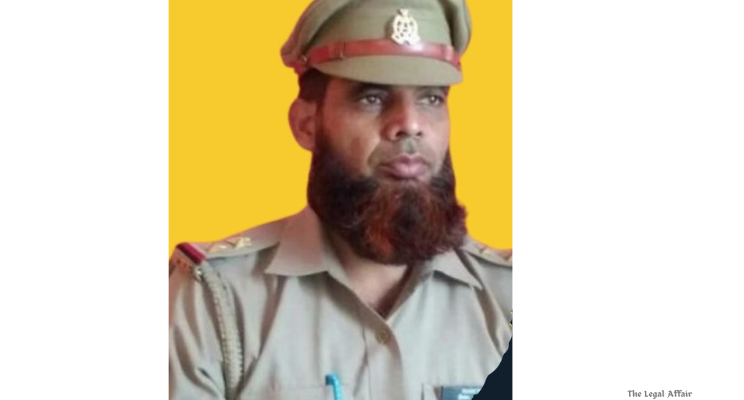
In a landmark decision, the Madras High Court ruled in favor of police constable G. Abdul Khadar Ibrahim, who faced punishment for maintaining a beard in accordance with his religious beliefs. The court emphasized India’s rich tapestry of diverse religions and customs, asserting that the police department’s need for discipline should not infringe upon the religious practices of minority communities. This judgment, delivered by Justice L. Victoria Gowri, underscores the balance between institutional discipline and individual religious rights.
G. Abdul Khadar Ibrahim, a Grade I Police Constable, faced disciplinary action for maintaining a beard and failing to report to duty after a 31-day earned leave. An inquiry concluded that Ibrahim had violated the mandate of the Madras Police Gazette, leading to a punishment of a three-year stoppage of increment, later reduced to two years upon appeal. Dissatisfied, Ibrahim approached the Madras High Court, seeking redress.
Arguments of Both Sides:
Ibrahim argued that the disciplinary actions were taken without proper consideration of his religious obligations. As a Muslim, he maintained a beard following the commandments of Prophet Mohammed, a practice acknowledged and permitted by the Madras Police Gazette for Muslim officers. He contended that the orders were passed without proper application of mind and failed to consider standing orders that protected his religious practices. Furthermore, Ibrahim highlighted that his failure to report to duty was due to medical reasons, which should have warranted leave approval.
The police authorities defended their decision, portraying Ibrahim as a habitual troublemaker with a history of disciplinary issues. They asserted that the punishment was justified and the orders were passed with due diligence and consideration. The authorities maintained that maintaining discipline within the force was paramount, and Ibrahim’s actions warranted the penalties imposed.
Court’s Judgment:
Justice L. Victoria Gowri’s ruling was pivotal in balancing religious freedom with institutional discipline. The court referred to an Office Memorandum in the Madras Police Gazette, which allowed Muslim officers to maintain beards, recognizing their religious significance. Justice Gowri emphasized that while discipline is crucial in the police force, it should not extend to punishing individuals for following their religious practices, especially those explicitly permitted by departmental regulations.
Regarding Ibrahim’s absence due to medical reasons, the court found that the authorities failed to consider his medical condition and the associated need for leave. The court viewed the punishment as excessively harsh and disproportionate to the infractions cited.
The Madras High Court quashed the disciplinary order against Ibrahim and remanded the matter back to the Commissioner of Police for fresh consideration. The judgment underscored that enforcing discipline should not come at the cost of infringing on constitutionally protected religious freedoms. The court’s decision reinforced the principle that minority communities should not be penalized for practices integral to their faith, especially when such practices are acknowledged and permitted by existing regulations.