


Introduction:
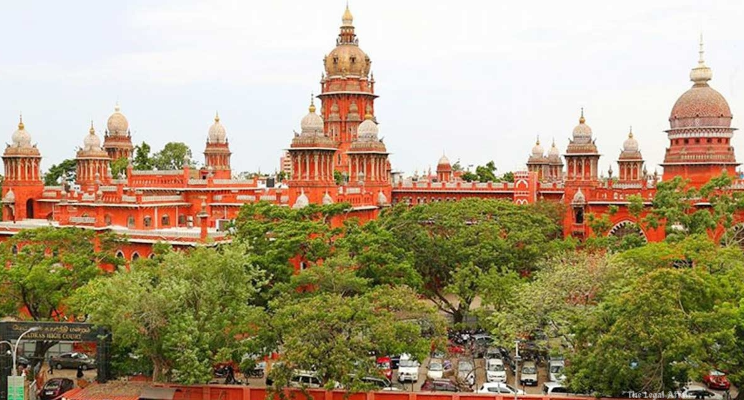
In a significant ruling, the Madras High Court quashed the criminal defamation case against AIADMK leader C. Ve. Shanmugam emphasised the paramount importance of freedom of speech and expression in a democratic society. Justice G.K. Ilanthiraiyan presided over the matter, underscoring that the right to dissent is fundamental and that opposition parties play a crucial role in highlighting governmental shortcomings.
Background of the Case:
The case originated from a speech delivered by C. Ve. Shanmugam during a demonstration near the Thiruvalluvar Statue in Villupuram. In his address, Shanmugam criticized the Chief Minister of Tamil Nadu, alleging failures in governance and highlighting issues such as inflation and the rising prices of essential commodities. Following this, a complaint was filed by the Public Prosecutor, leading to the Villupuram court taking cognizance of offenses under Section 499 of the Indian Penal Code (IPC), punishable under Section 500 IPC. Challenging this, Shanmugam approached the Madras High Court seeking the quashing of the proceedings.
For the Petitioner (C. Ve. Shanmugam):
- The speech was part of a lawful protest addressing genuine public concerns, particularly the surge in prices of essential goods.
- The prosecution was alleged to be politically motivated, aiming to suppress dissenting voices.
- In a democratic framework, the opposition has the inherent right to critique the government and bring attention to its perceived failures.
For the Respondent (State):
- The speech was contended to be defamatory, intentionally maligning the reputation of the Chief Minister and the state government.
- It was argued that the remarks were not constructive criticism but were made in bad faith to tarnish the image of the Chief Minister.
- The prosecution maintained that there were sufficient grounds for the case to proceed to trial.
Court’s Observations and Judgment:
Justice Ilanthiraiyan, after a thorough examination of the arguments and evidence, made several pivotal observations:
- Role of Opposition in a Democracy: The court highlighted that opposition parties have a legitimate role in pointing out governmental failures and shortcomings to the public. Such actions are vital for a healthy democracy.
- Freedom of Speech and Expression: Reiterating the significance of Article 19(1)(a) of the Constitution, the court emphasized that it serves as a conduit for expressing dissent. Shanmugam’s speech was deemed an exercise of this right, representing criticism of the current government.
- Limitations on Free Speech: While upholding the right to free speech, the court noted that it is not absolute and does not extend to hate speech. The language used by Shanmugam was acknowledged as lacking elegance, and he was cautioned against employing hate speech in public addresses.
- Defamation and Public Order: The court observed that for speech to be curtailed on grounds of defamation, it must have a tangible tendency to disrupt public order. In this instance, no evidence suggested that Shanmugam’s remarks led to such disruption.
- Expectation from Public Figures: Public officials and figures are expected to exhibit a higher threshold for criticism. The court remarked that holders of public office should be resilient to critiques and use them as feedback for policy improvements.
Based on these considerations, the court concluded that the speech in question fell within the permissible limits of free expression and did not constitute defamation under Section 499 IPC. Consequently, the criminal proceedings against Shanmugam were quashed.