


Introduction:
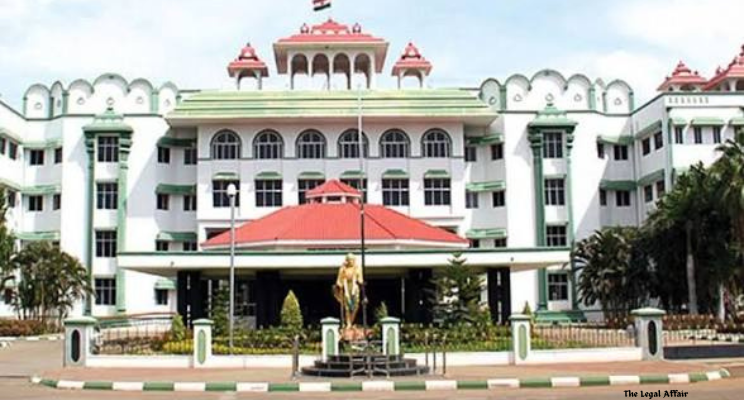
The Madras High Court, in P. Palanikumar v. R. Selvi (A.S. (MD) No.162 of 2018, 2026 LiveLaw (Mad) 269), delivered a significant judgment emphasizing the proactive role of judges in the administration of justice. A Division Bench comprising Justice G.R. Swaminathan and Justice R. Poornima held that Section 165 of the Indian Evidence Act, 1872 empowers a judge to ask any question, in any form and at any stage of the proceedings, regarding any relevant or even irrelevant fact if such questioning is necessary for discovering the truth. The Court observed that this extraordinary power is not merely permissive but carries with it a duty to ensure that justice is not defeated because of doubts left unexplored during trial.
The appeal arose from a money recovery suit filed by the appellant, Palanikumar, who sought recovery of ₹31,54,167 together with interest at the rate of 12% per annum from the respondent, Selvi. According to the appellant, he had advanced a loan of ₹25,00,000 to the respondent on 5 June 2015. In acknowledgment of the debt, the respondent allegedly executed a promissory note agreeing to repay the principal amount with interest at 12% per annum. To secure repayment, the respondent was also stated to have deposited the original sale deed relating to her property with the appellant.
Despite receiving a legal notice and subsequently facing a civil suit, the respondent neither filed a written statement nor entered the witness box to contest the allegations. She also did not cross-examine the appellant when he deposed before the Trial Court. Ordinarily, such conduct would substantially strengthen the plaintiff’s case, particularly where documentary evidence remained unchallenged.
However, the Additional District Judge dismissed the suit. The Trial Court reasoned that the appellant had failed to establish that he possessed sufficient financial capacity to advance such a substantial loan. Without any evidence being led by the defendant disputing the transaction or questioning the plaintiff’s means, the Trial Court independently concluded that the plaintiff lacked the financial ability to lend ₹25,00,000 and rejected the claim.
Aggrieved by this approach, Palanikumar approached the Madras High Court in appeal. The principal issue before the Division Bench was whether the Trial Court could dismiss a suit on grounds not supported by evidence and without exercising its statutory power under Section 165 of the Indian Evidence Act to clarify doubts regarding the plaintiff’s financial capacity.
The judgment therefore presented the High Court with an opportunity to elaborate upon the judicial duty embedded in Section 165 and to explain how active judicial participation during trial promotes fairness, transparency and the broader objective of discovering the truth.
Arguments of the Parties:
The appellant contended that the Trial Court had committed a serious error in dismissing the suit despite the overwhelming absence of any defence from the respondent. It was argued that the respondent neither filed a written statement denying the transaction nor disputed her signatures on the promissory note. She also chose not to cross-examine the appellant or lead any evidence contradicting the plaintiff’s version of events.
According to the appellant, these omissions were significant because the documentary evidence produced before the Court remained completely unchallenged. The promissory note executed by the respondent and the deposit of the original title deed constituted strong evidence supporting the existence of the loan transaction. In addition, the respondent’s reply to the legal notice did not deny either the loan transaction or the execution of the promissory note. Consequently, there existed no material on record enabling the Trial Court to reject the plaintiff’s claim.
The appellant further submitted that the Trial Court had introduced an entirely new issue by questioning his financial capacity to lend ₹25,00,000. This issue was never pleaded by the defendant, nor was any evidence produced to suggest that the plaintiff lacked the means to advance the loan. Instead of relying upon evidence, the Trial Court had reached its own conclusions based on assumptions and personal suspicion.
It was argued that if the Trial Judge genuinely entertained doubts regarding the appellant’s financial capacity, the proper course would have been to exercise the powers conferred under Section 165 of the Indian Evidence Act. The Court could have questioned the appellant regarding his income, savings, business activities or other sources of funds. Such clarification would have enabled the Court to decide the issue on the basis of evidence rather than conjecture.
The appellant therefore contended that the dismissal of the suit was contrary to settled principles governing appreciation of evidence and violated the fundamental requirement that judicial findings must be based on material available on record.
The respondent, though represented before the High Court, had not actively contested the suit before the Trial Court. No written statement had been filed denying the alleged loan transaction, the execution of the promissory note or the deposit of the title deed. Likewise, no oral evidence had been adduced challenging the plaintiff’s version.
The respondent had also refrained from cross-examining the appellant during trial. Consequently, there was no evidence before the Trial Court contradicting the plaintiff’s testimony or disputing the authenticity of the documents relied upon by him.
In the absence of any substantive defence before the Trial Court, the respondent’s case essentially rested upon supporting the judgment under appeal and defending the Trial Court’s conclusions regarding the plaintiff’s financial capacity.
Court’s Judgment:
Allowing the appeal, the Madras High Court found the reasoning adopted by the Trial Court to be legally unsustainable and fundamentally inconsistent with the statutory scheme of the Indian Evidence Act. The Division Bench observed that the Trial Court had dismissed the suit on assumptions unsupported by pleadings or evidence and had failed to exercise the wide powers specifically entrusted to judges under Section 165 of the Indian Evidence Act.
The Court placed considerable emphasis on the language of Section 165, describing it as one of the broadest powers available to a judge during trial. The provision authorises the judge to ask any question, in any form, at any stage of the proceedings, either to witnesses or to the parties, regarding any fact, whether relevant or irrelevant, if such questioning assists the Court in discovering the truth. The provision further empowers the judge to direct production of any document or thing necessary for effective adjudication.
The Bench observed that the purpose of Section 165 is to ensure that the search for truth is not defeated by procedural limitations or incomplete advocacy. While parties present their respective cases, the judge is not expected to remain a passive spectator. Instead, the judge bears an independent responsibility to clarify doubts that arise during the course of the proceedings so that justice is based upon facts rather than speculation.
The Court made the following significant observation:
“Section 165 of the Indian Evidence Act, 1872 enables the Judge to ask any question he pleases, in any form, at any time, of any witness, or of the parties about any fact relevant or irrelevant and may order the production of any document or thing. This cannot be objected. When such a sweeping power was available, the trial Judge was obliged to have exercised the same.”
Applying this principle, the High Court held that if the Trial Judge genuinely doubted the appellant’s capacity to lend ₹25,00,000, the proper judicial course was to question the appellant directly regarding his financial resources. Instead, the Trial Court chose to dismiss the suit solely on the basis of personal suspicion without seeking clarification from the party concerned.
The High Court strongly criticised such an approach and observed that judicial decision-making cannot rest upon assumptions or undisclosed reasoning. The Bench eloquently remarked:
“The Judge should not sit like a sphinx. He must engage in a dialogue with the Bar. He must pose questions to the witness to disabuse his mind of lingering suspicions. This is also a facet of the principles of natural justice. The litigant cannot be taken by surprise. Our adjudicatory system contemplates laying all cards on the table. There can be no ace up the Judge’s sleeve. The outcome of the judgment may be a bolt from the blue but its substance must not.”
These observations underline an important aspect of natural justice. A judge who entertains doubts regarding a party’s case must communicate those concerns during the trial itself, thereby providing the concerned party with an opportunity to explain or clarify the issue. A litigant should never discover for the first time, while reading the judgment, that the Court rejected the case on grounds which were never disclosed during the proceedings.
The Court further observed that the respondent’s conduct significantly strengthened the appellant’s case. The respondent had not filed a written statement, had not entered the witness box, had not cross-examined the appellant and had not denied the execution of the promissory note even in her reply to the legal notice. In these circumstances, the Trial Court’s adverse finding regarding the appellant’s financial capacity lacked any evidentiary foundation.
The Division Bench held that judicial findings must always emerge from pleadings, evidence and legally permissible inferences. Personal suspicion, however genuine, cannot substitute proof. Where doubts arise, the judge is expected to invoke the powers under Section 165 to seek clarification rather than deciding the matter against a party without affording an opportunity to address those concerns.
The judgment also reinforces the modern understanding of the role of judges in civil trials. While courts must remain impartial, impartiality does not require passivity. Active judicial engagement aimed at discovering the truth strengthens rather than compromises fairness, provided the judge does not assume the role of either party’s advocate.
Accordingly, the High Court concluded that the Trial Court’s approach was “utterly unsatisfactory” and that the reasons assigned for dismissing the suit were legally unsustainable. Since the adverse findings were unsupported by evidence and resulted from a failure to exercise the powers available under Section 165, the judgment and decree passed by the Trial Court were liable to be interfered with.
The appeal was therefore allowed, and the judgment and decree of the Trial Court were set aside. Through this decision, the Madras High Court has reaffirmed that Section 165 of the Indian Evidence Act is a powerful instrument for discovering the truth and ensuring substantive justice. The ruling serves as a reminder that judges are not silent spectators in judicial proceedings but active participants entrusted with the responsibility of eliminating doubt through fair questioning, open dialogue and adherence to the principles of natural justice.