


Introduction:
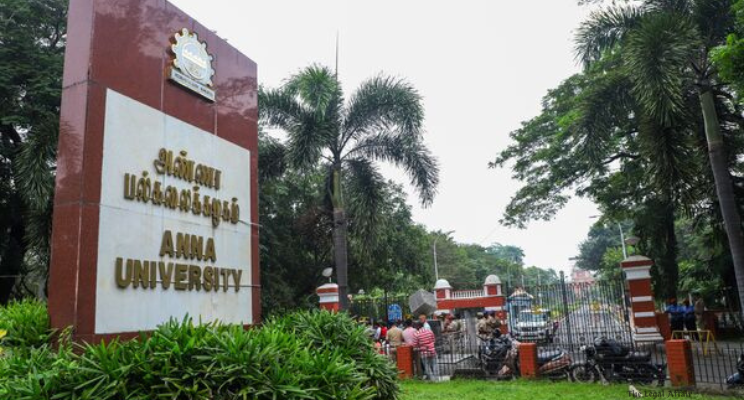
In a significant ruling on December 28, 2024, the Madras High Court formed a Special Investigation Team (SIT) to probe the alleged sexual assault of a second-year engineering student within the Anna University campus in Chennai. The bench, comprising Justice SM Subramaniam and Justice V Lakshminarayanan, passed the order following a batch of pleas requesting a Central Bureau of Investigation (CBI) probe into the incident. The court found substantial lapses on part of both the police and Anna University, leading to the formation of the SIT, which would consist of women officers. The court stressed that the investigation must be conducted with the utmost seriousness, and no offender, regardless of their status or position, should be allowed to evade justice. The bench’s remarks touched on multiple aspects of the case, including the leaking of the FIR, which contained the victim’s personal details, the insensitive handling of the FIR, and the treatment of the victim by the authorities.
Arguments of Both Sides:
The petitioner, represented by the victim’s family, had sought a CBI investigation into the case, claiming that the local police and Anna University had mishandled the case from the outset. The petitioners argued that the police failed to act promptly, and the university did not take adequate steps to support the victim. Additionally, they pointed out that the leaking of the FIR, which included the victim’s sensitive personal information, was a major violation of her privacy and led to unnecessary trauma. They further contended that the insensitive phrasing of the FIR was an example of victim-blaming, which could harm the victim’s chances of obtaining justice.
The defense, on the other hand, represented by the Tamil Nadu government and police authorities, argued that the case was being handled as per the procedures laid out in the law. They expressed regret over the lapses but claimed that the police had acted within their capabilities under the circumstances. The government emphasized that an investigation was ongoing and that necessary steps would be taken to address the lapses pointed out by the court. They also asserted that the leak of the FIR and other procedural flaws were unintended and would be rectified.
Court’s Judgment:
The court, after examining the arguments from both sides, was particularly critical of the lapses in handling the case by both the police and Anna University. The bench noted that there had been a clear mishandling of the FIR, where the personal details of the victim had been leaked, causing undue trauma. The court observed that the leak was a grave violation of privacy and directed the state to pay interim compensation of Rs. 25 lakh to the victim. The court also made it clear that this compensation was without prejudice to any other claims that the victim might have in the criminal cases arising from the assault.
The court further reprimanded the police for their insensitive handling of the FIR. It pointed out that the wording of the FIR itself seemed to blame the victim, suggesting that her actions contributed to the assault. The bench emphasized that this victim-blaming narrative only exacerbated the trauma for the victim and discouraged many women from coming forward with similar cases. The court stressed that society must stop blaming women for crimes committed against them, adding that the perpetrators often benefit from such victim-shaming tactics.
In terms of ensuring that the victim’s rights were protected moving forward, the court ordered that Anna University provide counseling to the victim and facilitate her education without charging any fees, including tuition, hostel, or miscellaneous fees. The court also directed the Director General of Police to ensure that the victim and her family were provided with interim protection.
The court went on to form a Special Investigation Team (SIT), comprised entirely of women police officers, to investigate the assault. The bench emphasized the importance of the SIT’s composition, stating that the presence of women officers would help ensure a sensitive and thorough investigation. The court expressed confidence that the SIT would take up the investigation in earnest and ensure that a charge sheet was filed promptly. The SIT was instructed to investigate the matter without bias and ensure that justice was served, irrespective of the status or position of the accused.
The bench also criticized the actions of the Commissioner of Police, who had held a press conference discussing the case before obtaining prior government approval. The court expressed its disapproval, stating that such a press meeting violated service rules and could further complicate the investigation. The court directed the state government to review the matter and take appropriate action against the Commissioner if necessary.
Conclusion:
The Madras High Court’s decision underscores the importance of handling sexual assault cases with sensitivity, urgency, and respect for the victim’s dignity. By forming a Special Investigation Team (SIT) with women officers, the court has taken a significant step in ensuring a fair and thorough investigation, free from any biases. The court’s strict stance on victim-blaming, the police’s lapses, and the leaking of personal information sends a clear message that such actions will not be tolerated. In addition, the court’s direction to Anna University to support the victim’s education without charging fees and its mandate for interim compensation to the victim highlight the need for institutions to take responsibility in such cases.
Moreover, the court’s rebuke of the Commissioner of Police for the press conference serves as a reminder to authorities about the importance of adhering to rules and procedures, especially when dealing with sensitive matters. Overall, the judgment reinforces the need for society, the police, and educational institutions to act with greater sensitivity and responsibility in cases of sexual violence, providing the necessary support to the victims while ensuring justice is served.