


Introduction:
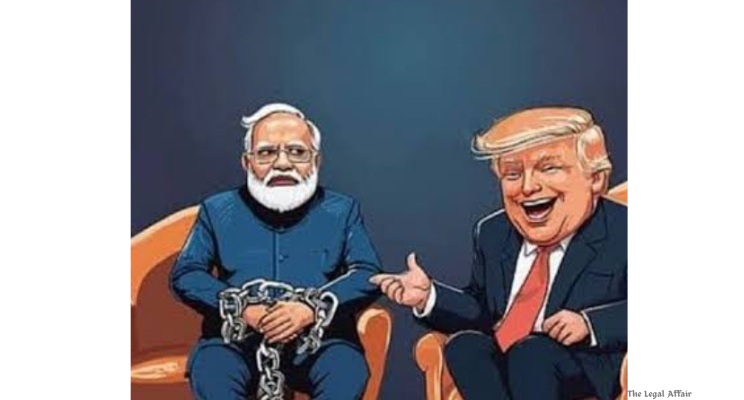
In a significant legal development, the Madras High Court addressed the contentious issue surrounding the Tamil weekly magazine, Ananda Vikatan, and its depiction of Prime Minister Narendra Modi and U.S. President Donald Trump in a political cartoon. The case, titled Ananda Vikatan Productions Private Ltd and Others v. Union of India (WP 7944 of 2025), was presided over by Justice Bharatha Chakravarthy.
Background of the Case:
The controversy began when Ananda Vikatan published a cartoon on February 10, 2025, illustrating Prime Minister Modi in shackles and chains, seated beside President Trump. This depiction was a satirical commentary on the deportation of several Indians from the United States, who were reportedly transported in restraints, and it preceded a scheduled meeting between the two leaders at the White House. The publication of this cartoon led to significant backlash, particularly from political figures. BJP Tamil Nadu President K. Annamalai accused the magazine of defaming the Prime Minister and undermining India’s diplomatic efforts, prompting him to raise the issue with the Minister of State for Information and Broadcasting in New Delhi. Subsequently, on February 25, 2025, the Ministry of Information and Broadcasting ordered the blocking of Ananda Vikatan’s website, citing concerns that the content impinged upon the sovereignty of the country.
Petitioner’s Arguments:
Represented by Senior Advocate Vijay Narayan, Ananda Vikatan challenged the website’s blocking on several grounds:
- Freedom of Speech and Expression: Narayan contended that the cartoon did not violate any of the reasonable restrictions outlined in Article 19(2) of the Indian Constitution. He argued that the depiction neither threatened the sovereignty and integrity of India nor harmed the country’s friendly relations with the United States.
- Journalistic Freedom: Emphasizing the role of satire in media, the counsel highlighted that political cartoons are a common form of expression in journalism. He argued that subjecting the magazine to such punitive action for a satirical cartoon was an overreach and posed a threat to press freedom.
- Lack of Transparency: The petitioner pointed out that the Central Government had not disclosed the identity of the complainant whose grievance led to the website’s blocking. This lack of transparency, they argued, was concerning and indicative of arbitrary action.
Respondent’s Arguments:
Additional Solicitor General ARL Sundaresan, representing the Union of India, defended the government’s decision with the following points:
- Impact on International Relations: The ASG asserted that the cartoon had the potential to adversely affect India’s diplomatic relations with the United States. He maintained that such content could be perceived negatively, thereby justifying the need for its removal.
- Legal Provisions for Content Blocking: Citing Article 19(2) of the Constitution and Section 69A of the Information Technology Act, Sundaresan argued that the government possessed the authority to impose reasonable restrictions on content deemed harmful to the sovereignty, integrity, and security of the state, as well as to its foreign relations.
- Conditional Restoration: The ASG noted that a committee appointed by the Ministry had concluded that the website could be unblocked if the offending cartoon was removed. He opposed lifting the ban unconditionally, suggesting that doing so would effectively grant the relief sought in the main petition before a detailed examination.
Court’s Judgment:
After considering the arguments from both sides, Justice Bharatha Chakravarthy issued the following directives:
- Lifting of the Ban: The Court ordered the Ministry of Information and Broadcasting to lift the ban on Ananda Vikatan’s website, thereby restoring public access.
- Temporary Removal of the Cartoon: Concurrently, the magazine was instructed to temporarily remove the page containing the controversial cartoon from its website. This measure was suggested to balance the interests of free expression with the government’s concerns until a final decision is reached.
- Further Proceedings: The Court directed the government to file a detailed counter to the plea and adjourned the case for two weeks, indicating that a comprehensive examination of the issues would follow.
Conclusion:
The Madras High Court’s interim order underscores the judiciary’s role in balancing the fundamental right to freedom of speech and expression with the state’s responsibility to maintain sovereignty and diplomatic relations. By directing the restoration of Ananda Vikatan’s website while temporarily removing the contentious cartoon, the Court acknowledged the importance of press freedom and the role of satire in a democratic society. Simultaneously, it addressed the government’s concerns about potential diplomatic repercussions. This case highlights the ongoing debate over the limits of free expression, especially in the context of political satire, and sets a precedent for how similar disputes might be navigated in the future.