


Introduction:
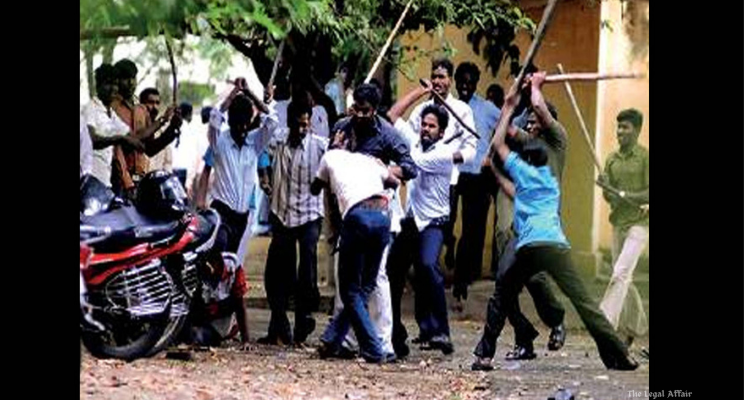
In a significant ruling, the Madras High Court granted bail to four students who were allegedly involved in a tragic clash that resulted in the death of a fellow student. Justice A.D. Jagadish Chandira, while ordering their release on bail, imposed conditions such as executing a bond of Rs. 15,000 with two sureties, one of whom must be a parent of the student. Additionally, the court instructed the petitioners to assist in the Trauma wards of the Rajiv Gandhi Government General Hospital and the Kilpauk Medical College Hospital, preparing a written account of their experiences. This case revolves around an incident of violent rivalry between students from different colleges over a long-standing tradition known as “Route Thala.” The prosecution alleged that the petitioners were involved in a fatal assault on a student named Sundar. However, the petitioners have denied the charges, asserting their innocence and claiming they were falsely implicated in the case.
The backdrop of the case involves a bitter rivalry between students of Pachaiyappa’s College and another institution over the “Route Thala” issue, which is a common tradition among college students in Chennai. This tradition involves groups of students singing songs and supporting their respective colleges at bus stops, which sometimes leads to clashes over territorial and group loyalties. The situation escalated when Sundar, a student, was allegedly assaulted by the petitioners and subsequently died due to the injuries inflicted. In response to the rising incidents of such group rivalries among students, the Madras High Court took a broader view, recognizing the issue as a symptom of deeper problems in student culture and institutional responsibilities.
Arguments of Both Sides:
The petitioners argued that they were innocent and had been falsely implicated in the incident. They emphasized that there was no concrete evidence linking them to the alleged assault on Sundar. Their defence pointed out that the accusations were based on group rivalry, and they claimed that they had no part in the tragic incident that led to the student’s death. They further argued that the case was a result of the escalating tensions between groups of students, which had been building over the “Route Thala” tradition.
On the other hand, the prosecution contended that the petitioners were directly involved in the assault, which led to the untimely death of Sundar. They highlighted the growing trend of student group violence and emphasized that such behaviour must be curbed through strict legal action. The prosecution’s case was based on testimonies and evidence that suggested the petitioners had engaged in physical altercations that escalated into a fatal assault.
Court’s Judgment:
In delivering the judgment, Justice A.D. Jagadish Chandira granted bail to the petitioners, but he also took the opportunity to reflect on the wider societal issue of student violence. The judge noted that while the petitioners’ release on bail was justified, the court was deeply concerned about the escalating group rivalries among students. Justice Chandira emphasized the need for a more comprehensive approach to dealing with such incidents, particularly through the involvement of parents, teachers, and educational institutions. He pointed out that the focus should not only be on the individual actions of students but also on addressing the systemic issues that lead to such violentbehaviourr.
The judge further remarked on the lack of empathy shown toward the students involved in such cases, noting that while sympathy was often directed toward the victim, there was insufficient attention given to the need for guidance and reform for the students who engaged in these altercations. He stressed that students were at a crucial developmental stage in their lives and could be easily guided away from destructive behaviours through proper counselling, education, and family support. The judge recommended that regular teacher-parent meetings be conducted to address these issues early and help students understand the consequences of their actions.
Government’s Response and Educational Reforms: During the proceedings, the State informed the court that there had been 231 cases of student-related disturbances and clashes over the past decade. These cases, the State pointed out, primarily involved altercations between rival student groups, often fueled by trivial issues. The government also informed the court that steps were being taken to address the problem, including issuing communications to the principals of Pachaiyappa’s College and Presidency College to sensitize students about the dangers of such group rivalries.
Justice Chandira expressed doubts regarding the effectiveness of current teacher-parent meetings, raising concerns about the actual participation of teachers in these meetings. He pointed out that many teachers and lecturers, who were supposed to be role models for students, often engaged in other professions, neglecting their primary responsibility as educators. This, he suggested, was contributing to the deterioration of student discipline and behaviour. The judge’s observations underscored the need for reform not only within the student body but also within the educational institutions and their faculty, who play a critical role in shaping students’ values and behaviour.