


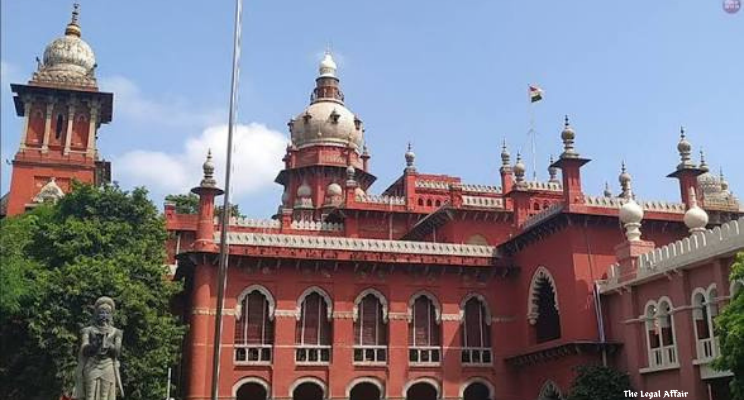
Introduction:
The Madras High Court has directed the Regional Passport Office and the concerned passport authorities to process the passport application of A.G. Perarivalan, one of the convicts in the Rajiv Gandhi assassination case, within four weeks. The Court held that the authorities could not indefinitely keep his application pending merely because they were awaiting a police verification report, particularly when he had already been set at liberty by the Supreme Court and no criminal case was pending against him.
Justice P.T. Asha passed the order while allowing Perarivalan’s writ petition seeking a direction to the authorities to process his passport application and take a decision on it without further delay. The Court observed that the reluctance of the passport authorities to proceed with the application, solely on the ground that a police report had not been received, was unjustified in the circumstances of the case.
The dispute concerned Perarivalan’s application under the Normal Scheme, submitted through the Passport Seva Online Portal on May 6, 2024. He subsequently appeared for his scheduled appointment on October 21, 2024, following which the application was registered under a file number and placed on hold pending police verification. Despite his claim that he had completed the necessary formalities and cooperated with the authorities, the application remained unprocessed for an extended period.
Perarivalan approached the High Court contending that the unexplained delay had caused him considerable hardship and affected his plans to travel abroad for higher studies. His grievance was not merely that the passport had not been issued, but that the authorities had failed to take a decision on his application despite the passage of substantial time.
The matter also raised an important question concerning the exercise of administrative discretion in passport processing. A person’s past conviction may be relevant to the consideration of a passport application under the applicable legal framework. However, the authorities are still required to examine the applicant’s present legal position and process the application in accordance with law. The mere fact that an applicant had previously faced a criminal conviction cannot, without examining the relevant circumstances and applicable provisions, justify indefinite administrative inaction.
In Perarivalan’s case, the Court took particular note of the fact that although he had earlier been convicted and sentenced to death, he was subsequently set at liberty by the Supreme Court. The High Court considered this subsequent legal development significant while examining the justification offered by the passport authorities for keeping his application pending.
The Court ultimately directed the Passport Seva Kendra to treat the counter affidavit filed by the Inspector of Police, Jolarpettai Police Station, Thirupathur District, as the police verification report and proceed with the application accordingly. The entire exercise was directed to be completed within four weeks from the date of receipt of a copy of the order.
Perarivalan was represented by Advocate R.A. Parkavi. The respondents were represented by U.M. Shankaar, Central Government Standing Counsel, and Durai Gunasekaran, Government Advocate (Criminal Side).
Arguments of the Parties:
Perarivalan approached the High Court seeking a writ of mandamus directing the passport authorities to process his application and dispose of it expeditiously. His principal grievance was that the application had remained pending for an unreasonable period despite his having complied with the procedural requirements and cooperated with the authorities.
He submitted that he had applied for a passport under the Normal Scheme through the Passport Seva Online Portal on May 6, 2024. After submitting the online application, he appeared before the concerned Passport Seva Kendra on October 21, 2024, for the scheduled appointment. His application was thereafter registered under File No. MA3067042901524.
However, instead of proceeding with the application, the authorities placed it on hold pending police verification. Perarivalan maintained that he had completed the formalities required of him and had not withheld any information necessary for the processing of his application. Despite this, the authorities had failed to take the matter forward.
The petitioner argued that the continued pendency of the application was causing him hardship. He specifically submitted that the delay was affecting his plans to travel abroad for higher studies. In his view, an administrative process could not be allowed to remain unresolved indefinitely, particularly when the applicant had fulfilled the requirements within his control.
A significant part of his case concerned his present legal status. Perarivalan had been convicted in connection with the assassination of former Prime Minister Rajiv Gandhi and had initially been sentenced to death. However, he pointed out that he had subsequently been set at liberty by the Supreme Court. He therefore sought consideration of his passport application in light of the legal position that existed at the time of its processing.
The petitioner essentially contended that the authorities could not continue to treat his application as unresolved merely because a police verification report had not been received. He sought a direction requiring the authorities to consider the material already available and take a decision within a reasonable time.
The respondents, represented by the Central Government Standing Counsel and the Government Advocate (Criminal Side), were required to address the petitioner’s grievance concerning the pending police verification. The Inspector of Police, Jolarpettai Police Station, Thirupathur District, had filed a counter affidavit before the Court.
The precise substantive submissions advanced by the respondents are not fully detailed in the available case summary. However, the issue before the Court was the authorities’ continued reliance on the absence of a police verification report as the reason for not processing the application. The Court examined this position alongside the petitioner’s subsequent release by the Supreme Court and the material contained in the police inspector’s counter affidavit.
The respondents’ position, as reflected in the proceedings, did not persuade the Court that the application could legitimately remain pending without further action. Rather than allowing the absence of a separate verification report to continue obstructing the process, the Court adopted a practical course by directing the authorities to treat the Inspector’s counter affidavit as the police verification report.
This approach enabled the Court to address the administrative delay without itself issuing a passport or substituting its decision for that of the competent passport authority. The direction was confined to processing and disposing of the application within the stipulated period.
Court’s Judgment:
Justice P.T. Asha allowed the writ petition and directed the concerned passport authority to dispose of Perarivalan’s passport application within four weeks. The Court’s reasoning centred on his present legal position, the prolonged pendency of the application and the inadequacy of the explanation that the authorities were waiting for a police verification report.
At the outset, the Court took note of the history of the petitioner’s criminal proceedings. It acknowledged that Perarivalan had been convicted and sentenced to death in connection with the Rajiv Gandhi assassination case. However, the Court also noted that he had subsequently been set at liberty by the Supreme Court.
This distinction was material to the Court’s consideration of the passport application. The authorities could not proceed as though the petitioner’s earlier conviction and sentence, viewed in isolation, were sufficient to justify keeping the application pending. His subsequent release by the country’s highest court had to be taken into account when examining the justification for further administrative delay.
The Court specifically observed that no criminal case was pending against Perarivalan. In these circumstances, the authorities’ reluctance to process his application solely because they were awaiting a report from the police department was not justified.
The Court stated, “Considering the fact that the petitioner has been set at liberty by the Hon’ble Supreme Court, the reluctance on the part of the Passport Authority to process the petitioner’s passport application, solely on the ground that they were awaiting the report of the Police Department is not correct.”
The observation reflects the Court’s concern that an administrative authority must consider the applicant’s actual legal position rather than allow a procedural requirement to become an indefinite obstacle. Police verification may form part of the passport application process, but the absence of a report cannot automatically justify prolonged inaction without the authority taking appropriate steps to complete the process.
The Court’s order must also be understood in the context of the statutory framework governing passports. The Passports Act, 1967, regulates the issuance of passports and travel documents and sets out the circumstances in which an application may be considered, refused or a passport impounded or revoked. Section 6 of the Act deals with refusal of passports and travel documents, while Section 5 concerns the procedure for making and processing applications.
The statutory scheme requires passport authorities to examine applications in accordance with the Act and the applicable rules. The existence of a previous criminal conviction may be relevant under the prescribed legal conditions. However, the authority must consider the applicant’s circumstances and the legal position applicable to the particular case. The passport process cannot be reduced to an indefinite administrative hold merely because verification has not been completed.
In this case, the Court did not hold that every person who has been released after conviction is automatically entitled to a passport. Nor did it declare that the passport authorities were required to issue the document without examining the application under the governing law. Its direction was narrower: the authorities had to process and dispose of the pending application, taking into account the material placed before the Court and completing the exercise within the prescribed time.
An important feature of the judgment was the Court’s treatment of the counter affidavit filed by the Inspector of Police, Jolarpettai Police Station, Thirupathur District. Instead of permitting the application to remain stalled for want of a separate police verification report, the Court directed the passport authorities to consider the Inspector’s counter affidavit as the police verification report itself.
This direction was intended to remove the procedural obstacle that had prevented the application from moving forward. The Court thus adopted a practical solution that addressed the petitioner’s grievance while leaving the competent authority responsible for processing the application in accordance with the applicable requirements.
The Court issued a writ of mandamus directing the second respondent to dispose of the petitioner’s passport application bearing File No. MA3067042901524. The relevant portion of the order stated:
“Therefore, a writ of mandamus is issued to the 2nd respondent to dispose of the petitioner’s passport application bearing File No.MA3067042901524, by considering the counter affidavit filed by the Inspector of Police, Jolarpettai Police Station, Thirupathur District, as the police verification report. The aforesaid exercise shall be completed within a period of four (4) weeks from the date of receipt of a copy of this order.”
The four-week deadline is a significant part of the relief granted. It ensures that the application does not continue to remain pending without a definite timeline for action. By prescribing a clear period, the Court placed an enforceable obligation on the concerned authority to complete the processing exercise promptly.
The judgment also illustrates the scope of a writ of mandamus in matters involving administrative delay. A mandamus is generally issued where a public authority has a legal duty to perform an act and fails to discharge that duty. In the present case, the Court found sufficient justification to intervene because the passport application had remained pending and the explanation based solely on the awaited police report was not acceptable in light of the petitioner’s circumstances.
Importantly, the Court did not itself grant the passport or direct that it be issued unconditionally. Instead, it required the authority to process and dispose of the application, treating the police inspector’s counter affidavit as the verification report. This distinction preserves the statutory responsibilities of the passport authority while ensuring that the application is not left unattended.
The decision therefore addresses two related aspects of administrative fairness. First, public authorities must take account of material developments in an individual’s legal status when considering an application. Second, procedural requirements must be implemented in a reasonable manner and cannot become a ground for unexplained or indefinite delay.
The fact that Perarivalan had been convicted in the past was not ignored by the Court. Rather, the Court considered the subsequent order of the Supreme Court setting him at liberty and the absence of any pending criminal case, and concluded that the passport authority’s stated reason for inaction was insufficient to justify continued pendency.
The ruling does not dispense with the statutory conditions governing passport issuance or establish a general exemption from police verification for former convicts. Its significance lies in the Court’s insistence that an application must be dealt with through a reasoned and time-bound administrative process, particularly where the authority already has relevant material before it.
Ultimately, the Madras High Court allowed the petition and issued a writ of mandamus directing the second respondent to process and dispose of Perarivalan’s passport application within four weeks from receipt of a copy of the order. The counter affidavit filed by the Inspector of Police was directed to be treated as the police verification report for this purpose.
The decision reinforces the principle that administrative authorities cannot keep applications pending indefinitely by relying on procedural requirements without taking appropriate steps to resolve them. While passport issuance remains subject to the governing statutory framework, the processing of an application must be fair, timely and consistent with the applicant’s present legal position. In this case, the Court ensured that the petitioner’s application would finally move forward through a definite process and within a clearly prescribed timeframe.