


Introduction:
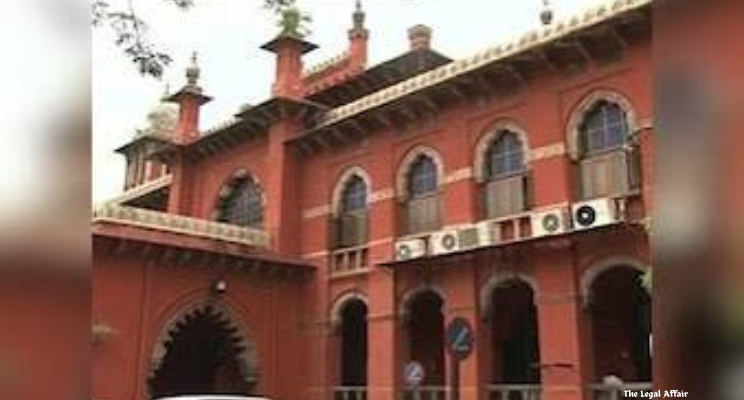
The Madras High Court, in Venkateswaran v. The Union of India and Another (WP No. 23077 of 2026, 2026 LiveLaw (Mad) 270), declined to entertain a public interest petition seeking the formulation of a comprehensive Standard Operating Procedure (SOP) for the conduct of the National Eligibility-cum-Entrance Test (NEET-UG) 2026. The matter was heard by a Division Bench comprising Chief Justice S.A. Dharmadhikari and Justice G. Arul Murugan, which dismissed the petition on the ground that substantially similar issues were already under active consideration before the Supreme Court of India.
The petition arose against the backdrop of one of the most significant controversies surrounding the NEET examination in recent years. The NEET-UG 2026 examination, conducted by the National Testing Agency (NTA) on May 3, 2026, was cancelled following allegations of a large-scale paper leak. Subsequent investigations reportedly revealed that a “guess paper” containing actual examination questions had been circulated through WhatsApp and Telegram weeks before the scheduled examination. The controversy led to widespread public concern regarding the integrity of the country’s premier medical entrance examination, compelling authorities to schedule a fresh examination on June 21, 2026.
The petitioner, Venkateswaran, a resident of Krishnagiri District in Tamil Nadu, approached the High Court not to challenge the cancellation of the examination itself but to seek institutional safeguards that would ensure a fair, transparent, uninterrupted, and uniform examination environment for all candidates across India. The petition highlighted practical issues experienced by candidates during examinations, including inconsistencies in the conduct of invigilators, interruptions during the examination process, and the absence of standardized operational guidelines governing examination centres.
The plea also assumed significance because the Supreme Court had already been monitoring reforms relating to NEET following its earlier judgment in 2024, pursuant to which a High-Powered Expert Committee had been constituted to recommend structural improvements in the examination process. The committee had reportedly suggested several measures aimed at strengthening security protocols, improving examination administration, and restoring public confidence in the system. Simultaneously, separate proceedings challenging the cancellation of the 2026 examination and the decision to hold a re-examination were also pending before the Supreme Court.
Against this broader legal backdrop, the Madras High Court was called upon to determine whether it should independently issue directions concerning the framing of an SOP or defer to the Supreme Court, which was already seized of multiple issues concerning the same examination process.
Arguments of the Parties:
The petitioner submitted that the controversy surrounding the cancellation of NEET-UG 2026 exposed serious shortcomings not only in examination security but also in the administration of examination centres across the country. According to the petitioner, the absence of a comprehensive Standard Operating Procedure resulted in inconsistent practices being followed at different examination centres, thereby affecting the uniformity and fairness expected from a national-level competitive examination.
It was argued that candidates appearing for NEET invest years of preparation, and any procedural irregularity or disruption during the examination could significantly affect their performance. Therefore, the petitioner contended that every student must receive an equal opportunity to attempt the examination under identical conditions. Uniformity in examination administration, according to the petitioner, was as important as the confidentiality of the question paper itself.
The petitioner sought a direction to the Union Government and the National Testing Agency to formulate a detailed SOP governing every stage of the examination process. Such guidelines, it was argued, should ensure uninterrupted writing time, standardized procedures for frisking, verification of candidates, handling of technical issues, treatment of emergencies, and uniform conduct by invigilators at every examination centre across the country.
As an immediate interim measure, the petitioner requested the Court to direct the National Testing Agency to issue ad hoc operational guidelines before the scheduled re-examination. These temporary guidelines were intended to address practical issues likely to arise during the conduct of the examination and to sensitize invigilators so that candidates would not suffer unnecessary interruptions or inconsistent treatment while writing the examination.
The petitioner maintained that these directions were necessary to protect the constitutional guarantee of equality under Article 14 and to uphold fairness in public examinations. It was argued that the Court possessed ample jurisdiction under Article 226 of the Constitution to issue appropriate directions in public interest where administrative safeguards were lacking.
On the other hand, the respondents, represented by the Union of India and the National Testing Agency, opposed the petition primarily on the ground that identical and substantially related issues concerning the conduct of NEET were already pending before the Supreme Court. The respondents pointed out that the apex court had not only examined the legality of the cancellation of the examination but had also constituted a High-Powered Expert Committee in 2024 to recommend comprehensive reforms to strengthen the examination mechanism.
It was submitted that the Supreme Court had already sought a status report from the National Testing Agency regarding the implementation of the committee’s recommendations. The respondents argued that any parallel directions issued by the High Court could potentially overlap with or conflict with the proceedings pending before the Supreme Court. Judicial discipline and the principle of comity between constitutional courts required the High Court to refrain from issuing directions on matters that were already under active consideration by the apex court.
The respondents further emphasized that another petition challenging the cancellation of the examination and the decision to conduct a fresh examination had also been listed before the Supreme Court for hearing in July. Therefore, the issues raised by the petitioner formed part of a much broader examination of the entire NEET framework already being undertaken by the country’s highest court.
Court’s Judgment:
The Madras High Court declined to entertain the writ petition and dismissed it after considering the pendency of substantially similar proceedings before the Supreme Court. The Division Bench observed that judicial propriety required constitutional courts to avoid parallel adjudication when the apex court was already examining issues concerning the same subject matter.
The Court noted that the Supreme Court had already assumed jurisdiction over matters relating to the conduct of the NEET examination, including the reforms suggested by the High-Powered Expert Committee constituted pursuant to its earlier judgment in 2024. The apex court had also called upon the National Testing Agency to submit a report detailing the steps taken to implement those recommendations.
In these circumstances, the High Court held that it would neither be appropriate nor desirable to independently examine the petitioner’s request for framing a Standard Operating Procedure. Any directions issued by the High Court could potentially overlap with the broader reforms being monitored by the Supreme Court, thereby creating the possibility of inconsistent judicial directions.
The Bench did not express any opinion on the merits of the petitioner’s concerns regarding the need for standardized examination protocols. Instead, it confined itself to the question of maintainability and judicial propriety. The Court acknowledged that issues relating to the conduct of national-level examinations are of considerable public importance but observed that once the Supreme Court is already seized of such matters, subordinate constitutional courts should ordinarily refrain from issuing parallel directions.
The decision reflects the well-established principle of judicial discipline, which seeks to ensure consistency and coherence in the administration of justice. Although High Courts possess wide powers under Article 226 of the Constitution to protect legal and fundamental rights, those powers are generally exercised with restraint where identical issues are already pending before the Supreme Court under Article 32 or in proceedings involving nationwide implications.
The judgment also reinforces the doctrine of comity between constitutional courts. This doctrine recognizes that while High Courts enjoy independent constitutional status, they must exercise judicial restraint to avoid conflicting decisions when the Supreme Court is actively considering the same legal questions. Such restraint promotes certainty in the law, prevents duplication of judicial effort, and ensures uniform implementation of legal principles throughout the country.
Consequently, the writ petition was dismissed without granting any of the reliefs sought by the petitioner. The Court left it open for the Supreme Court to examine the broader issues relating to NEET reforms, including the implementation of safeguards recommended by the High-Powered Expert Committee and any additional measures considered necessary to ensure fairness, transparency, and integrity in future examinations.
The ruling underscores that while concerns regarding examination fairness remain important, institutional reforms affecting a nationwide examination mechanism are best addressed through coordinated directions issued by the Supreme Court, particularly when comprehensive proceedings concerning the same issues are already pending before it. The decision therefore preserves judicial consistency while allowing the apex court to comprehensively determine the future regulatory framework governing one of India’s most significant entrance examinations.