


Introduction:
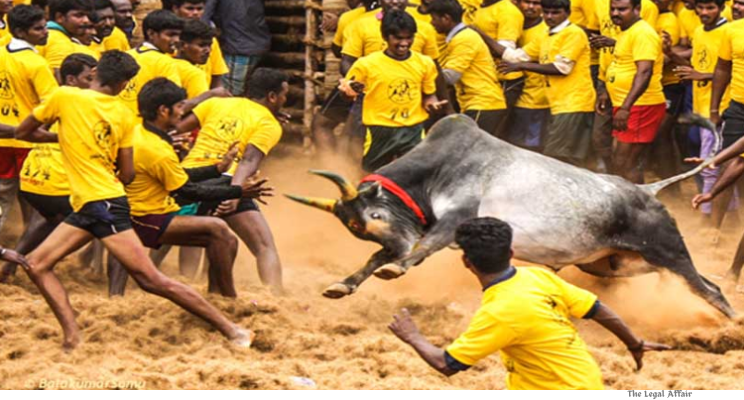
In P. Murugan v. The District Collector and Others (W.P.(MD) No.153 of 2026; 2026 LiveLaw (Mad) 32), a Division Bench of the Madras High Court comprising Justice G. Jayachandran and Justice K.K. Ramakrishnan considered whether a private village committee could seek court permission to conduct the Jallikattu festival at Avaniyapuram when the State itself had already undertaken responsibility for organising the event under statutory and administrative frameworks, the petitioner, Murugan, who was the President of the Avaniyapuram Village Jallikattu Committee, approached the Court seeking permission and police protection to conduct Jallikattu at Avaniyapuram village on 15 January 2026, asserting that the traditional festival was being conducted by the village community and that adequate security and formal approval were necessary to ensure smooth conduct, the petition was filed against the District Collector and other authorities contending that local involvement and community leadership were essential to preserving the cultural character of the event, and that villagers through their committee should be allowed to conduct the festival, while the State informed the Court that in view of the international importance, legal sensitivity, animal welfare concerns, and strict regulatory regime governing Jallikattu, the festival at Avaniyapuram, Alanganallur, and Palamedu was being organised directly by the Revenue Officials of the State in accordance with the Tamil Nadu Regulation of Jallikattu Act, 2009 and the Standard Operating Procedure issued by the Animal Welfare Department dated 21 November 2025, and therefore no separate permission could be granted to any independent committee, the case thus raised important questions about the balance between community participation in cultural festivals and the State’s responsibility to regulate, supervise, and directly manage events that attract national and international attention and legal scrutiny.
Arguments:
On behalf of the petitioner, it was argued that Jallikattu is not merely a government event but a deeply rooted cultural tradition of the village community, historically organised and conducted by the local people, and that excluding the village committee from formally conducting the festival would undermine the participatory nature of the celebration, the petitioner submitted that while the State may provide regulatory oversight, logistical support, and police protection, the actual conduct of the event should remain in the hands of the villagers who have traditionally been responsible for organising it, it was further argued that the Advisory Committee formed by the authorities should consist of collective representation of all communities residing in the village, so that no section of society feels excluded from the organisation of such an important cultural event, the petitioner expressed apprehension that if the festival was conducted entirely by State machinery without adequate representation of local stakeholders, it may lead to dissatisfaction, lack of coordination, and possible social tensions, it was also contended that the request was not to oppose State involvement but to seek formal recognition and permission for the village committee to be part of the organising structure with adequate police protection, the petitioner relied on the spirit of earlier judicial directions which emphasised peaceful and inclusive conduct of Jallikattu, suggesting that inclusivity necessarily requires strong village-level participation rather than complete administrative takeover. On the other hand, the respondents, represented by the Additional Advocate General and Government Pleaders, strongly opposed the plea and submitted that the petitioner’s request was misconceived in law and fact, they pointed out that due to the sensitive nature of Jallikattu, which involves animal welfare issues, crowd control, safety of participants, and intense public scrutiny, the State has adopted a policy of directly organising the events at major venues such as Avaniyapuram, Alanganallur, and Palamedu, which are globally known for Jallikattu, it was argued that under the Tamil Nadu Regulation of Jallikattu Act, 2009, read with the Standard Operating Procedures issued by the Animal Welfare Department, the responsibility of organising the event lies with designated authorities including Revenue Officials, veterinary teams, police, and municipal bodies, with villagers participating through an Advisory Committee, the State submitted that the Advisory Committee is constituted following past practices and judicial guidelines, ensuring that villagers are involved, but final authority must remain with the administration to ensure uniform compliance with law and safety norms, the respondents also relied on earlier High Court observations made in 2023 where the Court had directed that Jallikattu should be conducted jointly by district administration and municipal bodies, and that the festival should be free from religious and caste-based divisions, they argued that allowing private committees to independently seek permission would lead to multiple parallel authorities, administrative confusion, and potential law and order problems, especially in high-profile venues, therefore, the State maintained that the petitioner could not claim an independent right to conduct the festival when the government had already taken over responsibility in public interest.
Judgment:
After hearing both sides, the Division Bench declined to entertain the petitioner’s request and disposed of the writ petition by recording the submissions of the State, the Court observed that Jallikattu at Avaniyapuram is not an ordinary village-level sporting event but one of the most prominent and internationally recognised Jallikattu venues, drawing massive crowds and attention, which necessitates strict regulation, coordination, and accountability, the Bench categorically held that considering the international importance of Jallikattu conducted at Avaniyapuram, Alanganallur, and Palamedu, the State itself is directly organising the events, and therefore no private individual or committee can seek independent permission to conduct the festival, the Court clarified that when the State is already discharging its statutory and administrative responsibility to organise the event, there is no scope for granting parallel permission to a private committee, as that would undermine the uniform regulatory mechanism and could potentially create conflicts in management and accountability, with regard to the petitioner’s concern about representation of villagers in the Advisory Committee, the Court accepted the submission of the State that the Advisory Committee would be constituted as per past practices and in accordance with guidelines issued in previous court orders, ensuring that villagers are involved in coordination and support roles, but not as independent organisers, the Court thus found no merit in the apprehension that villagers would be excluded, as community participation would continue within the framework of State supervision, the Bench also took note of the earlier judicial direction that Jallikattu must be conducted peacefully and without introducing religion or caste considerations, and implicitly reaffirmed that direct State organisation is better suited to ensure neutrality, inclusiveness, and adherence to law, the Court therefore concluded that the petitioner’s plea for independent permission and police protection was unnecessary and legally untenable when the festival was already being conducted by the State under statutory provisions, and accordingly disposed of the petition without granting the relief sought, thereby reinforcing the principle that for major regulated cultural events involving public safety and animal welfare, administrative control must remain with the State, even while allowing community participation through structured advisory mechanisms.