


Introduction:
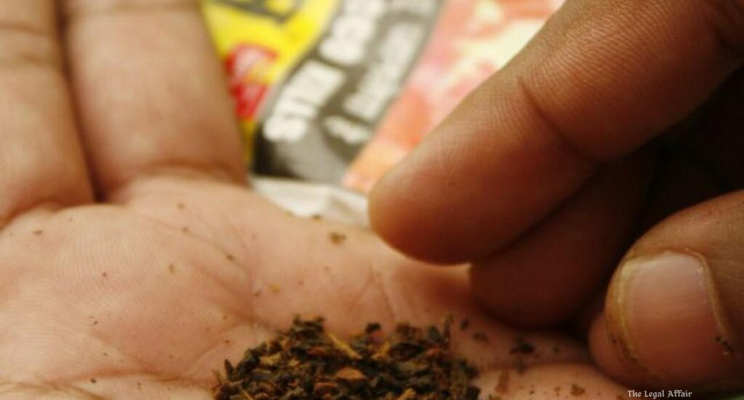
In a notable judgment, the Madras High Court affirmed the authority of Food Safety Officers to initiate proceedings against manufacturers and sellers of banned tobacco products, establishing that tobacco—whether containing additives or not—falls within the definition of “food” under the Food Safety and Standards Act, 2006 (FSS Act). This decision, issued by a single bench of Justice G. Jayachandran, has significant implications for public health enforcement and the regulation of tobacco products under food safety laws. The case involved M/s Jaiswal Products, a tobacco manufacturer, challenging proceedings initiated by a Food Safety Officer in Tamil Nadu, following the discovery of their banned product, Hans Chhap Tobacco, in a local shop without a purchase bill. The court upheld the prosecution, emphasizing the manufacturer’s obligation to explain how the product reached a jurisdiction where it is prohibited.
Case Background:
The case arose from a Food Safety Officer’s complaint after discovering the sale of Hans Chhap Tobacco in Vellore, Tamil Nadu, a state with a longstanding prohibition on certain chewing tobacco products. Upon inspecting a local shop, the officer found banned tobacco stocked without supporting documentation. Subsequent laboratory analysis confirmed the presence of nicotine, designating the product as unsafe under the FSS Act. Consequently, a criminal complaint was filed against the manufacturer and the seller under Sections 52(i) and 63 of the FSS Act, with the Judicial Magistrate of Katpadi accepting the case.
M/s Jaiswal Products, the manufacturer of Hans Chhap, filed a plea to quash the proceedings, contending that the Food Safety Officer had no jurisdiction over tobacco products, as tobacco does not fall within the scope of “food” under the FSS Act. The petitioner argued that their products were exclusively regulated under the Excise Act, GST, and the Cigarettes and Other Tobacco Products Act, 2003 (COTPA), claiming that prosecution under the FSS Act was unwarranted and illegal.
Petitioner’s Arguments:
M/s Jaiswal Products, represented by counsel Mr D. Saikumaran and Mr L. Goutham Raj, put forth several arguments:
- Jurisdiction and Definition of Food: The petitioner argued that tobacco does not qualify as “food” under the FSS Act, and therefore, the Food Safety Officer lacks jurisdiction to initiate proceedings. The counsel contended that the FSS Act’s scope does not encompass products like tobacco, which are regulated under COTPA.
- Notification and Legal Validity: The petitioner cited a stay order from the Delhi High Court on the notification banning tobacco products, contending that on the date of seizure and complaint, no effective prohibition was in place. Therefore, they argued, the proceedings were without a legal foundation.
- Regulatory Overlap: M/s Jaiswal argued that their operations as a registered tobacco manufacturer are governed by the Excise and GST Acts, and that prosecution under the FSS Act represents overreach and a disregard for statutory boundaries between COTPA and the FSS Act.
- Absence of Evidence of Intentional Sale in Tamil Nadu: The petitioner asserted that the prosecution lacked evidence of the manufacturer’s intent to sell banned products in Tamil Nadu, claiming there was no direct sale or distribution by the manufacturer in prohibited jurisdictions.
- No Additives in Product: The petitioner contended that their product contained no additives, and as such, should not fall under the FSS Act as a “food.” They argued that only products mixed with food substances or adulterants could be considered food items under the FSS Act.
Respondent’s Arguments:
The State of Tamil Nadu, represented by Additional Advocate General Mr. P. Kumaresan and Government Advocate Mr. S. Udaya Kumar, defended the prosecution under the FSS Act with several counterpoints:
- Definition of Tobacco as Food under FSS Act: The respondent argued that the Madras High Court, in prior rulings, had classified tobacco (whether with or without additives) as food under Section 3(j) of the FSS Act, which includes any substance consumed by humans, and thus, the Food Safety Officer had full authority to act on violations.
- Burden of Proof on Manufacturer: The respondent maintained that as per Section 109 of the Bharatiya Sakshya Adhiniyam, the manufacturer bears the burden of proving how the product was legally cleared from the manufacturing unit and how it reached banned territories. The State contended that substantial quantities of Hans Chhap Tobacco in Tamil Nadu implied the manufacturer’s involvement, requiring the manufacturer to rebut this presumption by providing appropriate evidence.
- Prohibitory Orders and Supreme Court Guidelines: The State emphasized that Tamil Nadu’s ban on chewing tobacco dates back to a 2013 prohibitory order, reaffirmed annually in compliance with Supreme Court guidelines. Additionally, the Ministry of Health had endorsed these bans to curb tobacco consumption.
- Mandatory Disclosure Requirement: The State argued that the manufacturer’s failure to provide details on the production, distribution, and sale of tobacco products, despite receiving a show-cause notice, creates a statutory presumption under the FSS Act that the manufacturer intended to distribute in banned jurisdictions.
- Public Health and Regulatory Compliance: The respondent stressed the state’s commitment to public health, highlighting that the prosecution of banned tobacco products under the FSS Act aligns with the Act’s objective of ensuring food safety and reducing public health risks posed by nicotine and tobacco consumption.
Court’s Judgment and Analysis:
In its judgment, the Madras High Court upheld the Food Safety Officer’s authority to prosecute under the FSS Act, providing a comprehensive interpretation of “food” within the statute’s context. Justice G. Jayachandran examined relevant provisions of the FSS Act, procedural laws, and past rulings, concluding that the state has the right to restrict harmful substances in the public interest.
- Interpretation of Food under the FSS Act: The court ruled that tobacco, irrespective of additives, is a food product under the FSS Act. The judgment emphasized the inclusive nature of the term “food” within the FSS Act, aiming to protect public health and ensure that harmful substances do not circulate in the market.
- The burden of Proof under Bharatiya Sakshya Adhiniyam: Citing Section 109, the court underscored that when a fact lies uniquely within the knowledge of a particular party, the burden of proof lies with that party. Therefore, the manufacturer must disclose details of the tobacco’s manufacture, distribution, and sales, especially since substantial quantities of Hans Chhap Tobacco have entered banned jurisdictions.
- Presumption of Knowledge and Intent: The court noted that the manufacturer’s lack of response to the show-cause notice supports a statutory presumption that the banned products were knowingly circulated in restricted areas. By choosing not to provide information on the sale and distribution process, the manufacturer tacitly permitted the sale in Tamil Nadu, where the prohibition was in effect.
- Prohibitory Orders and Annual Renewals: The court validated the Tamil Nadu government’s annual renewal of its prohibitory order on tobacco, in line with Supreme Court directions. It dismissed the petitioner’s argument based on the Delhi High Court’s stay, emphasizing that each state may independently enforce health regulations within its jurisdiction.
- Scope of COTPA and FSS Act: Addressing the petitioner’s argument that tobacco is governed solely by COTPA, the court clarified that the FSS Act is intended to regulate all consumables for public health safety. Therefore, COTPA does not preclude the state from prosecuting unsafe consumables under the FSS Act’s expansive mandate.
- Dismissal of the Plea to Quash: The court ultimately dismissed the manufacturer’s plea to quash the proceedings, directing that the trial court address the issues on merit. Justice Jayachandran advised the manufacturer to submit relevant documents and proofs during the trial to demonstrate that their products were not sold or distributed in banned areas, emphasizing that they still retain the opportunity to defend their case.