


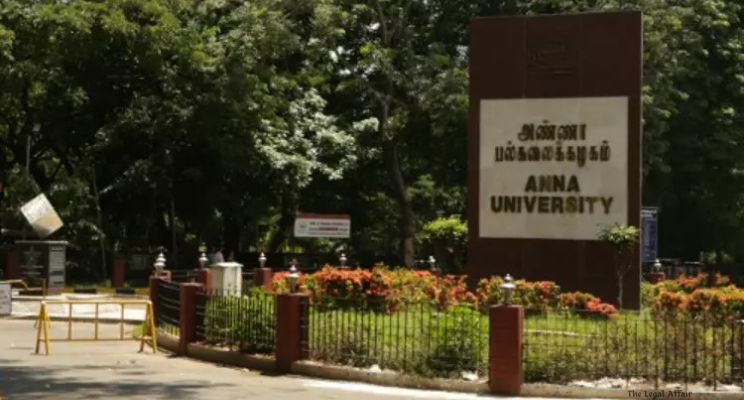
Introduction:
The Madras High Court recently criticized the politicization and media sensationalism surrounding the alleged sexual assault of a second-year engineering student at Anna University. The case gained widespread attention, with political parties and media outlets focusing on protests rather than addressing the systemic issue of women’s safety. Justice P. Velmurugan expressed disappointment at the lack of genuine concern for women’s rights, noting that such incidents should serve as wake-up calls for meaningful societal and legislative action. Advocate K. Balu raised the denial of permission for a protest by the Women’s Wing of Pattali Makkal Katchi (PMK), but the Court highlighted that protests often aim for media visibility rather than tangible outcomes. With a Special Investigation Team (SIT) already constituted to ensure a fair probe, the Court emphasized the importance of responsible actions over politicized or performative measures.
Arguments by the Petitioners:
Advocate K. Balu, representing the Women’s Wing of PMK, contended that the denial of permission to hold a protest infringed on their fundamental right to peaceful assembly and freedom of speech under Articles 19(1)(a) and 19(1)(b) of the Constitution. He argued that the protest was aimed at condemning the incident and raising awareness about the broader issue of women’s safety. Balu further submitted that public demonstrations serve as a means to pressurize authorities into swift action and to demand accountability from institutions that fail to protect women. Addressing the Court’s concerns about the political motives behind such protests, Balu maintained that the PMK’s intentions were purely to safeguard women’s rights and highlight systemic failures.
Arguments by the Respondents:
The State opposed the plea, arguing that granting permission for such protests could disrupt law and order, especially in a sensitive and high-profile case. The government emphasized that a SIT, comprising experienced women officers, had already been constituted to investigate the assault. Any public demonstration could interfere with the ongoing investigation and potentially prejudice the case. The State also pointed out that protests often become platforms for political agendas, diverting attention from the primary issue of ensuring justice for the victim. The respondents contended that meaningful change requires institutional reforms and preventive measures, not performative protests that garner media attention but lack substantive impact.
Court’s Observations and Judgment:
Justice P. Velmurugan, while addressing the matter, expressed profound disappointment over the politicization of a grave issue like sexual assault. The Court noted that the focus should be on addressing the root causes of crimes against women and ensuring systemic reforms to protect their safety and dignity. The judge lamented that political parties often exploit such incidents for media coverage, overshadowing the need for genuine advocacy and action.
The Court criticized the media for conducting a “media trial,” cautioning that sensational reporting could hinder the investigation and compromise the victim’s privacy and dignity. Justice Velmurugan emphasized that public discourse around such incidents should be constructive, fostering awareness and advocating for long-term solutions rather than creating divisions or fueling political agendas.
On the petitioner’s argument for allowing protests, the Court remarked that demonstrations, while a constitutional right, should not be reduced to mere performances for political gain. The judge highlighted the need to shift societal mindsets, emphasizing that women are equal members of society, not individuals needing “protection” as implied in the protest’s rhetoric. Such narratives, the Court observed, perpetuate patriarchal attitudes and undermine the broader struggle for gender equality.
Regarding the investigation, the Court reaffirmed its confidence in the SIT constituted to handle the case. The bench reiterated that the SIT, comprising women officers, was tasked with ensuring a thorough and unbiased probe. The judge warned that any lapses in the investigation would invite strict judicial action. While denying the petition to direct the State to allow the protest, the Court urged political parties and activists to focus their energies on constructive measures like public education, legal reforms, and institutional accountability rather than protests aimed at garnering publicity.
The Court concluded by underscoring the collective responsibility of society, media, and political leaders to create a safe environment for women. It stressed that genuine concern and actionable steps, rather than performative gestures, are the need of the hour to address the pervasive issue of violence against women.