


Introduction:
The Madhya Pradesh High Court has issued notice to the State Government and other respondents on a public interest litigation challenging the alleged continued plantation of Conocarpus trees in public places despite an official circular directing urban local bodies to avoid planting the species. The petition raises questions concerning the implementation of environmental policy, the promotion of native vegetation and the responsibility of public authorities to ensure that administrative directions intended to protect the environment are followed in practice.
A Division Bench comprising Justice Subodh Abhyankar and Justice Jai Kumar Pillai passed the order on October 8, 2026, while hearing a public interest litigation filed by advocate Gopal Joshi, who appeared in person. The petitioner sought directions requiring the authorities to strictly implement the policy prohibiting further plantation of Conocarpus trees within Madhya Pradesh. Advocate Pradyumna Kibe appeared for the State.
The High Court directed that notice be issued to the respondents, subject to payment of process fee within seven working days, through speed post with due acknowledgement. The matter was made returnable within four weeks. According to the High Court website, the case is now listed for November 23, 2026.
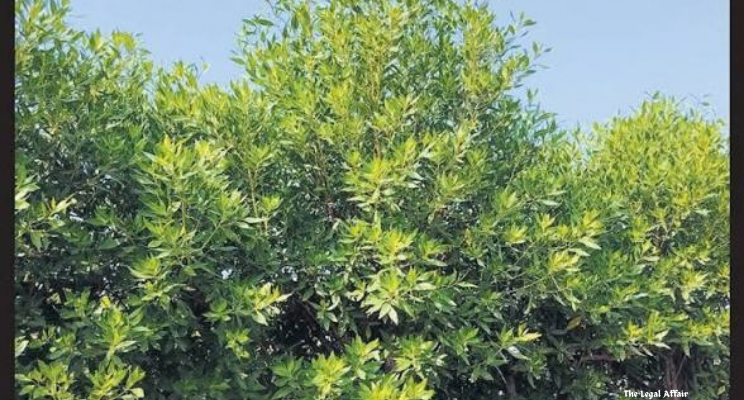
The controversy concerns Conocarpus, a non-native tree species whose environmental and ecological effects have attracted the attention of public authorities. According to the petition, the Central Empowered Committee examined the potential impact of the species and recommended that further plantation be stopped and that suitable native species be promoted instead. The petitioner relied on this recommendation to argue that the continuation of Conocarpus plantation in public places runs contrary to the environmental approach adopted by the authorities.
The petition also refers to a circular issued by the Urban Administration and Development Department of Madhya Pradesh on January 9, 2026. The circular reportedly directed urban local bodies to avoid planting Conocarpus trees. In addition, the petitioner cited a response given by the Ministry of Environment, Forest and Climate Change to a Lok Sabha Unstarred Question, stating that States and Union Territories had been advised to stop plantation of the species with immediate effect.
According to the petitioner, these measures reflect an official decision to discontinue further plantation of Conocarpus. However, the alleged continued planting of the species in public spaces demonstrates, in his submission, a gap between the policy announced by the Government and its implementation by the authorities responsible for urban development and public landscaping.
The petition further raises concerns about possible effects on public health. It alleges that pollen from Conocarpus trees may cause or aggravate allergic reactions and respiratory discomfort in susceptible individuals and may contribute to other respiratory problems among residents. These concerns form part of the petitioner’s broader argument that decisions about public plantation should account for ecological suitability and potential effects on people living in affected areas.
The petitioner also stated that he had submitted a detailed representation to the concerned authorities on July 23, 2026, requesting effective action concerning the continued plantation of the species. According to the petition, no satisfactory action followed, prompting him to approach the High Court.
The case therefore brings together two connected issues: whether public authorities are implementing the policy reflected in the January 2026 circular and whether judicial directions are necessary to ensure that the State’s approach to plantation is consistently followed. At this stage, however, the High Court has only issued notice. The allegations concerning continued plantation, the extent of implementation of the circular and the asserted health and ecological concerns remain matters requiring consideration in the proceedings.
Arguments of the Parties:
The petitioner, advocate Gopal Joshi, approached the High Court in the public interest, contending that the continued plantation of Conocarpus trees in public places was inconsistent with the State Government’s own directions. His principal argument was that an official policy intended to protect the environment must be implemented in practice and cannot remain merely a statement recorded in departmental documents.
According to the petition, the Central Empowered Committee had examined the environmental and ecological implications of Conocarpus plantation and recommended that further planting of the species be stopped. The Committee’s recommendation, as described by the petitioner, also called for the promotion of suitable native tree species. The petitioner relied on this recommendation to argue that plantation decisions should be guided by ecological considerations rather than by the continued use of a species that public authorities had been advised to discontinue.
The petitioner further relied on the circular dated January 9, 2026, issued by the Urban Administration and Development Department of Madhya Pradesh. The circular reportedly directed urban local bodies to avoid plantation of Conocarpus trees. Since urban local bodies are involved in maintaining public spaces and undertaking plantation activities, the petitioner argued that the circular should guide the conduct of the authorities responsible for planting trees in streets, parks and other public areas.
The petition’s case was that the existence of an official circular should have resulted in consistent action by the concerned departments and local bodies. If Conocarpus trees were still being planted after the circular had been issued, the petitioner argued, the authorities needed to explain why the stated policy was not being followed and what steps had been taken to prevent further plantation.
Support was also drawn from the response of the Ministry of Environment, Forest and Climate Change to a Lok Sabha Unstarred Question. According to the petition, the Ministry’s response stated that all States and Union Territories had been advised to stop plantation of Conocarpus with immediate effect. The petitioner relied on this response to show that concerns about the species were not confined to the State Government and that the issue had also been addressed at the national level.
The reference to the Ministry’s response formed part of the petitioner’s broader submission that the authorities should act consistently with the environmental advice and administrative measures already in place. The petitioner sought enforcement of the policy rather than allowing continued plantation to undermine its purpose.
A further component of the petition concerned public health. It was alleged that pollen from Conocarpus trees may trigger or aggravate allergic reactions and respiratory discomfort in susceptible people. The petitioner also raised concerns about possible contributions to other respiratory conditions among residents. On this basis, he submitted that decisions regarding plantation in populated areas should take account of potential health concerns alongside environmental and ecological considerations.
These assertions were advanced as grounds for seeking judicial intervention. They should not, at this stage, be treated as findings established by the High Court. The notice order does not determine the scientific extent of any health effects attributable to Conocarpus or establish that the alleged plantation activities have caused particular illnesses. Those matters would require assessment on the basis of relevant evidence and the responses of the concerned authorities.
The petitioner also relied on the steps he had taken before approaching the Court. He stated that a detailed representation was submitted to the concerned authorities on July 23, 2026, highlighting the alleged continued plantation and seeking effective implementation of the policy. According to him, the authorities did not take effective action in response. This alleged inaction was cited as a reason for invoking the High Court’s jurisdiction through a public interest litigation.
The relief sought was a direction to the respondents to strictly implement the policy concerning the prohibition on plantation of Conocarpus trees within Madhya Pradesh. The petition thus sought to move beyond a general statement of environmental concern and secure compliance with the measures that the petitioner contended had already been adopted by public authorities.
The State was represented by advocate Pradyumna Kibe. However, the available case summary does not set out the State’s detailed submissions on the merits of the petition. It would therefore be inappropriate to attribute a particular defence or factual explanation to the State at this stage.
The issuance of notice gives the respondents an opportunity to place their position before the Court. Their response may address the scope and legal effect of the January 9 circular, the extent to which it has been implemented, the alleged instances of continued plantation and the administrative arrangements governing plantation activities by urban local bodies. The State may also clarify the nature of the Ministry’s communication and the steps, if any, taken in response to the concerns raised in the petition.
The competing questions before the Court consequently concern the relationship between the environmental policy relied upon by the petitioner and its practical implementation, as well as the need for any further directions. The petitioner maintains that the reported continuation of plantation warrants judicial intervention, while the State’s position on these allegations remains to be considered through the proceedings.
Court’s Judgment:
The Madhya Pradesh High Court, comprising Justice Subodh Abhyankar and Justice Jai Kumar Pillai, issued notice to the respondents on October 8, 2026, in the public interest litigation concerning the alleged continued plantation of Conocarpus trees despite the State Government’s circular directing urban local bodies to avoid planting the species.
The Bench ordered:
“Issue notice to the respondents on payment of process fee within seven working days by speed post with due acknowledgement, returnable within four weeks. List after four weeks”.
The order sets out the immediate procedural course of the litigation. The petitioner has been permitted to proceed with service of notice upon the respondents, who are required to be brought before the Court so that the issues raised in the petition can be considered further. The matter was directed to be listed after four weeks, and the High Court website subsequently reflected November 23 as the next listing date.
The significance of the order lies in the fact that the Court has called upon the respondents to answer the petition rather than disposing of the matter at the initial stage. The dispute raises questions about the implementation of an official environmental direction and the alleged continuation of a practice that the petitioner says the Government has sought to discontinue.
Nevertheless, the issuance of notice should not be confused with a final determination on the merits. The Bench has not, on the information presently available, held that the State Government or any urban local body violated the January 9 circular. Nor has it conclusively accepted the petitioner’s allegations concerning the environmental or health effects of Conocarpus. Those questions remain open for consideration as the proceedings advance.
A central issue underlying the petition is the legal and administrative significance of the January 9, 2026 circular. According to the petitioner, the Urban Administration and Development Department directed urban local bodies to avoid further plantation of Conocarpus trees. If the circular applies to the activities identified in the petition, the Court may need to examine whether the relevant authorities have acted consistently with its directions.
That inquiry requires consideration of the actual terms of the circular, the authorities to whom it was addressed, the nature of the plantation activities alleged and the steps taken to implement the direction. The fact that an administrative instruction exists does not, by itself, establish whether it has been followed or breached in any particular instance. Those factual and legal questions require the relevant material to be placed before the Court.
The petition also relies on the findings and recommendations attributed to the Central Empowered Committee. According to the petitioner, the Committee recommended discontinuing further plantation of Conocarpus and promoting suitable native species after examining the ecological impact of the tree. This recommendation is relied upon as support for the requested directions.
The role of such material in the proceedings will depend on its precise contents and relevance to the policy adopted by the State. The Court may need to consider how the recommendation relates to the State circular and whether the measures adopted by the authorities reflect the concerns identified in the material relied upon by the petitioner. At this stage, however, the notice order does not establish that the Court has accepted any particular scientific conclusion or directed a specific replacement plantation programme.
Another important aspect of the petition is the reference to the Ministry of Environment, Forest and Climate Change’s response to a Lok Sabha Unstarred Question. The petitioner states that the response indicated that States and Union Territories had been advised to stop planting Conocarpus with immediate effect. This is relied upon to support the contention that the need to discontinue plantation had been communicated beyond the State’s own administrative framework.
The legal effect and scope of that communication may require examination. In particular, the Court may need to consider the precise nature of the advice, its relationship with the State circular and the extent to which it applies to the plantation activities in question. The petitioner’s reliance on the Ministry’s response does not, by itself, establish the final legal consequences of that communication. Those matters must be assessed from the underlying documents and the applicable legal framework.
The health-related allegations introduce another dimension to the dispute. The petitioner claims that Conocarpus pollen may cause or aggravate allergic reactions and respiratory discomfort in susceptible individuals. These allegations are presented as an additional reason for ensuring that public plantation policies account for the well-being of residents.
The Court has not, however, made a finding that Conocarpus plantation necessarily causes respiratory illness or that the species has produced the particular health effects alleged in the petition. Scientific questions of this kind must be distinguished from the administrative issue of whether a circular has been implemented. If the health concerns become material to the relief sought, their assessment would have to rest on appropriate evidence rather than on the mere assertion that a species may have adverse effects.
The petition also raises the broader question of administrative accountability. The petitioner’s contention is that the continued plantation of the species, despite the circular, reflects a failure to translate an announced policy into action. He argues that environmental directions should have practical effect and should be followed by the public authorities responsible for implementing them.
This submission places emphasis on the difference between issuing a policy and ensuring compliance with it. Where a public authority has adopted a direction governing an administrative activity, questions may arise about whether the responsible departments and local bodies have communicated, implemented and monitored that direction. In this case, the petitioner seeks the High Court’s intervention because he alleges that the policy has not been effectively implemented despite a representation made on July 23, 2026.
The Court’s decision to issue notice provides an opportunity for the respondents to address these allegations. Their replies may clarify the current administrative position, the implementation of the circular and the measures taken concerning Conocarpus plantation. Such responses are important because the Court must assess the controversy on the basis of the applicable documents and the material placed before it, rather than treating the petitioner’s allegations as established facts.
The procedural stage of the case is also significant. In a public interest litigation, the Court is asked to consider whether the matter warrants judicial intervention in the public interest. But the relief sought must still be examined against the governing legal framework, the evidence available and the responsibilities of the relevant authorities. The fact that an issue concerns the environment does not remove the need to establish the relevant facts or determine the scope of the directions that can appropriately be issued.
Here, the immediate order does not grant the substantive relief sought by the petitioner. It does not expressly direct the State to uproot existing Conocarpus trees, impose a new blanket prohibition, prescribe a replacement species or require compensation for any alleged harm. The relief sought is the strict implementation of the policy concerning plantation of the species, and the question of whether further directions are justified remains for the Court to consider after hearing the respondents.
The distinction between stopping further plantation and removing trees that have already been planted may also be relevant if the dispute develops in that direction. The petitioner’s stated grievance concerns continued plantation despite the circular directing urban local bodies to avoid it. A direction against further planting would not necessarily be the same as an order requiring the removal of existing trees. Any such question would depend on the relief actually pursued, the wording of the relevant policy and the material presented before the Court.
The case may therefore require a careful examination of the scope of the administrative instructions, the nature of the alleged non-compliance and the precise relief necessary to address any established violation. It may also require the Court to distinguish between the environmental recommendation relied upon by the petitioner and the binding effect, if any, of the different communications and directions involved.
No precedent has been identified in the supplied case summary as having been relied upon by the Bench in issuing notice. It would therefore be inaccurate to attribute a particular judicial precedent or settled legal test to the Court’s order. At this stage, the reported development is procedural: the High Court has required the respondents to be notified and has scheduled the matter for further consideration.
Ultimately, the Madhya Pradesh High Court’s order brings the alleged continuation of Conocarpus plantation into judicial consideration. The petitioner contends that the State’s environmental policy is not being implemented effectively and seeks directions to ensure compliance. The respondents now have an opportunity to respond to the allegations and explain the measures taken under the relevant circular and related communications.
The next stage of the proceedings will be important in determining whether the petitioner’s claims are substantiated and whether any further judicial directions are warranted. Until then, the issuance of notice should be understood as an opportunity for the Court to examine.