


Introduction:
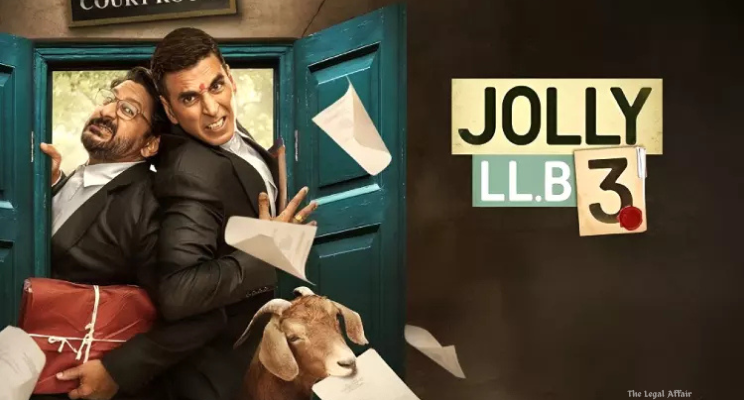
In a significant development highlighting the clash between cinematic creativity and the dignity of the legal profession, the Madhya Pradesh High Court on September 9, 2025, addressed a Public Interest Litigation (PIL) filed by Advocate Pranjal Tiwari against the song “Bhai Vakeel Hai” from the upcoming Bollywood film Jolly LLB 3. The petitioner claimed that the song ridiculed lawyers and demeaned the judiciary by depicting actors, including Akshay Kumar and Arshad Warsi, dancing in Advocate attire while wearing the professional neck band—a symbol of solemnity, responsibility, and dignity in the legal fraternity. The division bench, comprising Chief Justice Sanjeev Sachdeva and Justice Vinay Saraf, directed the petitioner to implead the producer and director of the film as necessary parties before the Court could hear the matter substantively. The Court further noted that without their inclusion, the PIL could not be adjudicated fairly, as they were the primary stakeholders responsible for the content. The petition invoked Section 5B of the Cinematograph Act, 1952, arguing that the song contained objectionable, obscene, and derogatory lyrics, thereby tarnishing the image of lawyers and encouraging vulgarity among youth. The case has been listed for further hearing on September 12, 2025, just a week before the scheduled release of the film on September 19. This controversy places the Court at the center of a delicate balancing act—between artistic freedom and professional dignity.
Arguments of the Petitioner:
The petitioner, Advocate Pranjal Tiwari, argued that the song in question portrayed advocates in a highly objectionable and derogatory manner, undermining the sanctity of the legal profession. According to him, the imagery of actors dancing while donning the neck band trivialized what it symbolically represents—the responsibility of truth, justice, and ethical conduct in the legal field. The petitioner stressed that the portrayal was not only in poor taste but also violative of the standards prescribed under Section 5B of the Cinematograph Act, 1952, which prohibits the exhibition of films or songs that contain vulgar, obscene, or derogatory elements against professions, communities, or individuals. He argued that such depictions mislead the public, especially the youth, who may begin to perceive advocates as figures of mockery rather than pillars of justice. Furthermore, he claimed that the lyrics themselves were objectionable, bordering on obscenity, and amounted to a deliberate attempt to sensationalize and commercialize the legal profession at the expense of its dignity. The petitioner highlighted that lawyers form an essential part of the justice delivery system and cannot be portrayed in a manner that encourages ridicule. He urged the Court to intervene urgently, as the film was slated for release on September 19, and the damage caused by the song’s circulation in the public domain would become irreparable if not restrained beforehand.
Arguments of the Respondents:
During the hearing, the State, represented by its counsel, opposed the plea, highlighting that a similar petition had already been dismissed by the Allahabad High Court. The Allahabad High Court, while dealing with an identical writ, had refused to interfere with the release of the film or the song, holding that claims of defamation of the judiciary or the legal fraternity were not sufficient grounds for judicial intervention under the writ jurisdiction. The State contended that freedom of speech and expression under Article 19(1)(a) of the Constitution includes creative expression in cinema, and such freedoms cannot be curtailed unless there is a clear, imminent, and demonstrable threat to law, order, or morality. The counsel also noted that the petitioner had failed to implead the producer and director of the film, who were the principal parties responsible for its content. Without their presence, the matter could not proceed. The respondents emphasized that the Cinematograph Act already provides adequate safeguards through the certification process administered by the Central Board of Film Certification (CBFC). If the CBFC has cleared the film and its songs, the petitioner cannot seek to impose personal standards of morality or professional dignity through judicial intervention. They argued that the petitioner’s concerns, though emotionally valid, lacked a legal basis strong enough to warrant halting or censoring the artistic work.
Court’s Judgment:
The division bench of the Madhya Pradesh High Court refrained from issuing any substantive directions on the PIL at this stage. Instead, it focused on the procedural defect in the petition—the failure to implead the producer and director of Jolly LLB 3. The Court observed that since the allegations directly targeted the song’s content and its depiction of lawyers, the producer and director were necessary parties to the proceedings. Without their presence, the Court could not pass any effective or binding order. Chief Justice Sanjeev Sachdeva, speaking for the bench, pointedly asked, “Where are the producer and director? They are the necessary parties; in their absence, how can this petition be disposed of? How will this be entertained in the absence of the necessary parties?” The Court allowed the petitioner’s counsel, Advocate Pramod Singh Tomar, to seek an adjournment to implead the concerned parties. Consequently, the matter was adjourned and listed for September 12, 2025, just days before the scheduled release of the film. The bench also took note of the State’s submission regarding the Allahabad High Court’s dismissal of a similar writ petition but chose not to pronounce any opinion on the merits until the procedural defects were cured. The Court’s restrained approach reflected its acknowledgment of the sensitive balance between protecting the dignity of the judiciary and respecting the freedom of artistic expression. While the PIL raises issues of professional honor and public morality, the Court clarified that due process requires hearing the filmmakers before any decision could be made. This interim order thus sets the stage for a more comprehensive hearing, where the competing interests of artistic freedom and professional dignity will be weighed against the statutory safeguards of the Cinematograph Act.