


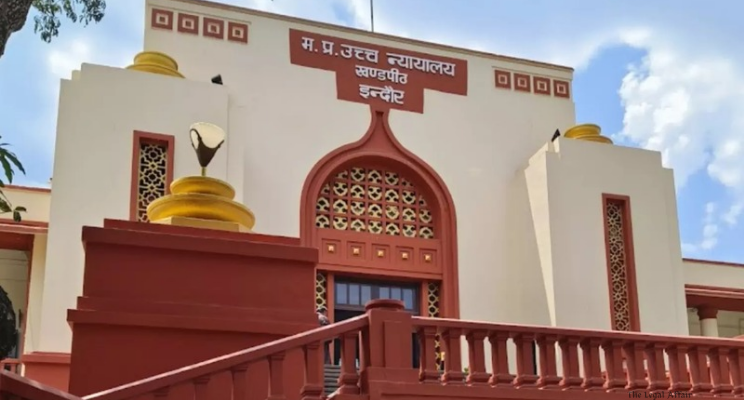
Introduction:
In a significant ruling, the Madhya Pradesh High Court has clarified that a wife’s mere emotional or romantic involvement with another person does not amount to adultery under the law and cannot be used as grounds to deny her maintenance. The case, Amit Kumar Khodake v. Smt. Madhuri @ Anjali, was brought before Justice G.S. Ahluwalia in a revision petition challenging an order of the Principal Judge, Family Court, Chhindwara, which granted Rs. 4,000 as interim maintenance to the wife under Section 125 of the Criminal Procedure Code (CrPC). The husband argued that his wife was involved in a romantic relationship with another person, which should disqualify her from claiming maintenance. However, the High Court firmly held that adultery, as per the legal definition, necessitates sexual intercourse, and mere affection or love towards another person without physical relations does not amount to “living in adultery.” Additionally, the husband contended that he was earning only Rs. 8,000 per month and that his wife was already receiving Rs. 4,000 under Section 24 of the Hindu Marriage Act, making the maintenance order unjust. The court dismissed his claims, emphasising that an able-bodied person cannot evade his legal duty to provide for his wife. The ruling reaffirmed that financial incapacity alone is not a valid reason to deny maintenance, particularly when the husband has not proven his inability to earn.
Arguments Presented:
The petitioner-husband, Amit Kumar Khodake, contended that the Family Court had erred in awarding maintenance to his wife despite her alleged romantic involvement with another man. He argued that his wife’s diary entries suggested that she had developed an affection for someone else, which, in his view, amounted to “living in adultery.” He further submitted that he had limited financial resources, earning a mere Rs. 8,000 per month and that the wife was already receiving Rs. 4,000 under the Hindu Marriage Act, making additional maintenance unfair. He also alleged that his father had disposed of the family’s ancestral property, significantly impacting his financial condition. To substantiate his financial hardship, he produced a salary certificate before the court.
On the other hand, the respondent-wife, Smt. Madhuri @ Anjali strongly refuted the claim that she was living in adultery. She argued that an emotional connection with another person does not legally amount to adultery unless it is proven that sexual relations occurred. Citing legal provisions, she maintained that she was entitled to maintenance unless the husband could establish that she was living in adultery, which he failed to do. She further contended that her husband was an able-bodied man and was capable of providing maintenance despite his alleged low income. She also pointed out that the husband’s financial documents lacked authenticity, as the salary certificate submitted did not contain the date or place of issuance, rendering it unreliable. She highlighted that her husband’s family had misrepresented their financial status before the marriage, falsely claiming to own a substantial amount of land when, in reality, they had no such property. Moreover, she alleged cruelty in her marriage, which was documented in her diary.
Court’s Observations and Verdict:
Justice G.S. Ahluwalia examined the legal framework surrounding adultery and maintenance, particularly the interpretation of Section 125(4) of the CrPC (previously Section 144(5) of the Bharatiya Nagarik Suraksha Sanhita, 2023), which states that a wife can be denied maintenance only if she is proven to be living in adultery. The court categorically held that adultery requires evidence of sexual intercourse, and mere romantic affection or emotional involvement with another person does not meet the threshold. The court criticised the petitioner for attempting to evade his responsibility based on an allegation that had no legal standing.
Furthermore, the court examined the financial aspects of the case. It observed that the husband’s salary certificate lacked the necessary authentication details, making it unreliable. Referring to the Supreme Court’s ruling in Rajnesh v. Neha & Another, the High Court reiterated that an able-bodied husband cannot escape his duty to provide maintenance, even if his salary is limited. The judgment also acknowledged the wife’s grievances regarding the fraudulent claims made by the husband’s family at the time of marriage, reinforcing the view that she was entitled to financial support.
Ultimately, the court upheld the Family Court’s order, affirming that the maintenance of Rs. 4,000 under Section 125 CrPC was justified, considering the previous award under the Hindu Marriage Act. The revision petition was dismissed, reinforcing the principle that a husband’s responsibility to maintain his wife remains intact unless clear legal grounds exist for denial.