


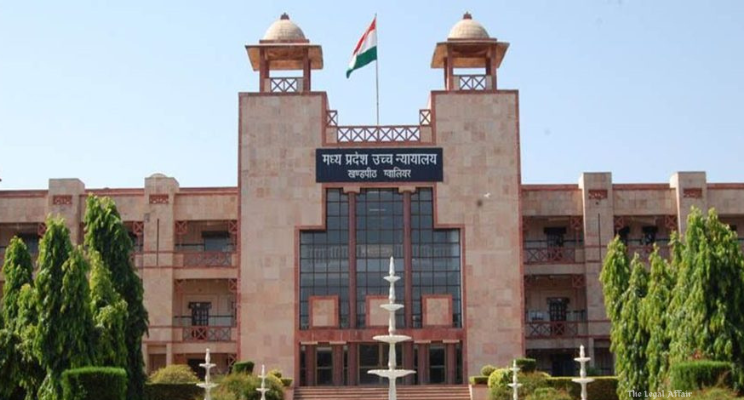
Introduction:
In a significant judgment reinforcing the distinction between civil and criminal liability, the Madhya Pradesh High Court in Raju v. State [Misc. Criminal Case No. 49157 of 2024] quashed an FIR registered against two traders accused of cheating and defrauding farmers in the Rajgarh district. The case was presided over by Justice Sanjeev S. Kalgaonkar, who held that the dispute between the traders and farmers was fundamentally contractual and commercial in nature, rather than criminal. The Court noted that while the plight of the farmers was indeed unfortunate, the mere failure to fulfill a commercial obligation or to make timely payments cannot constitute cheating or criminal breach of trust unless it is proven that the accused had a dishonest intention right from the inception of the transaction. The judgment underscores the principle that criminal law should not be used as a tool for enforcing civil contracts or recovering money and that the ingredients of cheating or criminal breach of trust must be clearly established before criminal proceedings can be sustained.
Arguments Presented by the Petitioners:
The petitioners, represented by Advocate Zenith Chhablani, argued that the FIR and subsequent proceedings against them were a clear abuse of criminal law machinery. They submitted that the entire dispute stemmed from commercial dealings involving the purchase of crops from farmers on credit, and thus, the matter was of a civil nature. According to the petitioners, they had been engaged in legitimate trade practices, purchasing agricultural produce such as wheat, soybean, mustard, lentil, and corn from local farmers in Rajgarh during the 2023–2024 season. The transactions were carried out consensually and were based on mutual trust and ongoing business relations. The petitioners asserted that payments were initially made promptly, thereby establishing confidence among the farmers.
However, due to subsequent financial difficulties and fluctuations in market conditions, the petitioners could not make immediate payments for certain later transactions. The petitioners contended that this temporary inability to pay did not indicate any fraudulent or dishonest intention at the outset. Rather, it was a matter of commercial credit and delayed payment, which at best could give rise to civil proceedings for recovery of dues or specific performance of contract, but not to criminal prosecution under Sections 420 (cheating), 406 (criminal breach of trust), or 467–468 (forgery) of the Indian Penal Code.
Counsel for the petitioners also argued that the FIR was a result of undue emotional influence and social pressure. He stated that the investigating agency, driven by public sympathy for the farmers and the high monetary value involved (approximately ₹2.32 crores), had hastily registered a criminal case without verifying whether the essential elements of the alleged offences were made out. The petitioners emphasized that there was no evidence of any fraudulent misrepresentation, false inducement, or deception at the inception of the transaction—requirements essential to sustain a charge under Section 420 IPC.
Additionally, the petitioners pointed out that the allegations of forgery relating to purchase receipts were baseless. Even assuming that the receipts were irregular or improperly maintained, such issues pertain to recordkeeping in commercial transactions and cannot be construed as “forgery” unless the documents were created with the intent to deceive or to misrepresent that they were authorized by someone else. They submitted that the FIR, on its face, was an attempt to convert a private commercial dispute into a criminal case to exert pressure on the traders and secure recovery through coercion.
The petitioners thus urged the High Court to exercise its inherent jurisdiction under Section 528 of the Bharatiya Nyaya Sanhita (BNSS), 2023 (equivalent to Section 482 of the old CrPC), to prevent abuse of the process of law and to ensure that criminal proceedings were not misused to settle civil scores.
Arguments Presented by the State:
The State, represented by Government Advocate Apoorv Joshi, opposed the petition and defended the registration of the FIR. The prosecution contended that the traders had intentionally deceived a large number of farmers by purchasing crops on credit and later absconding without payment. It was alleged that the accused traders forged or manipulated purchase receipts involving over 161 farmers, thereby causing a loss of approximately ₹2.32 crores. The State submitted that the accused acted with dishonest intent from the very beginning, inducing the farmers into selling their produce on the promise of prompt payment while knowing fully well that they would not honor their commitments.
According to the prosecution, the accused had engaged in a pattern of fraudulent conduct. They first made timely payments for initial transactions to earn the farmers’ trust and subsequently used that trust to make further large-scale purchases without paying the dues. This, the State argued, showed premeditation and deception—key ingredients of the offence of cheating under Section 420 IPC. The State maintained that the act of absconding after taking delivery of goods was indicative of the dishonest intention to cheat and misappropriate funds from the outset.
The prosecution further argued that the alleged forgery of purchase slips was not merely a clerical irregularity but a deliberate act to create false evidence. The false receipts, according to the State, were meant to cover up the fact that the accused had taken possession of goods without paying for them. The State thus insisted that the FIR disclosed cognizable offences, and quashing it at the threshold would amount to stifling a legitimate criminal investigation. It urged the Court to allow the investigation to proceed so that the true nature of the accused’s conduct could be brought to light through collection of evidence.
Court’s Judgment and Reasoning:
Justice Sanjeev S. Kalgaonkar, after examining the materials on record, delivered a detailed judgment quashing the FIR against the traders. The Court observed that the essential question in such cases is whether there existed fraudulent or dishonest intention on the part of the accused at the inception of the transaction. It reiterated the well-established principle that mere failure to fulfill a promise or pay an amount due under a contract cannot, by itself, constitute cheating unless there is clear evidence that the promise was made with dishonest intent from the beginning.
Quoting from the judgment, Justice Kalgaonkar remarked:
“Apparently, both the parties consensually agreed for the sale and purchase of crops on credit. They continued in transaction. The subsequent failure of petitioners/accused to pay the amount towards purchase of crops cannot lead to inference that they had fraudulent or dishonest intention at the beginning of the transaction. Therefore, in view of aforestated dictum of law, the offence punishable under Sections 420 and 406 IPC is prima facie not made out against the petitioner from the contents of the impugned FIR and the material on record.”
The Court further noted that the investigation agency appeared to have been “swayed by the magnitude of the outstanding amount and the plight of the farmers,” but that emotional considerations could not replace the requirement of proving the mens rea—the guilty intention—necessary to establish criminal offences. It emphasized that the law does not criminalize mere breach of contract or commercial default. Instead, the aggrieved party in such circumstances must seek redress through civil remedies such as recovery suits or specific performance, rather than resorting to criminal prosecution.
On the allegations of forgery, the Court observed that even if the disputed purchase receipts were assumed to have been created dishonestly, there was no indication that they were made with the intention to deceive anyone into believing that they were authorized by another person or entity. Thus, the essential elements of forgery under Section 463 IPC were absent. The bench clarified that mere fabrication or manipulation of records within a commercial relationship does not amount to forgery unless accompanied by the intent to deceive or impersonate.
Justice Kalgaonkar underscored that the FIR was nothing more than an attempt to “cloak a civil dispute” with criminal allegations to compel payment. The judgment emphasized that the criminal justice system must not be used as a means of exerting undue pressure or intimidation in matters that are essentially civil. The Court therefore invoked its inherent powers under Section 528 of the BNSS, 2023 (successor to Section 482 CrPC), to prevent the misuse of the judicial process.
The Court stated:
“The FIR based on written complaint is an attempt to clock the civil dispute of specific performance of contract and recovery of money for sale of goods with criminal prosecution for cheating, criminal breach of trust, and forgery. Hence, the exercise of inherent jurisdiction under Section 528 of the BNSS, 2023, is needed to prevent abuse of the process of Court.”
In conclusion, the High Court quashed the FIR registered against the traders, holding that no prima facie case was made out under Sections 420, 406, or 467 IPC. It also discharged the petitioners from all related criminal proceedings, observing that civil remedies were still open to the aggrieved farmers should they wish to pursue them.
This judgment reiterates the jurisprudential line drawn between contractual default and criminal wrongdoing. The Court relied on precedents such as Hridaya Ranjan Prasad Verma v. State of Bihar (2000) 4 SCC 168 and Dalip Kaur v. Jagnar Singh (2009) 14 SCC 696, where the Supreme Court had categorically held that a mere breach of contract cannot be given the color of criminal offence unless there is a demonstrable intent to deceive from the beginning of the transaction.
The Madhya Pradesh High Court’s decision serves as an important reminder to law enforcement agencies and litigants alike that the criminal process should not be weaponized for debt recovery or commercial disputes. Justice Kalgaonkar’s analysis reflects judicial prudence and reaffirms the judiciary’s role in safeguarding individuals against wrongful criminal prosecution motivated by public sentiment or economic hardship.