


Introduction:
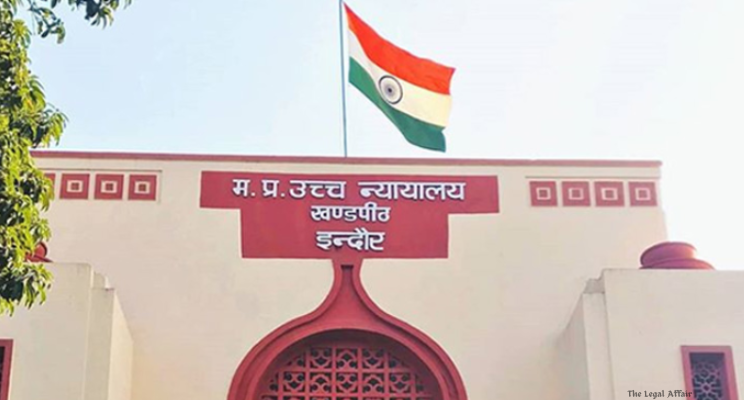
In a significant and progressive ruling that reinforces gender equality within marriage, the Madhya Pradesh High Court, in V v. SS [2025:MPHC-IND:30316], delivered a strong message on the equal responsibilities of spouses in a marital relationship. The Court observed that a husband’s duty extends beyond financial maintenance and filial responsibilities, emphasizing that he must also support his wife’s education and empowerment. Justice Gajendra Singh, presiding over the case, set aside the Family Court’s order that had denied maintenance to a woman pursuing her post-graduation in Homoeopathy (MD), holding that the wife’s pursuit of higher education was a legitimate reason for living separately. The Court declared that “entering into a marital tie-up does not mean the end of the personality of the wife” and underscored that equality in marriage cannot mean development for one spouse and restriction for the other. The High Court thus directed the husband to pay ₹15,000 per month as maintenance, recognizing that the wife required financial support during her studies to enhance her capabilities and independence.
Arguments of the Wife:
The wife, represented by Advocate Pragya Swami, contended that after her marriage on February 20, 2018, she faced cruelty and dowry demands from her husband and in-laws, which ultimately led to her being ousted from the matrimonial home on June 24, 2018. Having been forced to return to her parental home, she filed a maintenance petition before the Family Court on November 14, 2018, seeking ₹25,000 per month on the grounds of neglect and cruelty. She argued that despite being a qualified Homeopathic medical graduate, she was unemployed and fully dependent on her father for sustenance. She further explained that her registration as a practitioner did not imply that she was engaged in active practice, as renewing professional registration was merely a procedural requirement to maintain eligibility for future employment or further education. The wife stated that she had taken a bank loan to pursue her post-graduation (MD in Homoeopathy) at Swasthya Kalyan Hospital, Jaipur, to build a stable career, but lacked sufficient income to sustain herself during the course.
Her counsel highlighted that the wife’s only previous employment was a short-term temporary assignment under the National Health Mission (NHM) during the COVID-19 pandemic, where she served as an Aayush Chikitsak for limited contractual periods of 89 days and 62 days respectively, receiving a modest stipend of ₹25,000 per month. Beyond this brief stint, she had no consistent source of income. The wife argued that her husband, earning ₹74,000 per month as a technician, was financially well-placed and capable of providing maintenance. She emphasized that he had neglected his statutory and moral obligations under Section 125 of the Code of Criminal Procedure (CrPC), which mandates a husband to maintain his wife if she is unable to maintain herself. The petitioner further argued that equality in marriage required not just shared domestic obligations but also mutual respect for each partner’s aspirations and career growth.
She maintained that her decision to pursue higher education was not a ground to deny maintenance, especially since she had been driven away due to dowry harassment and cruelty. The Family Court’s rejection of her maintenance claim, she contended, was based on erroneous assumptions regarding her employment status. It failed to consider that she was still dependent on her father and struggling to complete her education. The wife thus prayed for the High Court to recognize her educational needs and direct her husband to provide adequate maintenance to help her sustain herself during her MD program.
Arguments of the Husband:
The husband, represented by Advocate Nipun Choudhary, opposed the wife’s revision petition, contending that she was not entitled to maintenance as she was living separately without sufficient cause. He denied all allegations of cruelty and dowry demand, asserting that his wife had left the matrimonial home on her own accord. He claimed that she was a qualified medical professional earning approximately ₹45,000 per month and thus capable of maintaining herself. The husband further argued that his parents were aged and dependent on him, and that his financial obligations toward them took priority. He submitted that the Family Court had rightly rejected the wife’s claim after finding that she voluntarily deserted him and had not demonstrated valid grounds for living separately.
Additionally, the husband claimed that the wife’s pursuit of higher studies was her personal choice and not a ground to claim maintenance. He contended that if she could afford to pursue a postgraduate course in Homoeopathy and take loans for it, she could not claim to be financially dependent. The husband further alleged that his wife was renewing her medical registration and taking part-time assignments, thereby implying a steady income. He accused her of exaggerating her financial difficulties to claim maintenance unjustly. He also pointed out that he had filed a petition for restitution of conjugal rights soon after receiving her maintenance application, indicating his willingness to reconcile. Therefore, he argued that the High Court should uphold the Family Court’s order and reject the revision petition.
Court’s Judgment and Observations:
Justice Gajendra Singh, after carefully examining the submissions and the evidence on record, delivered a detailed judgment that strongly underscored the equal standing of spouses in a marriage. The Court noted that the wife had completed her Bachelor of Homoeopathic Medicine and Surgery (BHMS) in 2017, registered as a practitioner, and got married in 2018. However, the Court observed that merely being registered as a medical practitioner did not prove that she was earning an income sufficient for self-sustenance. The judge emphasized that renewing a professional registration could not be treated as evidence of employment.
The Court acknowledged that the wife had temporarily served as a contractual Aayush Chikitsak under the NHM during the COVID-19 pandemic, but her employment lasted only for limited durations, and the stipend she earned could not be considered a regular income. Furthermore, the Court took note of her ongoing postgraduate studies in MD (Homoeopathy) and held that education was a legitimate pursuit deserving of support, not a ground for denial of maintenance. Justice Singh observed, “Entering into a marital tie-up does not mean the end of the personality of the wife. If the husband has a duty towards his parents, then he has also the duty to complete the course that would enhance the capability of the wife and to empower her. Equality in marital tie-up does not mean development of only one and only restrictions for the other, especially the wife.”
The Court also rejected the husband’s contention that the wife was living separately without sufficient cause. It noted that the wife had consistently alleged cruelty and dowry harassment, and her parents had made multiple efforts to reconcile the couple, which failed. The husband, on the other hand, had taken no sincere steps to restore the relationship or provide emotional or financial support. His subsequent filing for restitution of conjugal rights appeared to be a reaction to the wife’s maintenance claim rather than a genuine reconciliation effort. The Court further observed that while the husband’s care for his aged parents was commendable, it could not absolve him of his legal and moral obligations toward his wife.
Justice Singh clarified that marriage entails shared responsibilities and mutual respect, and financial equality within marriage should not result in restricting the wife’s growth while enabling the husband’s. The Court underscored that a husband’s responsibility extends to facilitating his wife’s education and career advancement, particularly when she is pursuing higher studies that would empower her and enhance her self-reliance. The bench held that denying maintenance on the ground that the wife was pursuing higher studies would be contrary to the spirit of equality and fairness in marital relationships.
Consequently, the High Court set aside the Family Court’s order and directed the husband to pay ₹15,000 per month as maintenance to his wife, effective from the date of her application, except for the one-year period during which she received a stipend for her temporary employment. The Court emphasized that this maintenance was not only a financial obligation but also a means of ensuring dignity, equality, and empowerment for women within the institution of marriage.
The judgment stands as a progressive affirmation of the evolving judicial perspective that recognizes the wife’s individuality, aspirations, and educational rights as integral to marital equality. It reiterates that the marital bond cannot diminish the woman’s autonomy or ambitions, and that financial dependency during educational pursuits cannot be used as a pretext to deny her rightful maintenance.