


Introduction:
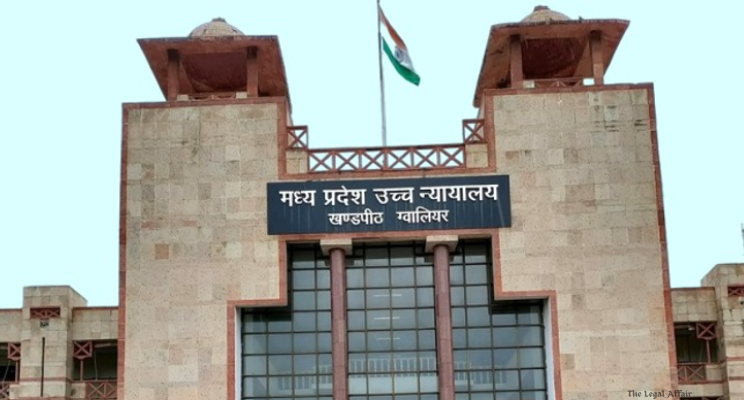
The Madhya Pradesh High Court, sitting at its Indore Bench, recently granted bail to an individual accused under the Narcotic Drugs and Psychotropic Substances (NDPS) Act. The ruling, issued by Justice Pranay Verma, focused on the insufficiency of evidence presented against the accused. The primary evidence linking the accused to the alleged crime was a statement from a co-accused, which, according to the court, was insufficient under Section 37 of the NDPS Act to deny bail. The Court also analyzed the relevance of WhatsApp chats produced by the prosecution, concluding that they did not definitively connect the accused to the drug transaction in question.
Prosecution’s Argument:
The prosecution, represented by the respondent, argued that the accused should not be granted bail under the stringent provisions of the NDPS Act, specifically under Section 37. Section 37 imposes a higher bar for granting bail in narcotics-related cases, mandating that the court be satisfied that there are reasonable grounds for believing the accused is not guilty and unlikely to commit another offense if released.
To support their claim, the prosecution cited a memorandum recorded under Section 27 of the Evidence Act, where the co-accused, Rahul, implicated the applicant. The prosecution argued that Rahul’s statement, along with the accused’s own memorandum, was sufficient to meet the legal threshold to deny bail under Section 37. Additionally, the prosecution introduced WhatsApp conversations that allegedly connected the accused to the drug transaction. They also claimed the accused had confessed to the crime under Section 67 of the NDPS Act, which allows authorities to record a confession.
In addition to the WhatsApp chats, the prosecution referred to a payment allegedly connected to the drug transaction, further asserting the accused’s involvement in illegal activities. Despite the lack of physical recovery of drugs from the accused, the prosecution maintained that the circumstantial evidence and co-accused’s statements should suffice to keep the accused in custody.
Defense’s Argument:
The defense counsel, on the other hand, vigorously contested the prosecution’s claims, asserting that the evidence against the accused was weak and unreliable. They argued that the accused’s involvement was based solely on the co-accused’s memorandum, which is insufficient to implicate the accused under the NDPS Act’s stringent standards for denying bail. The defense highlighted that no recovery of narcotics was made from the accused, and he was not present at the scene when the drugs were seized. Moreover, they pointed out that there was no independent corroboration of the statements made by the co-accused.
The defense also refuted the relevance of the WhatsApp chats produced by the prosecution, arguing that these conversations did not conclusively prove the accused’s involvement in any drug transaction. They maintained that the chats were circumstantial at best and lacked the evidentiary weight necessary to link the accused to the crime.
On the issue of payments, the defense stated that the prosecution had failed to show any direct connection between the accused and the payments allegedly made for the drugs. Without clear and direct evidence linking the accused to the financial transactions, the defense contended that the prosecution’s case was speculative and did not meet the legal threshold to deny bail.
The defense also highlighted that the investigation had concluded, a charge sheet had been filed, and there was no further need for custodial interrogation. The accused had been in custody since April 2024 and did not have a prior criminal record. Given these circumstances, the defense argued that further detention was unwarranted and that the accused should be released on bail, subject to appropriate conditions.
Court’s Judgment:
After considering the arguments from both sides, Justice Pranay Verma ruled in favor of the accused, granting bail on the grounds that the evidence presented was insufficient to deny bail under Section 37 of the NDPS Act. The court emphasized that the primary evidence against the accused was the co-accused’s statement, which, under the law, cannot be the sole basis for denying bail.
Justice Verma highlighted that the accused’s implication appeared to rest predominantly on the co-accused’s memorandum and the accused’s own memorandum recorded under Section 27 of the Evidence Act. Since no narcotic substances were recovered from the accused, and he was not present at the time of the recovery, the court concluded that the bar imposed by Section 37 of the NDPS Act could not be applied in this case.
The court also addressed the WhatsApp chats produced by the prosecution, observing that these conversations did not conclusively point to the accused’s involvement in the alleged drug transaction. Furthermore, the court noted that the payment referred to by the prosecution was not shown to be directly connected to the accused, weakening the prosecution’s case. In light of these findings, the court ruled that there was no legally admissible evidence against the accused that would justify further detention under the stringent standards of the NDPS Act.
Justice Verma further observed that since the investigation had concluded and a charge sheet had already been filed, custodial interrogation of the accused was no longer necessary. The accused had been in custody since April 2024, and with no criminal antecedents, the court held that his continued detention was unwarranted.
As a result, the court ordered the release of the accused on bail, subject to the condition that he furnish a bail bond of Rs. 2,00,000 along with one solvent surety. The court also imposed conditions under Section 437(3) of the Cr.P.C, requiring the accused to appear regularly before the trial court and comply with all other stipulations imposed by the court.
In conclusion, the court held that the evidence presented by the prosecution, primarily the co-accused’s statement and the WhatsApp chats, did not meet the stringent requirements of Section 37 of the NDPS Act. Without any direct evidence linking the accused to the alleged drug transaction, the court granted bail, allowing the accused to be released from custody under the stipulated conditions.