


Introduction:
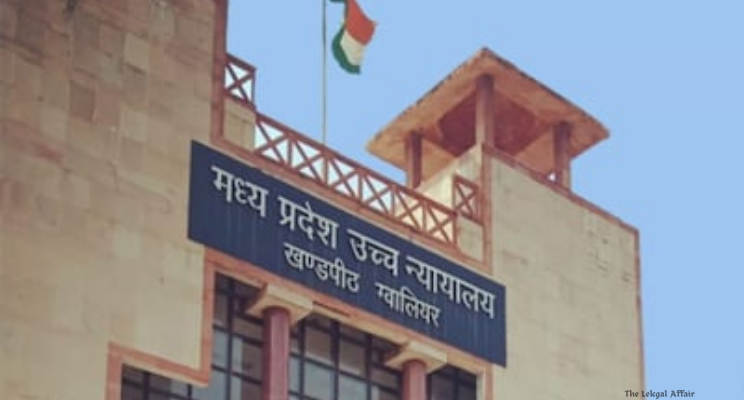
In the matter of Pawan Pathak v. Nathuram (MP-440-2025), the Madhya Pradesh High Court at Jabalpur recently made a striking observation on the competence of a trial court judge while correcting a procedural error regarding substitution of parties. The case was heard by Justice Hirdesh, who noted that the Presiding Officer of the Trial Court—6th Civil Judge, Senior Division, District Gwalior—lacked a fundamental understanding of procedural law. The Court recommended training for the officer in the Judicial Officers’ Training and Research Institute (JOTRI) to improve her knowledge of procedural law. The dispute originated from a civil suit filed by Munni Devi in 2021 concerning declaration, partition, and permanent injunction over agricultural land located in Village Bilheti, Gwalior. Following her death in May 2024, her son and petitioner, Pawan Pathak, moved an application under Order 22 Rule 3 read with Section 151 of the Civil Procedure Code (CPC), seeking substitution in her place based on a Will she had executed in his favor. The Civil Judge rejected the application, reasoning that since other heirs mentioned in the Will were not impleaded, the petitioner could not represent the estate. This rejection prompted the petitioner to approach the High Court, which set aside the impugned order, allowed the substitution, and directed the trial court to proceed with the suit in accordance with law.
Arguments by the Petitioner:
The petitioner, represented by advocates Anil Kumar Shrivastava, Pratika Pathak, and Rajiv Raghuvanshi, argued that the trial court committed a grave legal error in rejecting his application under Order 22 Rule 3 read with Section 151 CPC. He submitted that his mother, Munni Devi, who was the original plaintiff in the suit, had executed a Will on May 4, 2024, in favor of her late husband, Sitaram Pathak, and their children, including himself. After her death on May 12, 2024, the petitioner, as a beneficiary of the Will and a Class I heir, became a co-owner of her estate with a right to sue. He argued that the Will specifically bequeathed her share in the property to him, thereby granting him an enforceable right to continue the suit.
The petitioner further submitted that the trial court erred in insisting on the inclusion of all heirs mentioned in the Will as a condition precedent to substitution. He pointed out that the law does not require every heir to be impleaded for substitution, particularly when the right to sue survives with one of the legal heirs who claims under a valid Will. The petitioner emphasized that rejection of his application only on the ground of non-inclusion of other heirs was contrary to both legal principles and judicial precedent.
He also relied on the principle that the court has inherent powers under Section 151 CPC to ensure justice is not defeated by procedural technicalities. The trial court, instead of facilitating substitution to allow adjudication of the substantive rights, adopted an overly rigid approach, thereby defeating the very object of Order 22 Rule 3 CPC. The petitioner stressed that procedural laws are meant to advance justice, not thwart it, and the trial court’s order effectively abated the suit despite there being a clear right to sue.
Arguments by the Respondents:
The respondents, represented by advocates Tara Chandra Narwariya and Dhirendra Singh Chouhan, opposed the petitioner’s plea. They argued that the application was defective and incomplete as it failed to include all legal heirs mentioned in the Will executed by Munni Devi. According to them, since the Will distributed the deceased’s estate among multiple heirs, a single heir could not be allowed to substitute himself in place of the deceased plaintiff without impleading the others. They submitted that partial substitution could lead to complications in the trial, including conflicting claims and representation issues, and therefore, the rejection by the Civil Judge was justified.
The respondents also highlighted the necessity of protecting the integrity of succession disputes. They argued that allowing only one heir to step into the shoes of the deceased plaintiff might prejudice the rights of other heirs and undermine the final adjudication of ownership claims. They contended that in matters involving succession and partition, the court must ensure that all interested parties are brought on record so that the decree passed binds everyone and prevents multiplicity of litigation.
Additionally, the respondents suggested that the Will in question, although not alleged to be fraudulent in the pleadings, could still be contested at a later stage. They argued that impleading all heirs was necessary to preempt such disputes. The respondents therefore defended the Civil Judge’s order as a cautious step aimed at ensuring completeness of parties before proceeding with the suit.
Court’s Observations and Judgment:
Justice Hirdesh carefully considered the submissions of both parties and examined the record. The Court observed that the trial court’s reasoning was flawed because the rejection of the petitioner’s substitution application was based solely on the non-inclusion of other heirs named in the Will. The High Court emphasized that the defendants had not alleged fraud or collusion in the execution of the Will, and therefore, the petitioner’s claim could not be dismissed on mere technicalities.
The High Court referred to the Supreme Court’s decision in Dolai Molliko v. Krushna Chandra Patnaik [AIR 1967 SC 49], which clarified that substitution applications cannot be rejected merely because all legal representatives are not brought on record. As long as one heir with a valid interest applies for substitution, the right to sue survives, and the court must implead that person to continue the suit. The High Court noted that the trial court had failed to apply this well-settled principle of law.
Furthermore, Justice Hirdesh criticized the trial court for procedural inconsistency. While rejecting the substitution application, the trial court still proceeded to fix the case for plaintiff’s evidence, even though the original plaintiff had died. This, the High Court remarked, demonstrated a lack of basic procedural understanding on the part of the presiding judge. Consequently, the Court observed that the judge required training in procedural law at JOTRI.
Accordingly, the High Court set aside the impugned order dated January 8, 2025, and directed the trial court to implead the petitioner as plaintiff in place of Munni Devi. It further directed the trial court to proceed with the suit in accordance with law and ensure that justice is not defeated by procedural lapses.
The judgment reinforced two critical legal principles: first, that substitution under Order 22 Rule 3 CPC cannot be denied merely because all heirs are not impleaded, and second, that procedural law must serve the ends of justice rather than become a tool of injustice. The Court also demonstrated its supervisory role in ensuring the competence of trial court judges by recommending training for the concerned officer.