


Introduction:
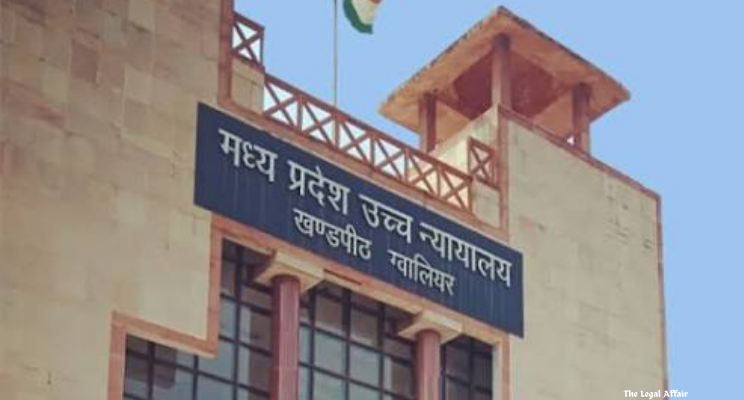
The Madhya Pradesh High Court has directed the State Government to reconsider the candidature of a woman who applied for the post of Higher Secondary Teacher (Hindi), taking into account an earlier Division Bench judgment that struck down a provision prescribing a second-division master’s degree as an eligibility requirement for teachers.
In Mamta Anjana v. State of Madhya Pradesh & Others, W.P. No. 8515 of 2025, Justice Milind Ramesh Phadke held that the petitioner’s candidature could not be examined without considering the legal position established by the Division Bench in W.P. No. 10018 of 2021, decided on March 17, 2025. The earlier judgment had invalidated Column 5 of Entry I of Schedule III of the Madhya Pradesh School Education Service (Teaching Cadre) Service Conditions and Recruitment Rules, 2018, and held that the minimum educational qualifications prescribed by the National Council for Teacher Education (NCTE) would govern eligibility.
The present petition arose from a selection list dated October 16, 2024, issued by the Director of Public Instruction, Madhya Pradesh, concerning appointments to the post of Higher Secondary Teacher of Hindi. The petitioner challenged her exclusion from the selection process, contending that her candidature had been rejected because her master’s degree was recorded as having been obtained in the third division.
The petitioner maintained that she had secured 47.62 per cent marks in her Master of Arts (Hindi) examination and that, after rounding off, her marks should be treated as 48 per cent, thereby satisfying the second-division requirement. She also relied upon the applicable university examination rules and an ordinance to support her claim.
Her case, however, raised a broader legal question concerning the continuing validity of the second-division requirement under the 2018 Recruitment Rules. The petitioner argued that her candidature had been rejected on the basis of an educational qualification that had subsequently been struck down by the High Court.
The State and the Madhya Pradesh Employee Selection Board opposed the petition, maintaining that the petitioner had failed to satisfy the prescribed educational qualifications and had not cleared document verification. The university also disputed the applicability of the ordinance relied upon by her.
The High Court examined these competing submissions in light of the Division Bench’s earlier decision. It observed that the earlier ruling directly affected the legal foundation upon which the petitioner’s candidature had been withheld. Since the petitioner had participated in the 2023 recruitment process, the Court held that her eligibility had to be reconsidered in accordance with the directions issued in that judgment.
The Court consequently directed the State to undertake the reconsideration exercise within three months. It also clarified that the petitioner would be entitled to compete against vacancies advertised under the 2023 recruitment, but that any appointment would depend upon her merit position and fulfilment of the remaining eligibility requirements.
The judgment, reported as 2026 LiveLaw (MP) 371, highlights the importance of applying judicial decisions concerning recruitment qualifications to candidates whose eligibility was determined under provisions subsequently declared invalid.
Arguments of the Parties:
Petitioner’s contention regarding her educational qualification
The petitioner, Mamta Anjana, challenged the selection list dated October 16, 2024, issued by the Director of Public Instruction for appointments to the post of Higher Secondary Teacher of Hindi. She contended that her candidature had not been considered because the university had recorded her master’s degree result as third division, despite her having secured 47.62 per cent marks.
According to the petitioner, the rejection of her candidature was based on an incorrect understanding of her academic performance. She argued that her marks should be rounded off to 48 per cent and that the resulting percentage should be treated as satisfying the second-division requirement applicable to the recruitment.
The petitioner relied upon Ordinance 31 and the General Rules of Examination to substantiate her claim. She maintained that the relevant examination provisions permitted her marks to be considered in a manner that would make her eligible for the teaching post.
She also pointed out that she had obtained the 19th rank in the unreserved female category and secured the 53rd position in the consolidated merit list. According to her, these positions demonstrated that she had participated in the selection process and that her candidature deserved consideration in accordance with the applicable recruitment rules.
The petitioner further submitted that the authorities had excluded her primarily because of the manner in which her marks were recorded in the university marksheet. She questioned the legality of treating that classification as conclusive when the recruitment qualification itself had been examined and struck down by the High Court.
An important part of her case concerned the Division Bench judgment dated March 17, 2025, in W.P. No. 10018 of 2021. The petitioner relied upon the decision to contend that the requirement of obtaining a master’s degree in the second division could no longer be applied in the manner prescribed by Schedule III of the 2018 Rules.
She argued that the earlier judgment had changed the legal framework governing educational qualifications for teaching posts in Madhya Pradesh. Consequently, her candidature could not continue to be rejected solely by applying the invalidated second-division requirement.
The petitioner also informed the Court that she had submitted an application to the university on February 25, 2025, seeking consideration of her grievance regarding the classification of her marks. However, no effective decision had been taken on that application.
On this basis, she sought appropriate directions requiring the authorities to reconsider her candidature by taking into account the applicable examination provisions, her academic record and the legal effect of the Division Bench judgment.
State’s objection to the petitioner’s eligibility
The State opposed the petitioner’s claim, maintaining that she did not possess the educational qualification required under the Madhya Pradesh School Education Service (Teaching Cadre) Service Conditions and Recruitment Rules, 2018.
The State submitted that the university’s grading system classified marks between 30 and 49 per cent as third division. Since the petitioner had secured 47.62 per cent, her result had correctly been recorded as third division under the applicable grading framework.
According to the State, even if the petitioner’s marks were rounded off, the resulting percentage would not satisfy the second-division requirement as understood under the relevant university rules.
The State therefore argued that the petitioner could not claim eligibility merely by seeking a different mathematical treatment of her marks. Her qualification had to be assessed in accordance with the rules applicable to the recruitment and the grading system followed by the university.
The State also contended that inclusion in the consolidated merit list did not create an indefeasible right to appointment. A candidate’s position in a merit list, it submitted, could not override the requirement to satisfy the prescribed eligibility conditions.
It was further argued that the petitioner had failed to qualify at the document verification stage. According to the State, the verification process was an essential part of recruitment and the petitioner could not be appointed unless she successfully established that she possessed the required educational qualifications.
The State’s position was therefore that the petitioner’s claim could not be accepted merely because she had participated in the recruitment process or secured a particular position in the consolidated merit list.
Submissions of the Madhya Pradesh Employee Selection Board
The Madhya Pradesh Employee Selection Board, arrayed as respondent No. 3, also opposed the petition.
Its counsel submitted that the final determination of a candidate’s eligibility depended upon the prescribed educational qualifications and verification of the relevant documents.
The Board maintained that the petitioner had not qualified at the document verification stage. Consequently, her candidature had not been accepted for appointment.
The Board’s submissions focused on the distinction between participation in the selection process and satisfaction of the eligibility conditions. It contended that the inclusion of a candidate’s name in a consolidated merit list could not be treated as conclusive proof of eligibility.
According to the Board, the recruitment authorities were required to verify the candidate’s educational qualifications before proceeding with an appointment. A candidate who failed to establish the prescribed qualification could not claim appointment merely on the basis of her position in the merit list.
The Board thus supported the State’s position that the petitioner’s candidature had been rejected because she had not satisfied the educational qualification requirements during document verification.
University’s response concerning the examination ordinance
The university, arrayed as respondent No. 4, disputed the petitioner’s reliance upon Ordinance 31.
Its counsel submitted that the ordinance relied upon by the petitioner was not applicable to the Master of Arts (Hindi) course pursued by her.
According to the university, the course was governed by the relevant ordinances applicable to affiliated colleges. Therefore, the petitioner’s claim regarding rounding off her marks and the classification of her result had to be examined under the provisions actually governing her course.
The university’s position was that the petitioner could not rely upon an examination ordinance that did not apply to her academic programme.
This submission placed the applicability of the university’s examination regulations at the centre of the dispute concerning the classification of the petitioner’s master’s degree result.
The parties’ arguments thus raised two connected questions: whether the petitioner’s marks could be treated as satisfying the second-division requirement under the applicable university rules, and whether that requirement could continue to form the basis for rejecting her candidature after the Division Bench had struck down the relevant recruitment provision.
Court’s Judgment:
Effect of the earlier Division Bench judgment
The Madhya Pradesh High Court considered the petition in the light of its earlier decision in W.P. No. 10018 of 2021, which had examined the validity of the educational qualification prescribed under the Madhya Pradesh School Education Service (Teaching Cadre) Service Conditions and Recruitment Rules, 2018.
The Division Bench, in its judgment dated March 17, 2025, had examined Column 5 of Entry I of Schedule III of the 2018 Rules. The provision prescribed a master’s degree in the relevant subject with second division, along with a Bachelor of Education (B.Ed.) degree or its equivalent, as the qualification for the concerned teaching post.
The earlier judgment had identified difficulties arising from the use of the second-division requirement as a uniform eligibility condition for candidates from different universities.
The Court observed that universities followed different standards for awarding second division. Consequently, candidates obtaining similar or even higher percentages of marks could receive different classifications depending upon the examination regulations applicable to their respective universities.
The Division Bench found that this approach created an inconsistent system for determining eligibility. A candidate’s eligibility for a teaching post could depend upon the classification adopted by the university rather than upon a uniform qualification prescribed by the competent regulatory authority.
The earlier judgment therefore held that eligibility for the concerned teaching posts should be determined by reference to the qualifications prescribed under the applicable regulatory framework, rather than by relying upon the varying concept of second division adopted by individual universities.
In paragraph 49 of that judgment, the Division Bench expressly held that Column 5 of Entry I of Schedule III of the 2018 Rules was liable to be struck down as manifestly arbitrary and contrary to the NCTE Regulations.
The Court accordingly invalidated the provision and clarified that the minimum qualifications prescribed by the NCTE would govern the field in place of the impugned requirement.
It further clarified that, since High School Teachers in Madhya Pradesh teach Classes IX to XII, the qualifications prescribed by the NCTE for Senior Secondary classes would be applicable to High School Teachers in the State.
This clarification was significant because it established the regulatory framework against which the educational qualifications of candidates had to be assessed.
The Division Bench also issued directions concerning the 2023 recruitment process, including the conduct of a supplementary recruitment exercise.
The present Court considered these findings directly relevant to the petitioner’s grievance. It observed that the legal basis upon which her candidature had been withheld was affected by the earlier judgment striking down the second-division requirement.
Reconsideration of the petitioner’s candidature
Justice Milind Ramesh Phadke observed that the earlier Division Bench decision had a direct bearing on the petitioner’s case.
The petitioner’s candidature had been withheld on the ground that her master’s degree was recorded as third division and therefore did not satisfy the second-division requirement under the 2018 Rules.
However, the Division Bench had subsequently invalidated the relevant provision and held that the minimum educational qualifications prescribed by the NCTE would govern eligibility.
The present Court therefore considered it necessary for the authorities to examine the petitioner’s candidature in light of the changed legal position.
The Court’s direction was not based on a finding that the petitioner had automatically acquired eligibility for appointment. Instead, it required the authorities to reconsider her candidature by applying the governing NCTE Regulations and the relevant recruitment framework.
The Court thereby distinguished between the invalidity of the second-division requirement and the petitioner’s obligation to satisfy the remaining eligibility conditions.
The earlier judgment had removed the particular qualification that formed the basis of the petitioner’s exclusion. Nevertheless, the petitioner would still be required to fulfil the other applicable requirements governing the recruitment.
The Court also took into account that the petitioner had participated in the 2023 selection process. Since the earlier Division Bench had issued directions concerning that recruitment, the petitioner was entitled to have her candidature considered in accordance with those directions.
The Court thus held that the authorities could not continue to determine her eligibility without considering the legal consequences of the March 17, 2025 judgment.
This approach ensured that the earlier judicial decision was given effect in the recruitment process to which it applied, while leaving the final determination of the petitioner’s eligibility to the competent authorities.
Merit position and absence of an automatic right to appointment
The Court also clarified the extent of the relief available to the petitioner.
Although she had secured the 19th rank in the unreserved female category and the 53rd position in the consolidated merit list, these rankings did not automatically entitle her to appointment.
The Court expressly stated that the petitioner would be entitled to participate and compete against the vacancies advertised for the 2023 recruitment in accordance with paragraph 52 of the Division Bench judgment.
However, her appointment would remain dependent upon her position in the merit list and fulfilment of all other eligibility conditions prescribed under the applicable NCTE Regulations and recruitment framework.
This clarification is important because the Court did not direct the authorities to appoint the petitioner merely because the second-division requirement had been struck down.
Instead, it directed that her candidature be reconsidered under the legally applicable qualification standards. The final outcome would depend upon the result of that exercise and the petitioner’s position in the recruitment process.
The judgment therefore preserves the distinction between the right to have a candidature considered in accordance with law and an automatic entitlement to appointment.
A candidate may be entitled to reconsideration after a disqualification is found legally unsustainable, but appointment remains subject to the applicable merit and eligibility requirements.
Directions issued by the Court
After considering the submissions of the petitioner, the State, the Employee Selection Board and the university, the Madhya Pradesh High Court directed the State to undertake the exercise of reconsidering the petitioner’s candidature in accordance with the Division Bench judgment dated March 17, 2025.
The Court directed that this exercise be completed within three months.
It further clarified that the petitioner would be entitled to participate and compete against the vacancies advertised for the 2023 recruitment in terms of paragraph 52 of the earlier judgment.
Her appointment, however, would remain dependent upon her position in the merit list and fulfilment of the remaining eligibility conditions under the applicable NCTE Regulations and recruitment framework.
The Court accordingly disposed of the writ petition.
The order does not declare the petitioner eligible for appointment, nor does it direct that she be appointed to the post of Higher Secondary Teacher of Hindi. Its effect is to require the authorities to reconsider her candidature without relying upon the second-division requirement that had been struck down by the Division Bench.
Legal significance of the decision
The judgment in Mamta Anjana v. State of Madhya Pradesh is significant for candidates whose eligibility was determined under recruitment provisions that were subsequently declared invalid.
It reinforces the principle that recruitment authorities must apply the governing legal framework when deciding a candidate’s eligibility. Where a court invalidates a qualification requirement, the authorities must take that decision into account while reconsidering affected candidatures.
The decision also highlights the importance of distinguishing between university classifications and qualifications prescribed by a competent regulatory authority. A university’s classification of a degree may be relevant to the candidate’s academic record, but the eligibility conditions for a teaching post must be assessed in accordance with the applicable recruitment rules and regulatory standards.
At the same time, the Court made it clear that striking down an eligibility condition does not automatically establish that every candidate previously excluded under that condition must be appointed.
The remaining eligibility requirements and the candidate’s merit position continue to be relevant.
Ultimately, the Madhya Pradesh High Court’s order ensures that the petitioner’s candidature is reconsidered in accordance with the law declared in the earlie Division Bench judgment. It leaves the final determination of her eligibility and appointm